
LONDON, April 4 — Having once more soared beyond US$110 (RM444) per barrel yesterday, could oil prices reach new records beyond US$150 as some analysts believe?
President Donald Trump’s latest belligerent tone over the Middle East war has reignited concerns about persistently high crude costs and the limited measures available to tackle the fallout.
US$200 oil?
Since the start of the US-Israeli conflict with Iran on February 28, benchmark oil prices have soared more than 50 per cent largely owing to the Strait of Hormuz — through which normally one-fifth of the world’s crude passes — shutting to most tankers.
French bank Societe Generale said US$150 is a “credible” outcome on a prolonged war, while most analysts estimate crude hitting US$130-US$140.
Australian bank Macquarie forecast US$200 crude should the war still occur in June.
And this does not take into account closure of the Strait of Hormuz combined with an attack on Kharg Island — through which the bulk of Iran’s crude production travels — or disruption to another key trading route, the Strait of Bab al-Mandeb.
International benchmark Brent North Sea crude and the main US contract, West Texas Intermediate, each soared to record highs above US$147 in the wake of the 2008 global financial crisis before collapsing during the Covid pandemic.
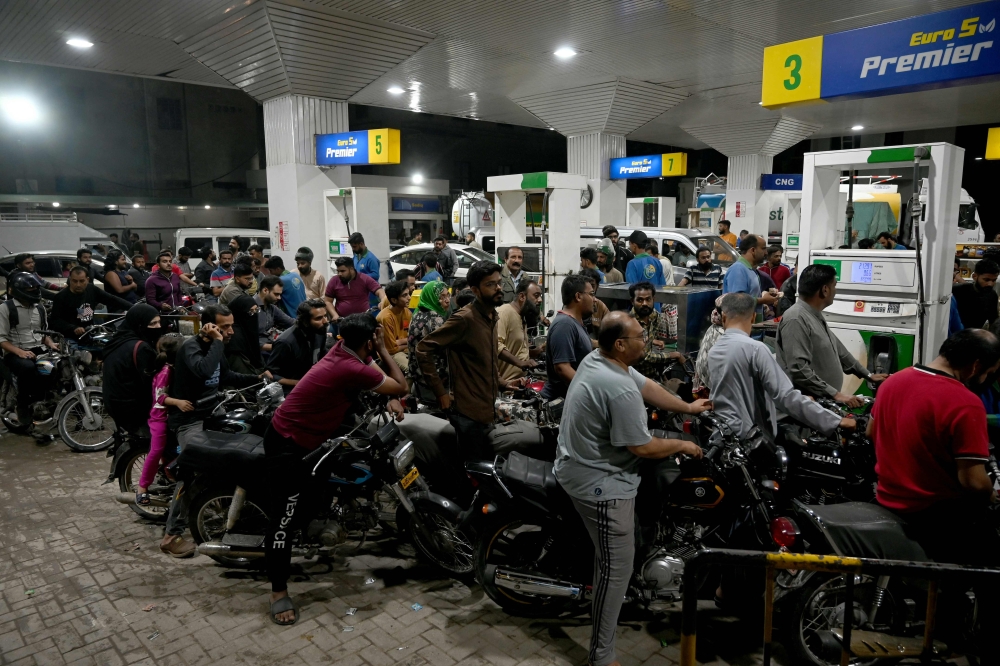
At around US$110, consumers are already facing heavy financial pain, as prices of gasoline and diesel soar around the world.
‘Insufficient’ oil reserves
In an unprecedented decision in response to the Mideast war, the 32 nations belonging to the International Energy Agency (IEA) pledged to unlock 426 million barrels, equivalent to more than one third of their combined reserves.
The United States, itself a major oil producer, is to release 172 million barrels, or 40 per cent of its strategic reserves.
These emergency releases “are not sufficient”, UBS commodities analyst Giovanni Staunovo told AFP, noting that the maximum pace of release is around three million barrels per day compared with 15 mpd failing to reach the market because of the war.
The conflict has already triggered a crisis more severe than the oil shocks of the 1970s and the one that followed Russia’s invasion of Ukraine in 2022, IEA head Fatih Birol said on a podcast published Wednesday, adding that “April will be much worse than March”.
The agency has identified about 40 key energy infrastructures damaged since the start of the Mideast war, which will each take time to repair.
Solutions?
For countries dependent on oil and gas transiting through the Strait of Hormuz — in particular those spread across Asia and Europe — the situation appeared bleak.
Three-quarters of the world’s population lives in countries dependent on fossil fuels, according to energy think tank Ember.
Governments have less budgetary leeway to help businesses and households, with public debt potentially reaching 100 per cent of gross domestic product by 2029, a high since the end of the Second World War according to recent projections by the International Monetary Fund.
Meanwhile among political leaders and economic groups, many want the phasing out of fossil fuels to be accelerated.
A recent University of Oxford study claimed that a fully decarbonised energy system in the UK would save an average household £441 in annual bills compared with up to £82 if all North Sea oil and gas wells were exploited.
In the short term, calls for energy-use moderation are multiplying, such as the European Commission’s request to member states to reduce their oil demand, or Bangladesh’s call for its civil servants to turn off lights and lower air conditioning.
Several countries, including Malaysia and Sri Lanka, are encouraging people to work from home if they are able to do so.
“The reality is, the economic shocks caused by this war will be with us for months,” Australia’s Prime Minister Anthony Albanese warned on Wednesday. — AFP
Date: 4 April, 2026 8:00 am
Source: Malay Mail
💬 Join the Conversation! 💬
We’ve disabled comments on our posts and pages to keep the discussions organized and lively! But don’t worry – the conversation isn’t over. Head over to our forum and share your thoughts, ideas, and feedback with the community! It’s the perfect place to connect, learn, and engage with others who care about the same things. We can’t wait to hear from you!