
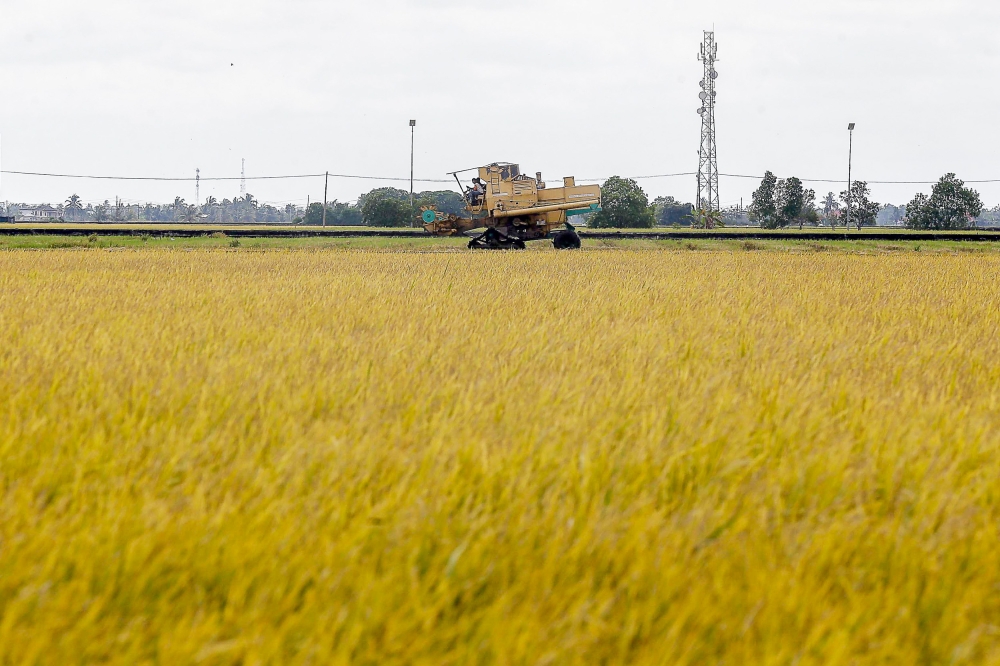
KUALA LUMPUR, April 11 — The government is reviewing several proposals to help paddy farmers affected by rising agricultural costs following the global surge in fuel prices, said Agriculture and Food Security (KPKM) Minister Datuk Seri Mohamad Sabu.
In a Facebook post today, he said the proposals under consideration include the use of fleet cards for agricultural machinery, as well as higher incentives for ploughing and rice harvesting.
“Other proposals, such as increasing ploughing and harvesting incentives, providing diesel quotas for C2 vessels, and offering one-off assistance to smallholder growers, are still being studied as they involve significant financial commitments,” he said.
Mohamad said the global rise in fuel prices has directly impacted agricultural production costs, including the price of fertilisers, pesticides and machinery services.
He highlighted that within a single month, fuel subsidies rose from around RM700 million to RM6 billion, placing immense pressure on the country’s fiscal position.
He said the government must balance the needs of various sectors, as paddy farmers are not the only ones affected, as other sectors are also facing similar cost pressures.
He stressed that the current priority is to safeguard national food security, including the supply of rice, chicken, eggs and vegetables.
“Among the initial measures that have been approved is an increase in rice buffer stocks, with an allocation exceeding RM100 million,” he said.
Mohamad added that under Budget 2026, the paddy and rice sub-sector received an allocation of RM2.62 billion, covering rice price subsidies, fertiliser subsidies and various production incentives.
More than 50 per cent of the ministry’s management budget is channelled to this sub-sector, he said, reflecting the government’s ongoing commitment to the welfare of paddy farmers and national food security.
However, he explained that the main challenges facing the rice industry are not merely about the level of assistance, but also structural issues that demand comprehensive reform, including the adoption of modern technology, large-scale management, and improvements to irrigation systems and supply chains.
“We can criticise, but let it be based on facts, not sentiment,” he concluded. — Bernama
Date: 11 April, 2026 5:00 pm
Source: Malay Mail
💬 Join the Conversation! 💬
We’ve disabled comments on our posts and pages to keep the discussions organized and lively! But don’t worry – the conversation isn’t over. Head over to our forum and share your thoughts, ideas, and feedback with the community! It’s the perfect place to connect, learn, and engage with others who care about the same things. We can’t wait to hear from you!