
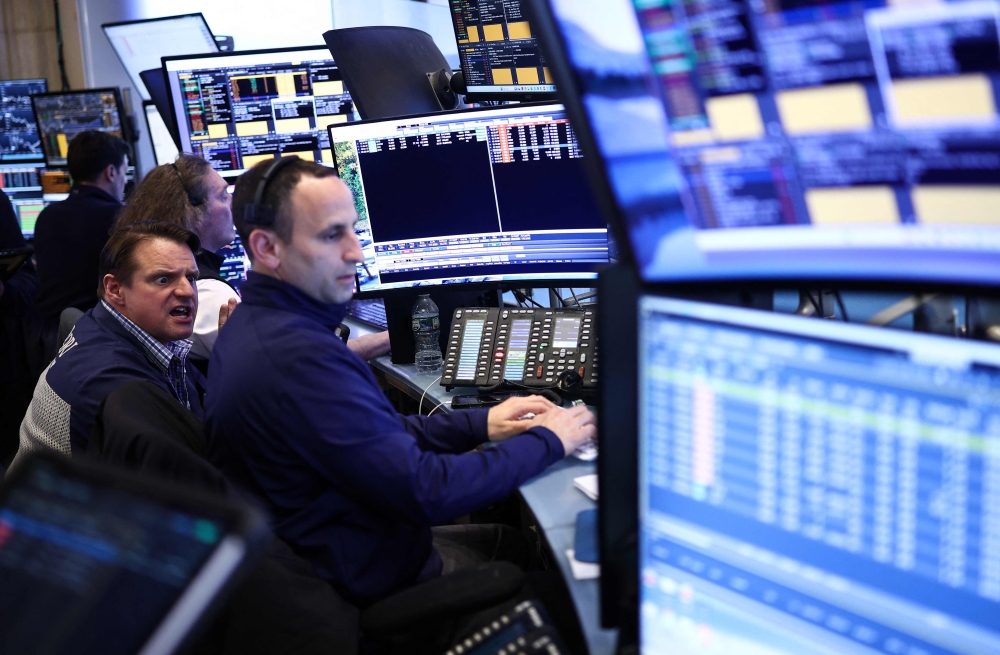
NEW YORK, April 9 — Oil and gas prices plunged, stock markets soared and the dollar retreated Wednesday after the United States and Iran agreed to a temporary ceasefire that could lead to the Strait of Hormuz reopening.
“A wave of relief has hit financial markets after threats of a devastating escalation of the war were replaced by a temporary truce,” said Susannah Streeter, chief investment strategist at Wealth Club.
The most widely traded oil contracts fell some 15 per cent to around US$95 (RM379) a barrel, after more than a month of conflict that killed thousands and hammered global markets.
But on Wednesday, investor relief sent markets soaring, with Wall Street’s three main indexes climbing more than 2.5 per cent.
Europe’s main continental bourses all closed up more than three per cent. Frankfurt led the way with a five-per cent gain while London gained 2.5 per cent, held back by weak oil companies.
Earlier, Tokyo stocks jumped 5.4 per cent and Chinese indices rose around three per cent.
The dollar, a safe haven in times of market turmoil, slid against the euro, yen and British pound as investors returned to riskier assets.
But traders warned that the euphoria could be short-lived. Both sides have threatened to resume hostilities if the two-week pause does not lead to an agreement.
“In reality, the markets are not pricing in peace but a window for negotiation,” said John Plassard of Cite Gestion.
“And that is precisely the issue: In two weeks, either this window will lead to a lasting agreement, or it will only postpone and amplify the energy shock that everyone fears,” he said.
Fractures of the deal started to emerge as Israel launched its heaviest bombardment of Lebanon since Iran-backed militant group Hezbollah joined the war in early March, killing at least 112 and wounding hundreds across the country, according to authorities.
Angelo Kourkafas, investment strategist at Edward Jones, described Wednesday’s financial market response as “a big relief rally” but indicated more bumps were likely.
“Every development in this war has been pretty much unpredictable and we still … remain in a headline-driven market,” he told AFP. “Potentially, there’s going to be more volatility.”
Oil prices remain much higher and equity prices lower than before the United States and Israel attacked Iran on February 28.
“I don’t think we’re going to (quickly) go back to the levels we were at before the war,” said Kathleen Brooks, research director at XTB traders. “Energy infrastructure across the Gulf has been targeted.”
Maritime monitor Marine Traffic noted that two ships had transited the waterway since Iran agreed to reopen it, through which about 20 per cent of the world’s oil passes.
But one major German shipping company, Hapag-Lloyd, said it was too early for its trapped ships to leave the Gulf.
Shipping journal Lloyd’s List estimated that around 800 ships have been stuck in the Gulf since the end of February.
The International Air Transport Association said that it would take months for jet fuel supplies and prices to normalize.
“Should talks falter or activity through the strait remain subdued, oil prices and the dollar could reverse course fairly quickly,” said Matthew Ryan, head of market strategy at global financial services firm Ebury.
Shares of oil producers fell sharply while airlines were among the biggest beneficiaries. — AFP
Date: 9 April, 2026 10:00 am
Source: Malay Mail
💬 Join the Conversation! 💬
We’ve disabled comments on our posts and pages to keep the discussions organized and lively! But don’t worry – the conversation isn’t over. Head over to our forum and share your thoughts, ideas, and feedback with the community! It’s the perfect place to connect, learn, and engage with others who care about the same things. We can’t wait to hear from you!