
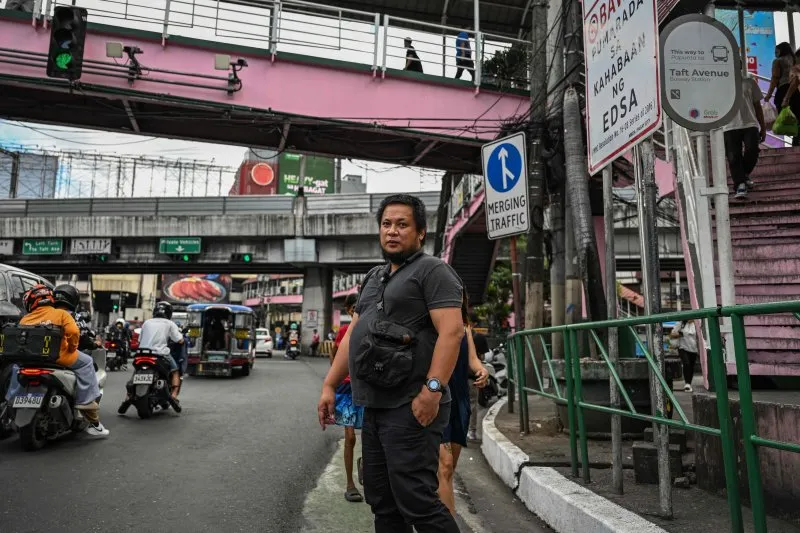
MANILA, Nov 27 — Noel Celis’s pulse still races whenever a motorcyclist pulls up alongside him at a red light, a legacy of countless nights photographing Philippine ex-president Rodrigo Duterte’s bloody drug war.
“They call it riding in tandem,” the freelance photographer told AFP of the two-man teams that once roamed the capital, Manila, dealing out death, conceding it remained “scary” after years of death threats tied to his work.
Duterte goes on trial at the International Criminal Court (ICC) on November 30 for the “crime against humanity of murder”, over killings that took place between 2011 and 2019.
For photographers like Celis, it is as if that period happened yesterday.
The 43-year-old, who worked for AFP at the time, photographed about 200 drug war killings.
One picture showed a young woman cradling the bloody body of her boyfriend shortly after he was gunned down at a busy intersection.
To the mainly Catholic nation, it bore a disturbing resemblance to Michelangelo’s “La Pieta”, a sculpture of the Virgin Mary cradling Christ after his crucifixion. It swiftly became the defining image of the crackdown.
Those working the drug war beat took to calling themselves “nightcrawlers”, after a Hollywood film about Los Angeles camera crews chasing late-night mayhem.
Mental map of death
At first, the journalists said, the police had no qualms about tipping them off about the killings.
But they clammed up as the public outcry grew, and the photographers resorted to chasing after mortuary vans summoned by police to collect the dead.
It all came flooding back for Dondi Tawatao, 46, when he returned with AFP to a garbage-strewn street where, on a rainy night 10 years ago, he took pictures of two bodies beneath the exposed roots of a banyan tree.
Near them were two handguns he believed were planted there.
“It was very dark, very sinister. It’s supposed to be the tree of life, but on that night, it became the tree of death,” he told AFP.
After shooting the drug war for four years, the killings became “normalised” to the point where he stopped visiting crime scenes unless they involved at least three corpses.
The long nights rearranged how he saw Manila, he said.
“You sort of have a mental map of where the killings took place. Like randomly, you would be walking, then you realise, ‘this was where so-and-so was killed’.”
He later left the profession, “primarily to take a rest mentally”.
‘We went to apologise’
Freelancer Kimberly dela Cruz, 36, found her first victim on Manila’s rail tracks, and another atop a major bridge.
“It was a full moon, and I thought, ‘What a beautiful evening it would have been — except somebody died’,” she told AFP of the first.
The head of the man at the second scene was wrapped in packaging tape. He lay next to a cardboard poster that read: “I’m a drug pusher, don’t emulate me.”
Some of her colleagues would require professional counselling. One suffered from recurring nightmares about the drug war dead coming back to life.
Celis’s memories centre on the heart-wrenching keening of victims’ wives and mothers, and the sharp, metallic smell of blood.
Residents of the mainly slum-area killing grounds could fear journalists as much as they did police, dela Cruz said.
“I was an outsider. They thought I was an (intelligence operative), police, or somebody that would bring evil,” she said.
Celis said photographers wrestled with feelings of guilt over not being able to help, and accusations of “profiting from the suffering of other people”.
When he and a colleague attended the wake of the “La Pieta” victim, they half-dreaded a lynching by angry relatives.
“We went there to apologise for not being able to help,” he said, telling the victim’s girlfriend the pictures could be evidence were charges ever brought.
‘I was shocked’
“A picture is powerful,” Celis said, “especially at this time, when standing history on its head is in vogue”.
Alluding to Holocaust deniers, Tawatao said the photos provided “incontrovertible proof that it happened”.
None of the photographers interviewed by AFP believed the drug war solved the country’s narcotics problem.
They remain convinced the police murdered thousands to enforce Duterte’s will.
But for all, Duterte’s arrest and handover to the ICC last year seemed an impossibility — until it happened.
“I was shocked, because I didn’t think it was possible. We’ve only seen the powers that be get away with it,” Tawatao said.
Dela Cruz described a “huge sense of relief when (Duterte) was flown to The Hague. It meant some sort of justice was achieved by the families”.
“He ordered a war on drugs that killed many people,” Celis said.
“It’s the natural consequence of his actions.” — AFP
Date: 27 November, 2026 9:00 pm
Source: Malay Mail
💬 Join the Conversation! 💬
We’ve disabled comments on our posts and pages to keep the discussions organized and lively! But don’t worry – the conversation isn’t over. Head over to our forum and share your thoughts, ideas, and feedback with the community! It’s the perfect place to connect, learn, and engage with others who care about the same things. We can’t wait to hear from you!