
NUKU’ALOFA (Tonga), April 5 — More than four years on from one of the most powerful volcanic eruptions in history, Tonga is struggling to improve its infrastructure as it pays off a massive Chinese loan.
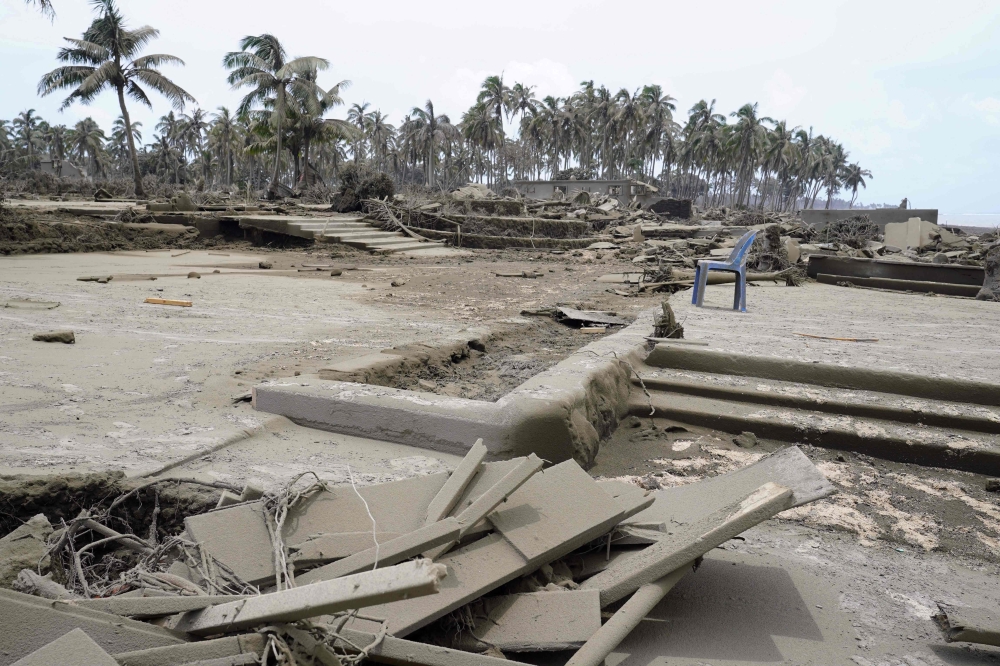
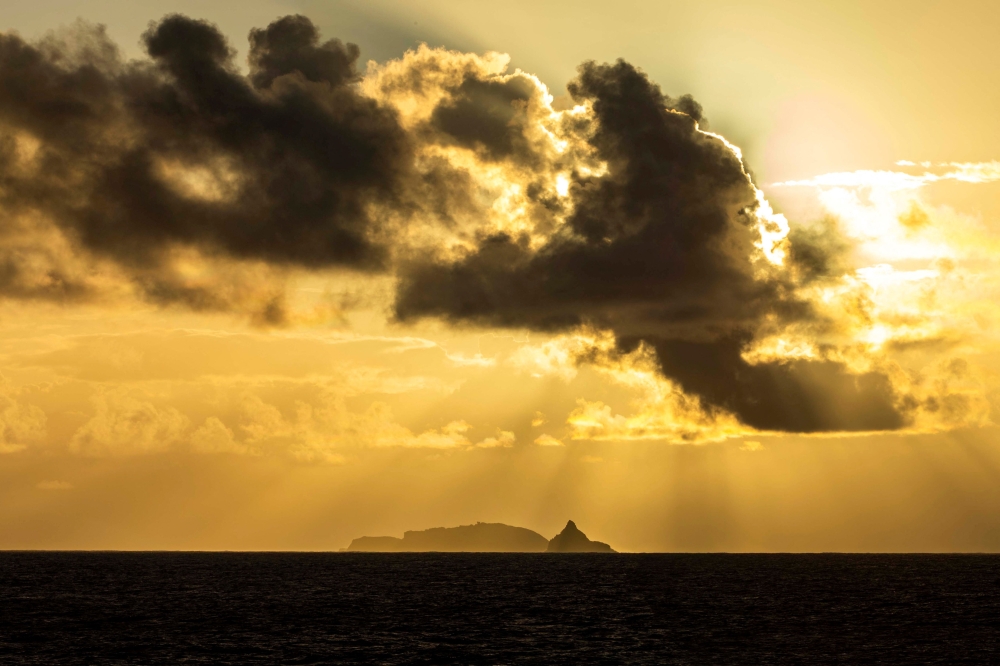
When Hunga Tonga-Hunga Ha’apai erupted on January 15, 2022, the blast could be heard as far away as Alaska and sent a powerful tsunami crashing into Tonga’s main island some 65 kilometres away, killing three people.
Hundreds of homes were destroyed, businesses flattened and roads washed out, while most water supplies were left undrinkable as six inches of ash fell on the Tongan islands.
Tongan Prime Minister Lord Fakafanua said last month that most government programmes to rebuild were complete, but conceded there were “some leftovers” his government needed to finish.
The damage caused by the tsunami remains obvious in parts of Tonga.
Debris from homes and businesses knocked down by the waves remains scattered near beaches on Tongatapu’s west coast, and on the nearby ‘Eua island, tourists are encouraged to bring cash with them from the capital, Nuku’alofa, as ATMs and banking services have not been restored.
But as much as Lord Fakafanua may want to address these issues, he told AFP his government has stopped taking loans.
Budget documents show a US$67.36 million (RM270.1 million) loan owed to China’s Exim Bank, taken out to rebuild Nuku’alofa’s central business district after the 2006 riots.
The initial loan, taken out in 2008, was for US$55 million, but with interest, the debt reached more than US$100 million by 2024.
Tonga’s government has committed to paying down its debt by 2030, and in the year to June 2025, it paid China US$17.7 million as part of total debt repayments of US$29.4 million.
The repayments represent a large share of government spending in the small nation where the annual infrastructure budget was just US$10.1 million.
The health budget for the same year was US$24.9 million, boosted by one-off funding provided by donors, including New Zealand and Australia, to redevelop Nuku’alofa’s hospital and nursing buildings.
The health budget is expected to be significantly lower this year, despite the country’s dire rates of obesity, diabetes and non-communicable diseases.
“We could use that money for other things,” Lord Fakafanua told AFP when asked if the debt to China hurt Tonga’s health and infrastructure needs.
“But Tonga committed to signing a loan agreement, and we intend to pay off what we signed to do.”
Chinese support
While Tonga shows fiscal restraint, China wants to spread its influence in the Pacific by offering loans and building infrastructure.
During a November visit to Beijing by Tongan King Tupou VI, President Xi Jinping said China was ready to “provide assistance to Tonga’s economic and social development” and said he wanted Tonga’s “independence and sovereignty” to be safeguarded.
Lord Fakafanua said his country will not be accepting any more Chinese loans.
“We’re currently in a position where we’re not taking any more loans, we’re not taking any more debt,” Lord Fakafanua told AFP.
“We’re being a lot more clever with our fiscal management,” he added.
According to Tonga’s budget documents, the country faces significant risk from its loan to China, with “refinancing risk and exchange rate risk being the primary concerns”.
The International Monetary Fund says Tonga is at high risk of debt distress.
World Bank grants
Tonga has received several grants from the World Bank and the Asian Development Bank to build much-needed infrastructure.
That includes the US$97 million Fanga’uta Lagoon Bridge project currently under construction—the largest infrastructure project in Tonga’s history.
The 720-metre-long bridge will connect Nuku’alofa, with the southern side of the main island, Tongatapu.
More than 120 Tongans are working on the project, which will provide a new evacuation path for Nuku’alofa in the event of a tsunami or flooding caused by tropical cyclones.
New Zealand’s Prime Minister Christopher Luxon viewed the bridge site during his two-day visit to Tonga in March, speaking to the New Zealand firm McConnell Dowell, which is building the bridge.
Luxon said he supports Tonga’s focus on fiscal restraint, and it “goes without saying” that New Zealand was ready to help when needed. — AFP
Date: 5 April, 2026 9:00 pm
Source: Malay Mail
💬 Join the Conversation! 💬
We’ve disabled comments on our posts and pages to keep the discussions organized and lively! But don’t worry – the conversation isn’t over. Head over to our forum and share your thoughts, ideas, and feedback with the community! It’s the perfect place to connect, learn, and engage with others who care about the same things. We can’t wait to hear from you!