
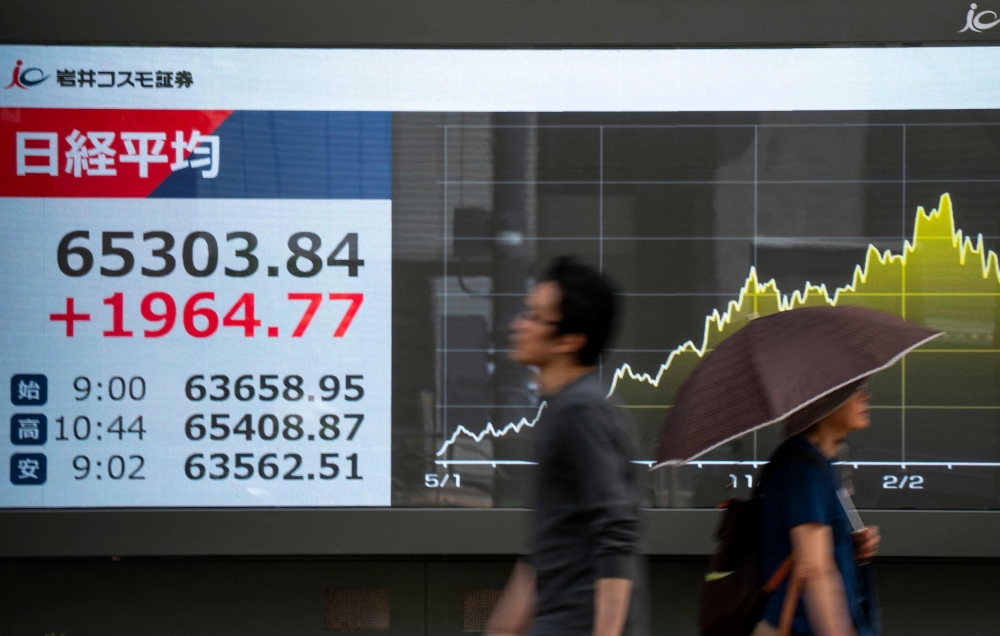
HONG KONG, May 27 — Asian equities were mixed today with gains driven by tech stocks and guarded optimism the United States and Iran will reach a peace deal.
Negotiations between Washington and Tehran to end the Middle East war have kept investors guessing with reports a deal was close undermined by fresh US strikes on Iran on Monday.
Tehran accused Washington of breaching their ceasefire, in place since April 8, and warned that it was ready to retaliate against US targets across the Gulf.
The strikes pushed up the price of Brent North Sea crude, the international benchmark, by almost 4.5 per cent yesterday, reaching back above US$100 (RM400) a barrel.
But Brent and US West Texas Intermediate futures contracts were down around 1 per cent this morning on renewed hopes a deal to reopen the blockaded Strait of Hormuz was on track.
“There remains an air of cautious optimism in markets that an MoU between the US and Iran will be signed and detailed throughout the week, although the central expectation and broad positive sentiment has been dented by the recent US defence strikes and Iran stating these measures breach the agreement,” said Chris Weston, Head of Research at Pepperstone.
Asian stocks were mixed today, with Seoul leading the climbers, jumping around five per cent, mostly driven by chipmaker stocks.
Shares of South Korean chip giant SK hynix, which furnishes Nvidia with high-bandwidth memory, climbed more than 10 per cent today to reach US$1 trillion in market capitalisation.
Its main rival, Samsung Electronics, also posted strong gains helped by its union approving a deal with management that secured huge annual bonuses and averted a major strike.
Tokyo rose around 1.3 per cent, with Taipei, Sydney, Wellington and Bangkok also up.
Hong Kong was flat, while Shanghai, Kuala Lumpur, Jakarta, Singapore and Manila were down.
It comes after Wall Street stocks mostly rose, lifting the S&P 500 and Nasdaq to fresh records, with chip company Micron piling on nearly 20 per cent to also hit a US$1 trillion market capitalisation.
“In practical terms, the market heard one thing loud and clear. AI demand is no longer just about chips powering large language models. It is now about the memory systems required to feed those models at industrial scale,” said SPI Asset Management analyst Stephen Innes.
The Middle East war, which began in late February, has disrupted the Hormuz strait, a vital oil and gas trading corridor, driving up energy prices and stoking global inflation.
“The latest rally across global equities feels less like a vote of confidence in permanent peace and more like traders front-running the possibility that Washington and Tehran eventually find a way to step back from the ledge,” Innes said. — AFP
Date: 27 May, 2026 12:00 pm
Source: Malay Mail
💬 Join the Conversation! 💬
We’ve disabled comments on our posts and pages to keep the discussions organized and lively! But don’t worry – the conversation isn’t over. Head over to our forum and share your thoughts, ideas, and feedback with the community! It’s the perfect place to connect, learn, and engage with others who care about the same things. We can’t wait to hear from you!