
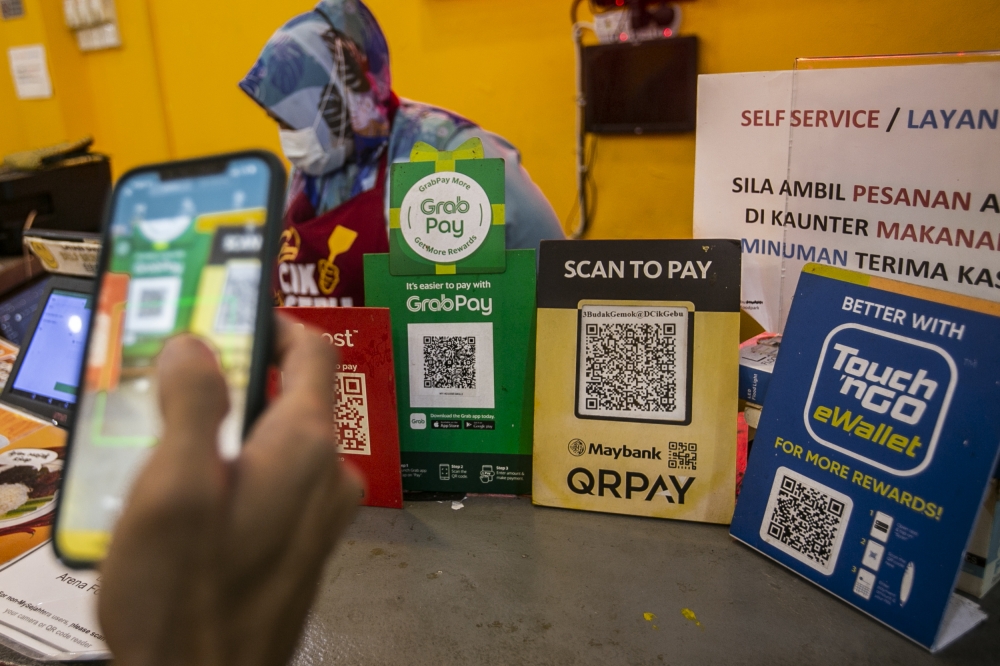
KUALA LUMPUR, April 29 — From stamp books and post office savings to instant QR payments, Malaysians’ relationship with money has shifted dramatically — and not necessarily for the better.
That is the candid view of Chief Statistician Datuk Seri Mohd Uzir Mahidin, who said the convenience of digital payments may be quietly eroding the discipline that once defined how Malaysians saved.
Speaking alongside the release of the National Transfer Accounts (NTA) 2022 by the Department of Statistics Malaysia, Uzir reflected on how earlier generations were conditioned to save from a young age — often through simple but consistent habits.
“When we were in school, there was already a concept of saving. Teachers would bring stamp books, and if we didn’t spend our money, we would paste the stamps and save. At the time, there weren’t many banks around.
“We’d then take those books to the post office, either on our own or with our parents, to deposit the accumulated value or surplus in the city.
“That was how we built the habit — collecting (buying stamps), saving, and keeping money in the post office.
“Has anyone here done that or maybe I’m just the old one here,” he said, adding with a chuckle.
The underlying principle, he said, remains unchanged — saving is essentially about discipline.
“Saving is delaying current consumption but it must come with a condition — inflation must be controlled. If inflation is too high, then delaying spending becomes less meaningful.”
Still, he stressed that having some savings — even modest — is far better than none.
“If you are financially literate and can get returns of more than 10 per cent, that’s good,” he said.
“However, not everyone can do that. You need to be savvy about where you invest. So even 5 to 6 per cent is already enough to help cover expenses. The important thing is — don’t have nothing at all.”
He added that the habit should ideally start from the moment one enters the workforce.
“When you start working, there should already be a concept of saving — even 5 per cent, 3 per cent — something consistent,” he said.
‘QR code kacau’: When convenience drives consumption
If the past was defined by restraint, the present, Uzir suggests, is shaped by ease — particularly with the widespread use of QR code payments.
“The problem now is QR codes — they are quite kacau (disruptive),” he said bluntly.
Unlike cash, which naturally limits spending, digital payments remove that friction entirely.
“Before this, when we used cash, we only brought a small amount. When it’s finished, that’s it,” he said. “Now with QR, everything is easy.”
That ease, he warned, can lead to impulsive behaviour.
“When you see someone show a QR code, you also feel like using it,” he said.
“Even when you don’t really need to buy something, you still end up paying.”
The shift, he added, has subtly changed spending psychology — from deliberate choices to almost automatic transactions.
“Before, we were more prudent because we had to think about the cash in our pocket,” he said. “Now, the barrier is gone.”
For Uzir, the challenge is not to reject technology, but to rebuild discipline within it.
“The tools have changed, but the principle is the same,” he said.
“If we don’t control our spending, our surplus will disappear.”
His message echoes a broader concern highlighted in the NTA findings — that Malaysians only have a limited window in their working lives to generate surplus income.
Date: 29 April, 2026 3:00 pm
Source: Malay Mail
💬 Join the Conversation! 💬
We’ve disabled comments on our posts and pages to keep the discussions organized and lively! But don’t worry – the conversation isn’t over. Head over to our forum and share your thoughts, ideas, and feedback with the community! It’s the perfect place to connect, learn, and engage with others who care about the same things. We can’t wait to hear from you!