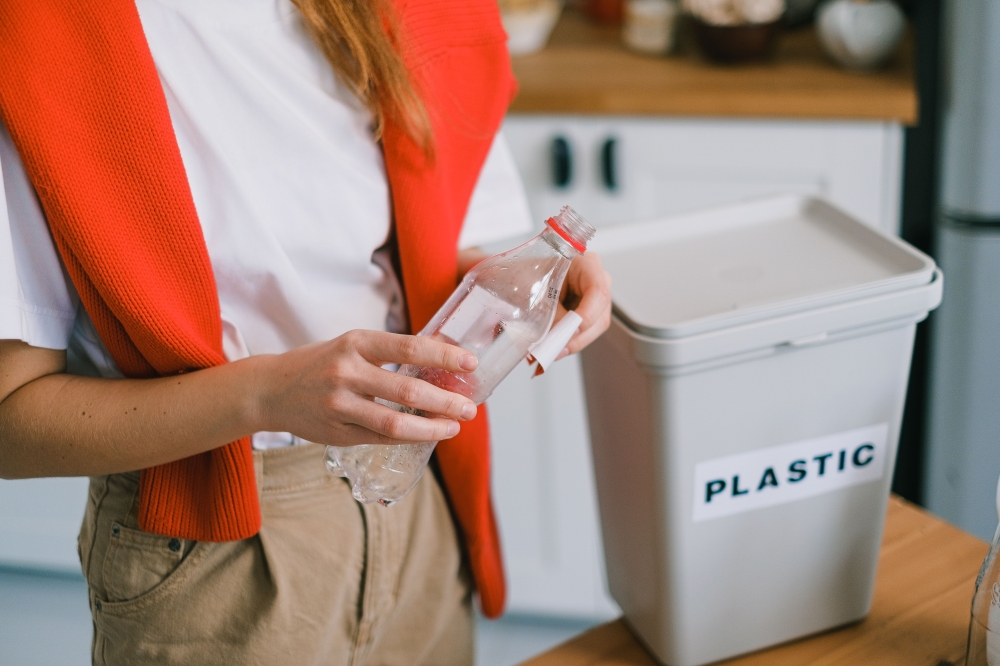
KUALA LUMPUR July 16 — The small mountains of plastic bags inside your kitchen cabinet or under your sink right now could potentially be an untapped source of extra income.
Despite decades of state campaigns to encourage recycling, waste collection data suggests attitudes about individual plastic waste management barely shifted.
But a new wave of digital recycling apps is trying to change that.
A step up from the old recycle-for-credit model, these apps let you trade everyday household plastic waste for direct bank transfers, shopping vouchers, and Touch ‘n Go eWallet credits right from their smartphones.
Their arrival is timely.
Since 2024, Malaysia has faced escalating pressure over municipal waste management — the country produces roughly 39,000 tonnes of municipal solid waste daily, with plastic making up the largest single component at over 20 per cent, according to data from the Ministry of Housing and Local Government.
Malaysia ranked highest among six major Asian countries in annual per capita plastic consumption, according to a landmark World Wide Fund for Nature (WWF).
In response, state waste authorities and private financial-technology startups have deployed digital ecosystems to formalise and incentivise household-level waste separation.
Two apps, KITARecycle and Riicycle & Recircle have similar aims but different implementations:
KITARecycle
Operated by SWM Environment Sdn Bhd — one of the country’s three main municipal waste concessionaires — this platform leverages established public infrastructure across southern states, including Johor, Melaka, and Negeri Sembilan.
How does it operate? Users print unique, account-linked QR codes via the mobile app and affix them to bags of segregated waste.
For collection, bags are deposited into designated neighborhood collection enclosures. Concessionaire staff weigh and scan the bags during routine collection rounds, automatically crediting the user’s digital account with Recycling Points (RP). RPs can then be liquidated via direct electronic fund transfers to the user’s bank account.
Riiicycle and recircle
Both are private-sector platforms that target urban high-density regions, primarily the Klang Valley and Penang.
Riiicycle deploys automated Smart Collection Machines (SCMs) in some shopping malls and commercial lobbies.
Users scan an on-screen QR code to authenticate, place clean plastics into the repository and receive real-time weight validation and points.
Another platform is Recircle, which operates on a reverse-logistics marketplace model.
It effectively functions as an on-demand collection service — users with high volumes of household or small-office waste request a doorstep pickup via the app.
Upon collection, a vetted local collector handles the weighing and digital payout on-site.
The financial blueprint for households
To generate measurable returns, households must try to optimise sorting according to the industrial resin classification system.
Contaminated or mixed-resin batches are routinely rejected by processors due to machine-clogging risks during downstream extrusion.
Here are the examples of common household plastic waste, industrial demand and the commensurate action payout profile:
PET (Code 1): Clear mineral water, carbonated soft drink bottles. High demand; crushed into flakes for synthetic fibers and PET bottles. This yields the highest value from point weightings.
HDPE (Code 2): Opaque detergent jugs, shampoo bottles, milk containers. High durability and often recycled into industrial pipes, crates, and non-food packaging. Also of high value with stable demand from manufacturing.
LDPE/PP (Codes 4 and 5): Grocery bags, flexible food wrappers, plastic straws. These are waste with a low recovery rate, prone to contamination during consumer use. Low value and accepted by fewer digital platforms.
How much do I get if I hand over 3kg of plastic waste?
Using 3kg of PET plastic waste as example, cashing out via KITARecycle would yield approximately 30 to 45 Recycling Points (RP) per kg for plastic bottles. Your 3kg stash generates around 90 to 135 RP. When transferred to your bank account, this translates to roughly RM1.50 to RM2.00.
If dropping off at digital smart kiosks (Putrajaya/Klang Valley hubs), centrally managed smart bins offering premium buy-back rates for perfectly clean, un-contaminated PET bottles pay up to RM0.60 to RM0.80 per kg, yielding up to RM2.40.
A guideline on how to maximise yield
Decontaminate. Residual liquids or organic waste lower the batch grade so a basic rinse prevents down-rating at processing centers. And then reduce volume. Crushing bottles maximises storage capacity, allowing households to accumulate larger, more profitable weight aggregates before booking a pickup or visiting a kiosk.
Component separation also helps. Bottle caps (typically HDPE) should be stored separately from clear bottle bodies (PET), as processing plants treat these lines independently.
Micro-economic relief
Official estimates indicate up to 40 per cent of standard household waste consists of high-value recyclable materials.
For an average suburban household, consistent separation can yield between RM30 and RM50 monthly in e-wallet credits or retail vouchers, based on the estimation that the average household produces up to 56.6kg worth of recyclable plastic a month (140.4kg x 0.40 = 56.6kg)
It may sound modest, but these digital payouts could function as an immediate subsidy against rising living costs, which could help offset micro-transactions like highway tolls (Touch ‘n Go) or baseline utilities.
Still, plastic use reduction is more encouraged.
While separation and recycling may provide temporary relief to plastic pollution, groups like Greenpeace said tackling an already severe plastic problem is more effective by targeting upstream — that is to cut at least 75 per cent of all plastics production, starting with single-use plastics such as bags.
Date: 16 July, 2026 7:04 am
Source: Malay Mail
💬 Join the Conversation! 💬
We’ve disabled comments on our posts and pages to keep the discussions organized and lively! But don’t worry – the conversation isn’t over. Head over to our forum and share your thoughts, ideas, and feedback with the community! It’s the perfect place to connect, learn, and engage with others who care about the same things. We can’t wait to hear from you!