
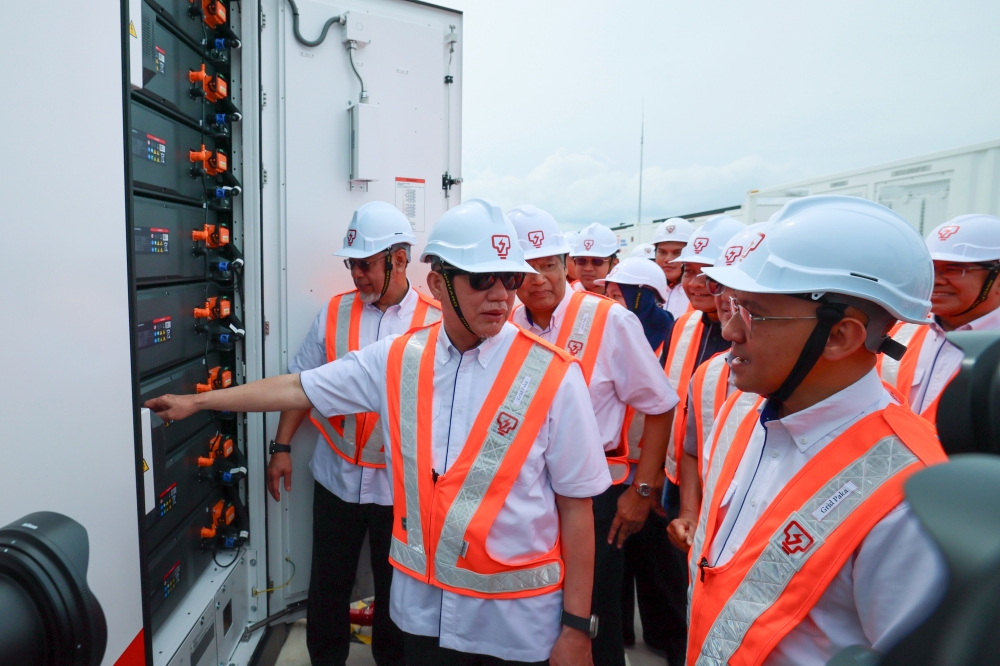
DUNGUN, May 18 — Deputy Prime Minister Datuk Seri Fadillah Yusof has called for greater emphasis on research and development (R&D) in energy storage technology following the launch of the 100MW/400MWh Santong Battery Energy Storage System (BESS) project developed by Tenaga Nasional Berhad (TNB).
Fadillah, who is also the Minister of Energy Transition and Water Transformation, said the move was crucial to reduce Malaysia’s dependence on imported batteries while building domestic capabilities in the production and development of energy-related technologies.
“I hope this first BESS launch will serve as a starting point for TNB to continue expanding its efforts, particularly in strengthening cooperation with overseas suppliers.
“Rather than merely importing batteries, we should begin focusing on research and development, while also building our own internal capabilities in battery manufacturing and other technologies closely related to the country’s energy supply,” he told a press conference in conjunction with the inauguration of the BESS project here today.

Elaborating further, Fadillah said the increasingly uncertain global landscape highlighted the need for Malaysia to reduce its reliance on foreign countries and strengthen national self-sufficiency across the entire energy sector chain.
“That is why we must focus on this matter, given the uncertain global situation. We can no longer continue depending entirely on foreign countries, and instead need to develop our own national capabilities in all aspects.
“This includes energy supply and related technologies, including battery storage systems, so that one day we will be able to produce our own batteries,” he said.
He added that Malaysia’s energy transition efforts must address three key elements of the energy trilemma, beginning with energy security to ensure a stable and sufficient supply amid global uncertainties.
“The second element is sustainability, where we must ensure that the energy supplied is environmentally friendly and does not damage the environment. We also aim to reduce dependence on energy generated through carbon combustion,” he said.
Fadillah noted that Malaysia’s commitment to achieving net-zero carbon emissions by 2050 would require the energy sector to play a central role, with about 70 per cent of the country’s energy sources expected to come from renewable or clean energy.
He said the third element is affordability, which ensures that energy supply remains not only secure and sustainable, but also affordable for consumers and competitive for the industrial sector. — Bernama
Date: 18 May, 2026 6:00 pm
Source: Malay Mail
💬 Join the Conversation! 💬
We’ve disabled comments on our posts and pages to keep the discussions organized and lively! But don’t worry – the conversation isn’t over. Head over to our forum and share your thoughts, ideas, and feedback with the community! It’s the perfect place to connect, learn, and engage with others who care about the same things. We can’t wait to hear from you!