
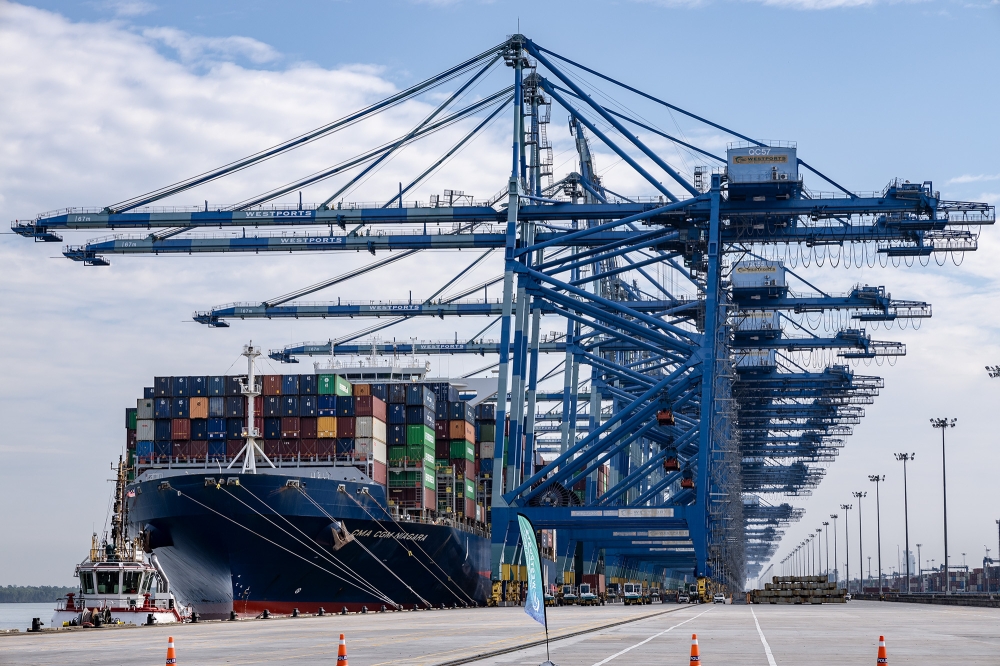
KUALA LUMPUR, July 27 — US President Donald Trump introduced fresh tariffs against Malaysia and dozens of other trading partners, just five months after the US Supreme Court quashed his earlier unilateral tariffs.
Malaysian goods entering the US will continue facing a 10 per cent tariff but under a different regulation and for an entirely different reason.
The latest levy is applied under the US’ Section 301 of the Trade Act of 1974 for Malaysia’s alleged failure to eliminate forced labour in its supply chain.
Malaysia has denied the claims and Prime Minister Datuk Seri Anwar Ibrahim said negotiations would continue until a satisfactory outcome is achieved.
Trump’s erratic tariffs are expected to hurt Malaysia’s export-oriented economy as the US is currently Malaysia’s largest export destination and its second-largest trading partner.
Here’s what we know so far:
First, a recap
After taking office for the second time last year, Trump imposed sweeping unilateral tariffs on foreign goods entering the United States to narrow the country’s trade deficit.
Malaysia was slapped with a 25 per cent levy, which was later reduced and maintained at 19 per cent via the Malaysia-US Agreement on Reciprocal Trade (ART) signed last October.
The deal exempted semiconductors, a key Malaysian export to the US, and more than 1,700 other items including palm oil, rubber, cocoa, aircraft parts and pharmaceuticals from tariffs.
In exchange, Malaysia agreed to a slew of purchases from the US — including liquefied natural gas, coal, aircraft and semiconductors — and promised not to ban or restrict rare earth exports to the US.
However, when the US Supreme Court struck down the blanket tariffs in February 2026, Trump resorted to imposing a 10 per cent levy for 150 days under Section 122 of the Trade Act of 1974.
The latest tariffs, imposed under Section 301 of the same legislation, aim to prolong the temporary arrangement using concerns of forced labour.
So, is 10 per cent the final rate?
No.
Malaysia qualified for the 10 per cent rate because it has committed to impose and enforce an import prohibition on goods made with forced labour under the ART.
Under the deal, the US agreed to give two years for Malaysia to enforce the ban — but the ART itself was only signed last October and has not been ratified yet.
However, Investment, Trade and Industry Minister Datuk Seri Johari Abdul Ghani reportedly said the US is also investigating Malaysia separately over excess industrial capacity concerns and that the probe could result in additional tariffs.
What’s exempted so far?
Some of the goods exempted from the 10 per cent tariff include oil and gas, fertilisers, aircraft and parts, critical minerals as well as certain food items.
Exports that are already subject to national security tariffs under Section 232, such as autos, steel, aluminium and copper, will not face an additional levy under the new regulation.
However, Johari told TV3 on Friday that Malaysia’s palm oil exports to the US — hovering around RM2 billion annually — might also be subject to the 10 per cent tariff but insisted that Malaysia could manage the impact.
Date: 27 July, 2026 9:00 am
Source: Malay Mail
💬 Join the Conversation! 💬
We’ve disabled comments on our posts and pages to keep the discussions organized and lively! But don’t worry – the conversation isn’t over. Head over to our forum and share your thoughts, ideas, and feedback with the community! It’s the perfect place to connect, learn, and engage with others who care about the same things. We can’t wait to hear from you!