
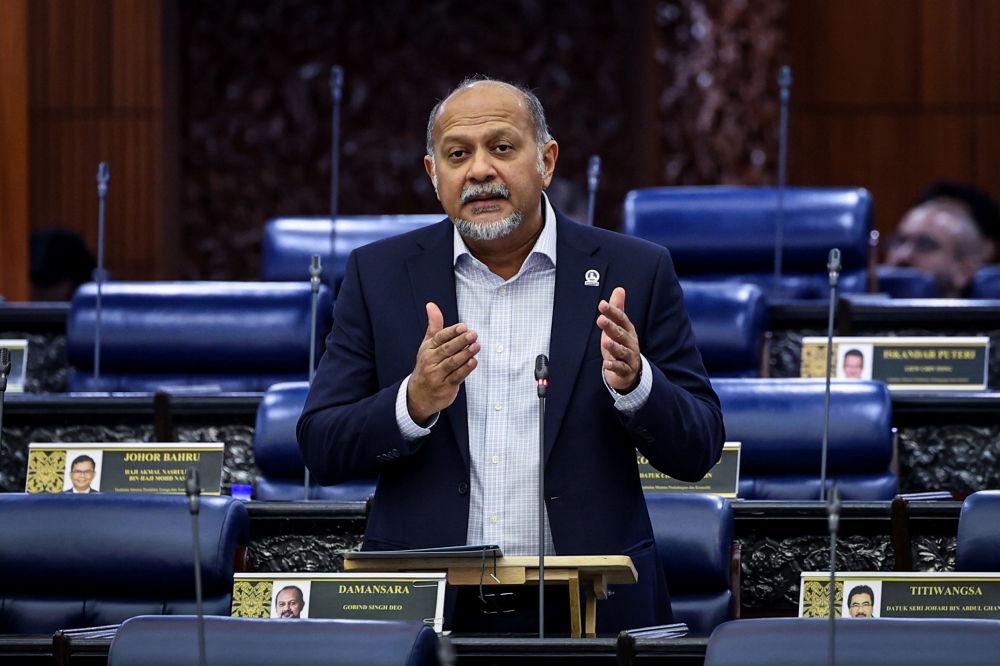
KUALA LUMPUR, June 22 — Digital Minister Gobind Singh Deo said the government is moving to strengthen existing legislation to address artificial intelligence (AI)-enabled offences, including deepfakes, identity impersonation and AI-generated child sexual exploitation material.
He said Malaysia already has legal safeguards in place for certain crimes, particularly those involving children, but stressed that the legal framework must evolve to keep pace with emerging AI-related risks.
“In our country, we already have systems or protection mechanisms that look at specific sectors. For example, if we look at children, we already have existing criminal laws.
“What needs to be strengthened is how we deal with situations where there is exploitation of children, for instance cases involving sexual offences against children that may arise as a result of AI,” he told the Dewan Rakyat today.
He was responding to a supplementary question from Kluang MP Wong Shu Qi, who asked whether existing laws were sufficient to deal with AI-related offences and what role the proposed AI governance framework would play.
The minister said the government is adopting a two-pronged approach, which involves embedding safeguards during AI development and strengthening enforcement when violations occur.
“Firstly, AI must be developed within a safety framework from the outset to prevent harmful outputs, including exploitation or sexually abusive content.
“Secondly, we acknowledge that there will still be instances where AI outputs breach the law, and in such cases, existing laws must be strengthened and expanded to deal with new technologies such as AI,” he said.
Gobind said this approach would ensure Malaysia can regulate emerging technologies while still allowing offences involving AI to be investigated and prosecuted under the current legal system.
He also said existing laws must continue to be strengthened to remain relevant as technology evolves.
He then said he welcomed contributions from a broad range of stakeholders, including academics and religious experts, to weigh in on the matter.
“I have received very useful input from academics, including professors, which we are incorporating into the legal review process. We have also taken into account views from religious practitioners and others. I think that is important,” he said.
Date: 22 June, 2026 4:00 pm
Source: Malay Mail
💬 Join the Conversation! 💬
We’ve disabled comments on our posts and pages to keep the discussions organized and lively! But don’t worry – the conversation isn’t over. Head over to our forum and share your thoughts, ideas, and feedback with the community! It’s the perfect place to connect, learn, and engage with others who care about the same things. We can’t wait to hear from you!