
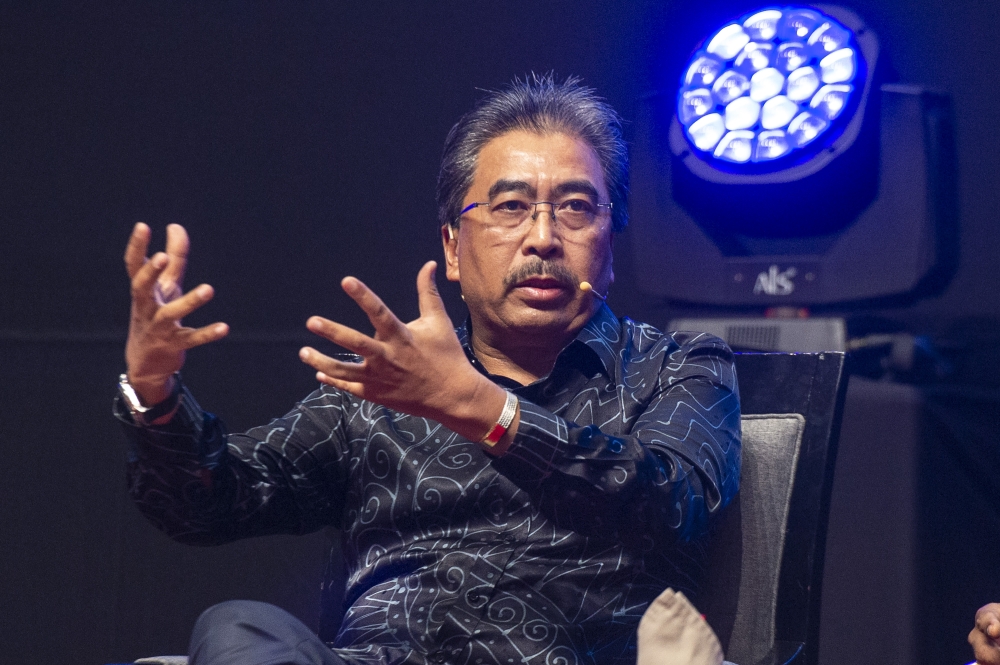
KUALA LUMPUR, Aug 4 — The government is considering imposing a levy on every electric vehicle (EV) sold to establish a fund for expanding Malaysia’s public EV charging network, Investment, Trade and Industry Minister Datuk Seri Johari Abdul Ghani said.
Speaking during question time in the Dewan Negara today, Johari said the proposal was being studied as the government faced constraints in financing a nationwide public charging infrastructure on the scale seen in China.
He was responding to a supplementary question from Senator Datuk Leong Ngah Ngah on the government’s preparedness for the growing adoption of EVs.
“We may impose a levy on every EV sold and channel the proceeds into a dedicated fund to build public charging stations because we cannot rely solely on vehicle manufacturers or distributors to undertake such investments,” he said.
Johari said the government had previously granted exemptions on import duty, excise duty and sales tax for completely built-up (CBU) EVs for four years to spur market growth and attract investment.
However, he said the incentives resulted in forgone tax revenue of RM3.3 billion over the period, while investment in public charging infrastructure fell short of expectations.
“After four years, when we looked for public charging stations, the investment from EV industry players was simply not there,” he said.
As a result, the government did not extend the incentives for imported EVs, but retained tax exemptions for completely knocked down (CKD) EVs until December 31, 2027, to continue supporting the development of the domestic EV industry.
Responding to another supplementary question from Senator Tan Sri Low Kian Chuan on measures to ensure EV investments strengthen local vendor participation, increase the use of locally produced components and facilitate technology transfer, Johari said incentives would only be granted to companies that genuinely develop Malaysia’s automotive ecosystem.
He said companies seeking government incentives must integrate local suppliers into their supply chains and support the growth of domestic vendors and component manufacturers.
“If companies bring in all their components from overseas, assemble and sell vehicles here, and expect incentives, we cannot allow that because it would undermine the automotive ecosystem we have built over the past 30 to 40 years,” he said.
Johari said Proton and Perodua had developed a network of about 733 Tier 1, Tier 2 and Tier 3 vendors, which account for between 72 and 82 per cent of the country’s automotive component manufacturing activities.
He said Malaysia would continue to welcome EV investments, provided they generated greater economic value through local vendor development, technology transfer and the creation of high-skilled jobs.
On EV adoption, Johari said the lack of public charging infrastructure remained the biggest challenge, particularly for residents of apartments and People’s Housing Programme (PPR) projects who were unable to install chargers at their homes.
Although EVs represent the future of mobility, he said, a comprehensive public charging network is essential to support wider adoption across the country. — Bernama
Date: 4 August, 2026 1:00 pm
Source: Malay Mail
💬 Join the Conversation! 💬
We’ve disabled comments on our posts and pages to keep the discussions organized and lively! But don’t worry – the conversation isn’t over. Head over to our forum and share your thoughts, ideas, and feedback with the community! It’s the perfect place to connect, learn, and engage with others who care about the same things. We can’t wait to hear from you!