
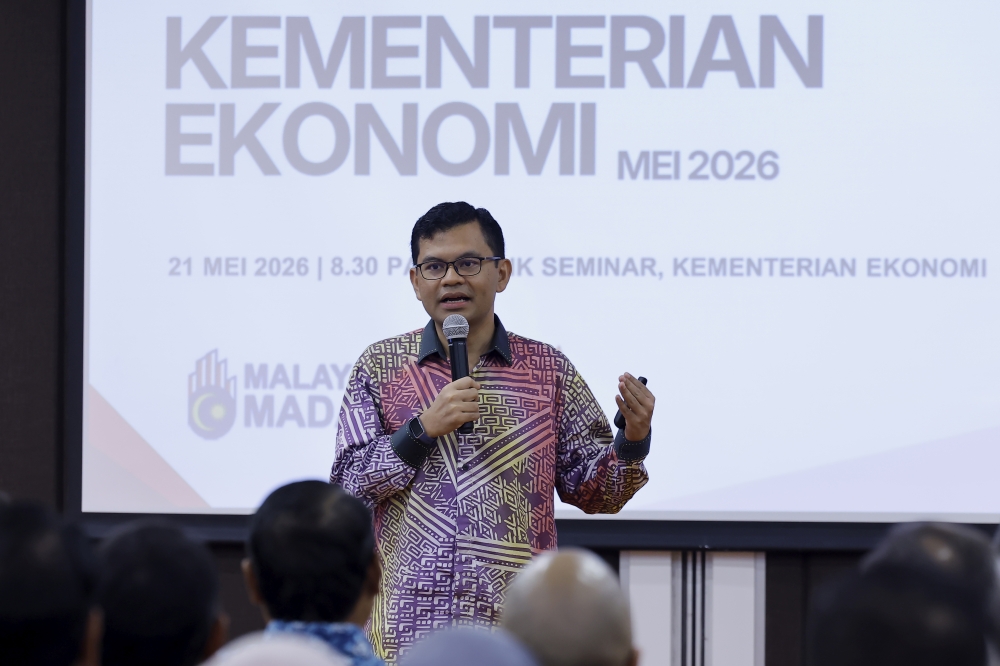
PUTRAJAYA, May 21 — The Ministry of Economy is studying a fairer and more comprehensive approach in determining eligibility for public aid and subsidies by taking into account net disposable income and the actual commitments of households, instead of relying solely on the existing B40, M40 and T20 classifications.
Its Minister Akmal Nasrullah Mohd Nasir said the concept is being developed based on the Basic Expenditure of Decent Living (PAKW), which enables a more accurate assessment of the actual condition of a household.
He said the discussions also take into account the reality of the current global crisis, which could further increase the cost-of-living burden on the people if prolonged.
According to him, the approach considers the basic costs of a reasonable standard of living for a household, including residential location, number of dependants and financial commitments that need to be borne.
“We are bringing forward discussions on how to assess people’s living capacity not solely based on income. The income earned must take into account the basic expenditures needed for an individual or household to sustain a reasonable standard of living,” he said.
He told reporters this after the Ministry of Economy’s monthly assembly here today.
Asked whether the approach would replace existing income classifications such as B40, M40 and T20, Akmal Nasrullah said no decision has been made so far as the matter is still at the discussion stage and requires collective agreement at the government level, including from the Cabinet and the National Economic Action Council (MTEN).
He said the approach being discussed no longer focuses on income group classifications, but instead emphasises the actual situation of households based on their respective dependents and commitments.
“This calculation does not look at those classifications because one family may have a different PAKW assessment even though they earn the same salary.
“That is why comparisons based solely on income are sometimes not an apples-to-apples comparison.
He said the calculation does not rely on fixed classifications such as T20 or B40 because two families with the same income may face vastly different levels of financial burden.
He added that the approach is seen as more accurate in reflecting the actual capability of households, especially for families in urban areas facing higher living costs and commitments despite belonging to higher income groups.
The data and input used in the simulation were obtained through the Central Database Hub (PADU), but he stressed that it remains at the discussion stage and has not yet been brought for formal consideration amid the current economic situation.
“If there are more urgent decisions that need to be made, our view is that they should not be seen solely from the income aspect, but should also take into account the expenditures and commitments that a family has to bear,” he said. — Bernama
Date: 21 May, 2026 1:00 pm
Source: Malay Mail
💬 Join the Conversation! 💬
We’ve disabled comments on our posts and pages to keep the discussions organized and lively! But don’t worry – the conversation isn’t over. Head over to our forum and share your thoughts, ideas, and feedback with the community! It’s the perfect place to connect, learn, and engage with others who care about the same things. We can’t wait to hear from you!