
PUTRAJAYA, June 9 — Chief Justice Tun Wan Ahmad Farid Wan Salleh once said that justice must reach those who had long stood furthest from its protection, a simple yet enduring belief that the Malaysian judiciary continues to reaffirm today.
The remark, made during his speech at the Opening of the Legal Year 2026, referred to the Mobile Courts initiative launched in circa 2018.
“It was born out of necessity, to serve communities in remote and interior areas where travelling to a courthouse was often an insurmountable challenge, and in places where no permanent court buildings existed,” Wan Ahmad Farid was quoted as saying.
Nearly eight years later, the Mobile Courts initiative has since expanded into the Children’s Mobile Court, reflecting a shared commitment between the Judiciary and the federal government to a fairer, more child-sensitive justice system.
“When it comes to court, everyone feels scared and intimidated, especially children, whether as victims or witnesses.
“Before this, you including the children had to go to court in person but now the court comes to you.
“We don’t want people coming to court and not being able to give their evidence properly because they are intimidated by the building and the proceedings,” Registrar of the Subordinate Courts of Malaya Mohammed Mokhzani Mokhtar told Malay Mail during a recent interview at the Palace of Justice here.
At the heart of the initiative are three components:
- The Vehicle for Meaningful Redress (VMR), which safely transports child victims and witnesses
- The Victims’ Nexus to Justice (VNEJ), where children can testify remotely in a comfortable environment
- The Vehicle for Nationwide Justice (VNJ), a courtroom on wheels equipped to hear cases outside conventional court settings.
“Though the feedback is not quantifiable, the information we gathered from our judges and prosecutors indicates it has been favourable.
“The reason is that child victims who attend court and hesitate while giving evidence are now able to complete their testimony without much difficulty.
“I cannot say the quality of their testimony is now better (as compared to in court), but the Children’s Mobile Court has facilitated and eased their anxiety during court proceedings,” Mohammed Mokhzani said.
In essence, the Children’s Mobile Court aims to create a conducive environment — physically, economically and emotionally — for children at every step, from their homes through their journey and into the courtroom.
“Because every time a victim goes to court, it can be a traumatic experience even if they are placed in a separate room from the accused (who may try to make their presence known).
“They go through it once and are then often required to relive it again when giving testimony, so our aim is to reduce that burden and make the process as supportive and least distressing as possible,” he said.
He noted that some families of child victims or witnesses also come from less privileged backgrounds, making trips to court a costly undertaking and the Children’s Mobile Court helps alleviate these costs by bringing court services closer to the children and their families.
Specially designed
Mohammed Mokhzani said the Judiciary’s Mobile Court primary setup is built around the VNEJ and the VNJ, and is later complemented by the VMR.
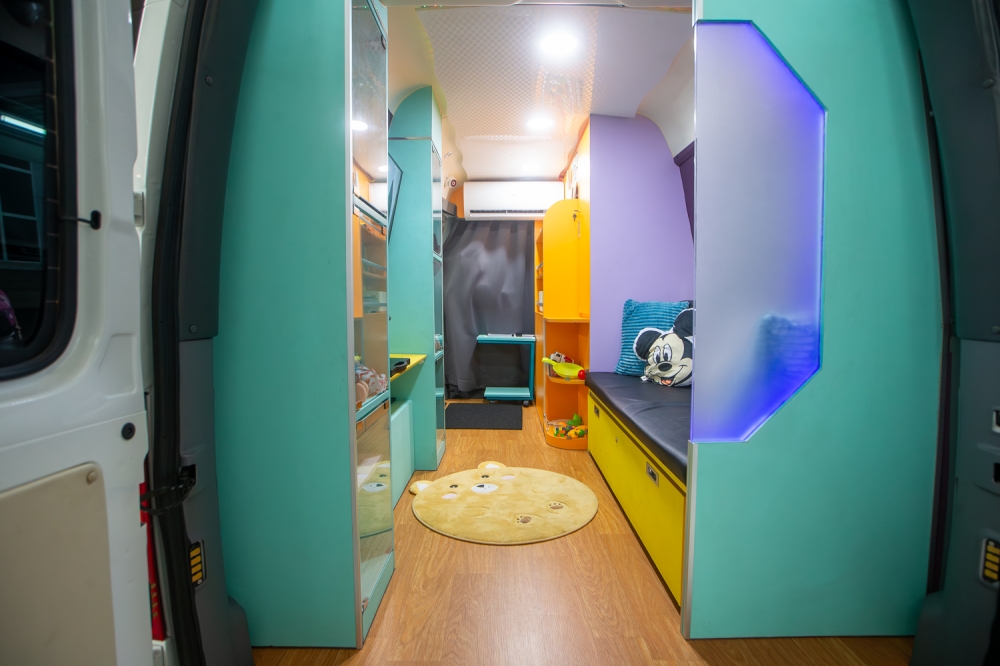
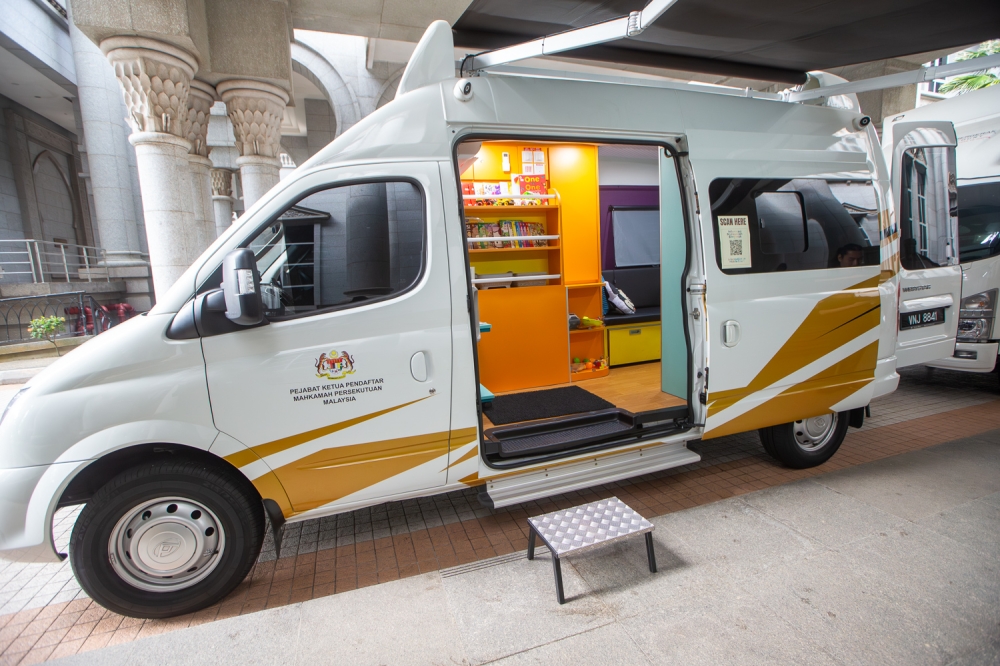
The VNEJ — a modified Weststar Maxus V80 multipurpose van — is equipped with daybeds, pillows, books, toys, air-conditioning and anatomical dolls to help children feel more comfortable while giving evidence, particularly in cases under the Sexual Offences Against Children Act.
It also doubles as a child witness room where children can testify via video conferencing during ongoing hearings, or as a temporary child witness room where specially appointed Victim Liaison Officers (VLOs) assist in recording evidence.
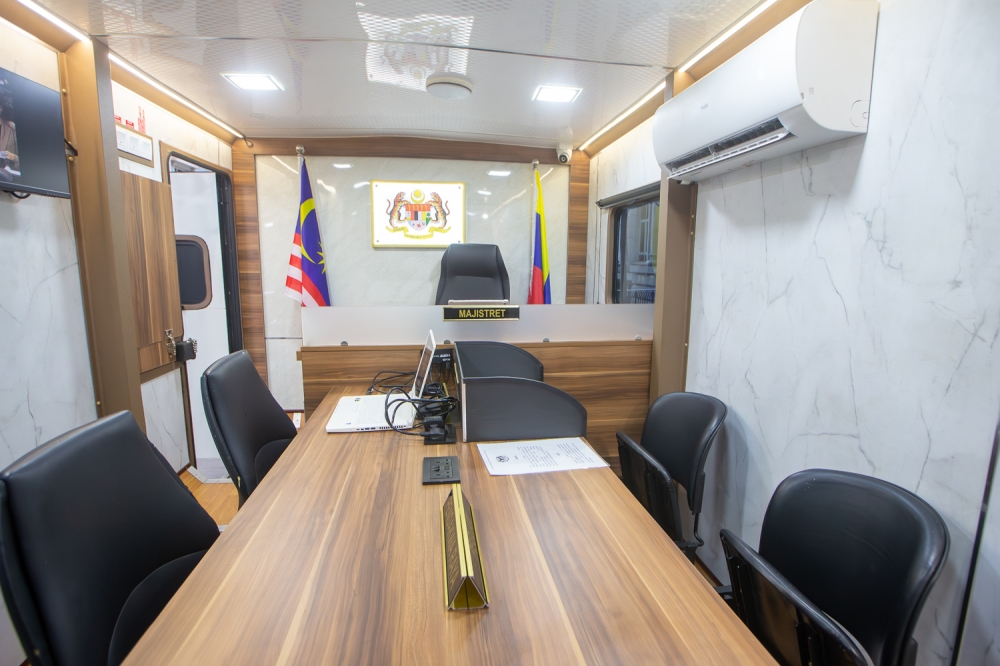
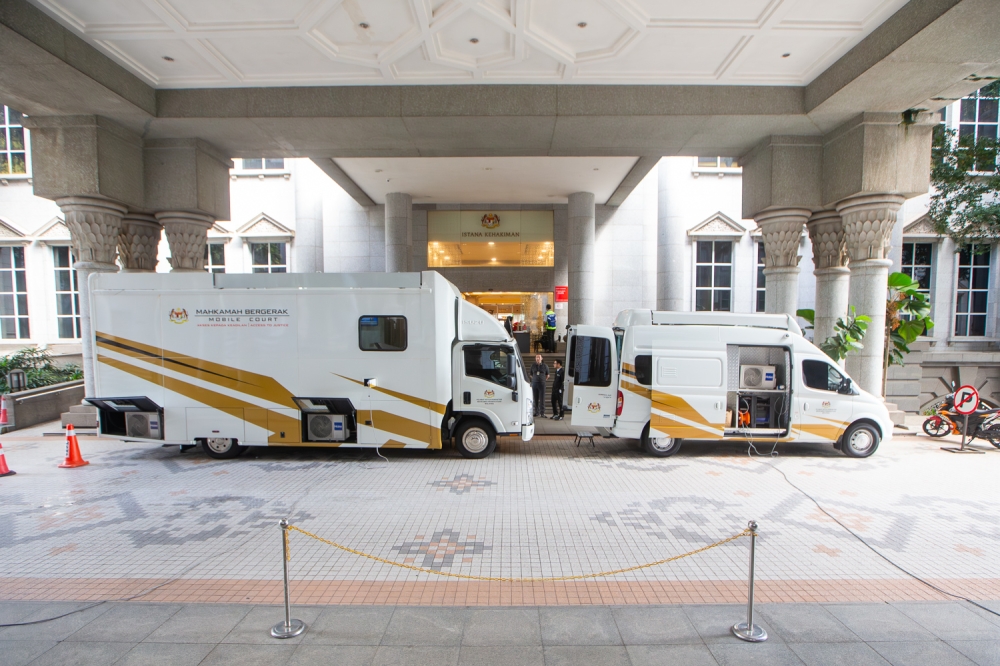
Unlike the VNEJ, the VNJ — a modified Isuzu medium-duty truck — is essentially a courtroom on wheels, complete with nearly all the facilities found in a conventional courtroom.
This includes areas for the judge, prosecutors, lawyers, court staff, auxiliary police, the witness and the accused, except for a public gallery due to space constraints.
As the VNJ is a fully functioning courtroom, it may hear cases before a Magistrate, Sessions Court judge or High Court judge, provided all parties consent to its use.
Last but not least, the specially designated VMR — a modified Weststar Maxus G10 multipurpose van — is used to safely transport child victims and witnesses involved in criminal trials to court.
Not without challenges
While the Mobile Court initiative has had a positive impact since its launch, Mohammed Mokhzani noted that challenges remain, including the need for a stable power supply and reliable internet connectivity to ensure optimal function.
“While both the VMR and VNJ are equipped with their own generators, we prefer an external power source because it will be quieter and cause less disruption,” he said.
Security can also be a concern on certain occasions, as the VMR or VNJ are sometimes parked in public or less secure areas rather than within police stations or court complexes.
Nevertheless, Mohammed Mokhzani expressed the Judiciary’s appreciation to the federal government and the Minister in the Prime Minister’s Department (Law and Institutional Reform) Datuk Seri Azalina Othman Said for allocating RM5 million to procure 15 additional VNEJ units for nationwide deployment.
“The allocation will allow each state to have at least one van, except for Kedah and Perlis, which will share one, while Sabah and Sarawak will each receive two,” he said, adding that the procurement is expected to be completed by year’s end.
He also assured that if children must go through court proceedings, families can be assured that their welfare and protection will be better safeguarded than before.
“With our VLOs and this mobile court, we try to reduce the intimidation level to a minimum.
“It might work or not work, but at the very least we try to do something to alleviate the fear of going to court,” he said.

Date: 9 June, 2026 8:00 am
Source: Malay Mail
💬 Join the Conversation! 💬
We’ve disabled comments on our posts and pages to keep the discussions organized and lively! But don’t worry – the conversation isn’t over. Head over to our forum and share your thoughts, ideas, and feedback with the community! It’s the perfect place to connect, learn, and engage with others who care about the same things. We can’t wait to hear from you!