
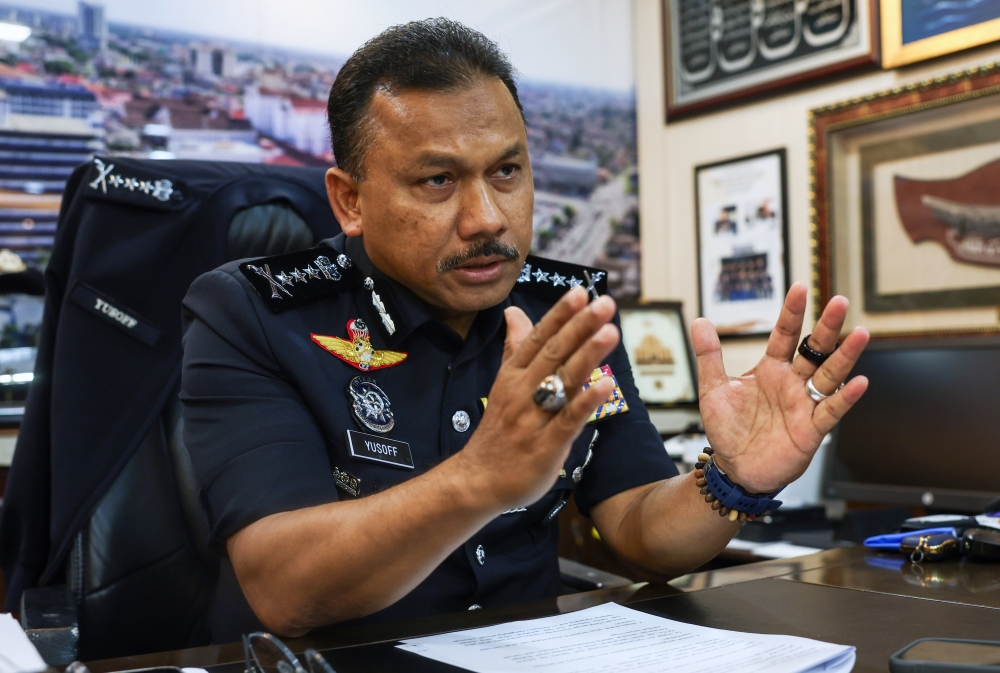
KUALA LUMPUR, June 15 — Kelantan police are closely monitoring more than 13,000 Rohingya residing across several districts in the state, including 5,373 individuals holding United Nations High Commissioner for Refugees (UNHCR) cards.
According to the New Straits Times, authorities say about 8,000 others in the group are without UNHCR documentation.
Kelantan police chief Datuk Mohd Yusoff Mamat said the monitoring was necessary to ensure the community did not pose security or public order risks.
He said surveillance efforts were being carried out continuously by the Special Branch, which tracks movements and activities within the community.
“Many Rohingya choose to stay in Malaysia because they have relatives here and can find work opportunities,” he said at a press conference on Monday.
“However, we will continue to monitor their activities closely, including those with UNHCR cards and those without documentation.”
Yusoff said Rohingya communities in Kelantan were mainly concentrated in Kota Bharu, Padang Siam in Tanah Merah, Ketereh, Bunut Susu and Pasir Puteh.
He said police were also monitoring informal settlements, community schools, religious learning centres, and areas commonly referred to as “Mini Dhaka”.
He added that attempts by Rohingya migrants to enter Malaysia illegally via Kelantan remained high, with many intercepted at the border before reaching villages.
“Some work as labourers in the construction sector or plantations,” he said.
“We also receive reports of disputes involving members of the community, but these are generally internal issues.”
Yusoff said some long-term residents were allegedly involved in cross-border smuggling activities, including acting as transporters for illegal migrants and joining criminal syndicates.
From January to May this year, Kelantan police recorded 412 cases involving Rohingya individuals, resulting in 825 arrests.
He said 277 cases involving 723 arrests were recorded last year, while a cumulative total of 689 cases involving 1,548 arrests had been recorded as of May this year.
Immigration offences made up the bulk of cases, followed by smuggling-related offences and property crimes, with a small number of violent incidents also recorded.
Yusoff said investigations showed the community was generally not involved in drug-related offences.
He added that detainees arrested for immigration offences were usually transferred to immigration depots or prisons after processing, rather than being held in police lock-ups.
“We will continue to monitor developments involving the Rohingya community to ensure public safety and security are maintained,” he said.
Date: 15 June, 2026 1:00 pm
Source: Malay Mail
💬 Join the Conversation! 💬
We’ve disabled comments on our posts and pages to keep the discussions organized and lively! But don’t worry – the conversation isn’t over. Head over to our forum and share your thoughts, ideas, and feedback with the community! It’s the perfect place to connect, learn, and engage with others who care about the same things. We can’t wait to hear from you!