
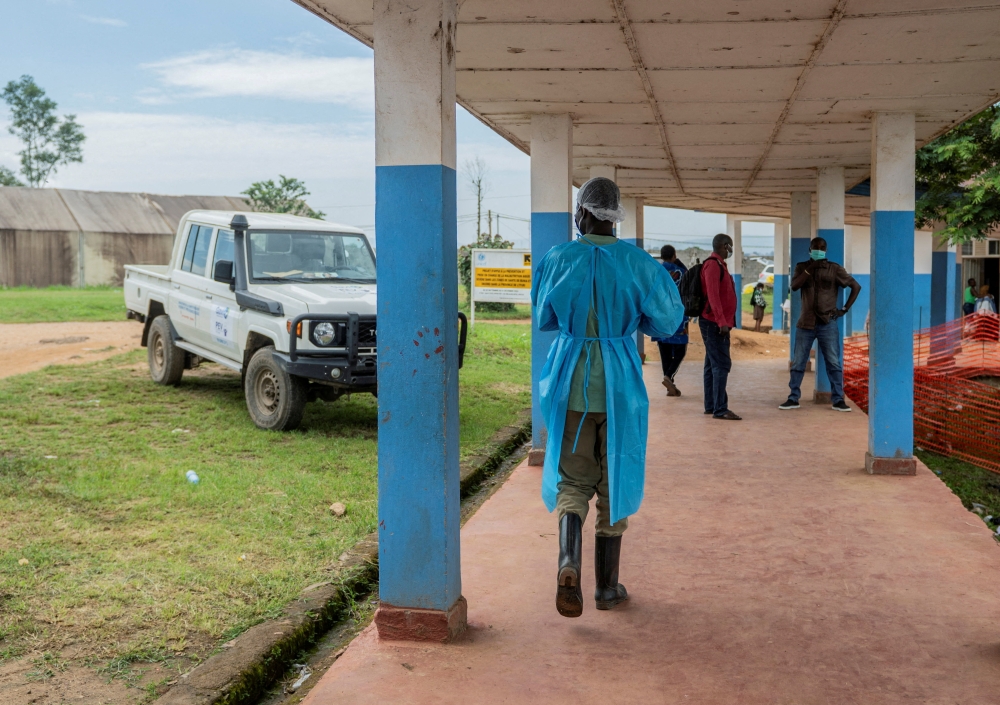
KUALA LUMPUR, May 25 — The latest Ebola outbreaks in the Democratic Republic of Congo (DRC) and Uganda are now the third largest in history, with nearly 750 suspected cases and almost 90 confirmed cases reported within weeks of being declared.
The largest Ebola epidemic happened between 2014 and 2016 in West Africa, with 28,600 recorded cases, while the second biggest outbreak also took place in the DRC, where over 3,470 cases were recorded between 2018 and 2020.
News reports citing public health experts said the latest flare-up is spreading rapidly in one of the most volatile and vulnerable regions of the world.
Cuts to international health aid over the past year are adding to the burden of efforts to contain the outbreak, they said.
On May 17, the World Health Organisation declared the outbreak a Public Health Emergency of International Concern (PHEIC).
What does that mean for the world and Malaysia?
For Malaysia, there are no reported cases inside the country and the immediate health risk to the general public remains low.
The country has never recorded an Ebola case, even from previous outbreaks.
Still, the PHEIC status legally binds member states under the International Health Regulations to ramp up defences.
Despite having no direct flights from the DRC or Uganda to Malaysia, transit travel may still pose some risks, but the Ministry of Health (MOH) has taken the proactive measure of activating security and medical protocols to prevent the virus from entering the country.
This includes border screening at points of entry, and monitoring and screening passengers arriving from or transiting through major international hubs like Dubai, Doha, and Singapore who have a recent travel history to the affected African nations.
What is causing the latest outbreak?
The epicentre of the current outbreak is in northeastern Congo province of Ituri, which the international press reported as a war-torn area that borders Uganda and South Sudan.
The WHO has pinned the cause of the latest surge in cases on the rare Bundibugyo strain, which reportedly had not been seen for over a decade.
The strain was named after a district in Uganda where it was first detected.
It had only caused two previous outbreaks, in 2007 and 2012.
A study suggested the Bundibugyo strain has a lower fatality rate than the more common Zaire (66.6 per cent) and Sudan (48.5 per cent) strains, but it still killed at least one in three of those infected.
There is currently no vaccine for the Bundibugyo Ebola, which health workers said makes the virus riskier.
In the 2014 epidemic, the virus killed more than 11,000 people.
There had been 177 confirmed deaths from the current outbreak to date.
What are the symptoms?
The Ebola virus causes a severe, often fatal viral haemorrhagic fever.
Like other strains of Ebola, the illness progresses in distinct stages, typically moving from initial “dry” symptoms to severe, gastrointestinal “wet” symptoms.
Ebola is not a highly contagious disease in the way the flu or Covid-19 is — it is not airborne.
The virus will not be transmitted if a person breathes the same air as an infected person or walks past them in a mall.
Instead, Ebola is an infectious disease that spreads through direct, physical contact with infected bodily fluids such as blood or vomit.
WHO said the incubation period, that is the time from exposure to when symptoms actually show up, ranges from two to 21 days, averaging eight to 10 days.
A person is not considered contagious until they start showing symptoms.
The symptoms in the first phase are sudden high fever and chills, intense fatigue and profound weakness, severe muscle aches and joint pain, sharp headache, sore throat and loss of appetite.
At the advanced stage, symptoms usually include frequent vomiting and severe nausea, as well as profuse, watery diarrhoea, which can cause rapid and dangerous dehydration.
Others are severe abdominal pain, unexplained bleeding that can manifest as oozing from injection or IV sites, bleeding gums or nosebleeds, blood in vomit or stool, and bruising or purple spots under the skin.
Date: 24 May, 2026 4:00 pm
Source: Malay Mail
💬 Join the Conversation! 💬
We’ve disabled comments on our posts and pages to keep the discussions organized and lively! But don’t worry – the conversation isn’t over. Head over to our forum and share your thoughts, ideas, and feedback with the community! It’s the perfect place to connect, learn, and engage with others who care about the same things. We can’t wait to hear from you!