
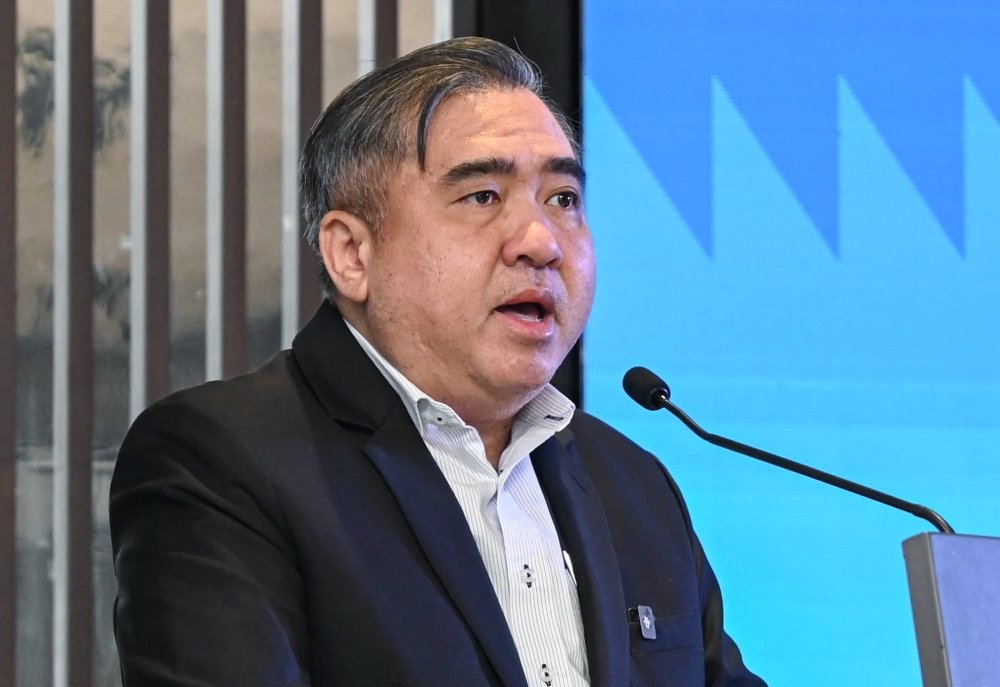
KUALA LUMPUR, June 23 — Malaysia must build a future-ready maritime economy, anchored by resilient ports, a diversified energy architecture, innovative digital infrastructure, secure shipping corridors, and robust regional cooperation.
Transport Minister Anthony Loke Siew Fook said this is important given the growing strategic significance of the Strait of Malacca amid evolving global development.
“With approximately one-quarter of globally traded goods and a massive share of Asia’s energy imports transiting through this corridor annually, Malaysia is strategically positioned in the centre of gravity.
“As global shipping routes recalibrate around geopolitical uncertainties, we have a significant opportunity to reinforce our standing as a premier maritime, logistics, and transhipment hub,” he said in his keynote address at the Global Maritime Economics Conference 2026, organised by the Maritime Institute of Malaysia here today.
The conference, themed ‘Advancing Resilience and Accelerating Sustainable Maritime Growth’, explores the trends influencing global maritime economic growth amid ongoing geopolitical uncertainty.
In his speech, Loke emphasised that by accelerating port modernisation, deploying advanced automation, expanding multimodal logistics networks, and elevating maritime security, Malaysia can capture new trade opportunities while actively stabilising regional supply chains.
“This is particularly as Malaysia’s major ports already handle hundreds of millions of tonnes of cargoes annually, serving as critical links connecting Asia, the Middle East, Europe, and Africa,” he added.
Loke also cautioned that modern economies are highly dependent on uninterrupted maritime freedoms.
“Historical milestones have shown that when maritime chokepoints are threatened, far-reaching economic shocks would follow. Shipping rates surged, insurance premiums spiked, supply chains fractured and energy markets spiralled into volatility,” he said.
Citing reports from the World Bank and the United Nations Trade and Development, Loke said that due to recent disruptions in the Red Sea and the Strait of Hormuz, the average maritime shipping routes have increased to 5,200 miles today from approximately 4,800 miles in 2018.
“When more than 80 per cent of global commerce relies on maritime transport, safeguarding freedom of commerce is not just an idealised goal but an absolute economic imperative,” he said.
As such, Loke emphasised that investment in maritime cybersecurity, digital transformation, sustainable infrastructure, and regional cooperation would ensure that international trade continues to function as a powerful engine for growth and prosperity. — Bernama
Date: 23 June, 2026 1:00 pm
Source: Malay Mail
💬 Join the Conversation! 💬
We’ve disabled comments on our posts and pages to keep the discussions organized and lively! But don’t worry – the conversation isn’t over. Head over to our forum and share your thoughts, ideas, and feedback with the community! It’s the perfect place to connect, learn, and engage with others who care about the same things. We can’t wait to hear from you!