
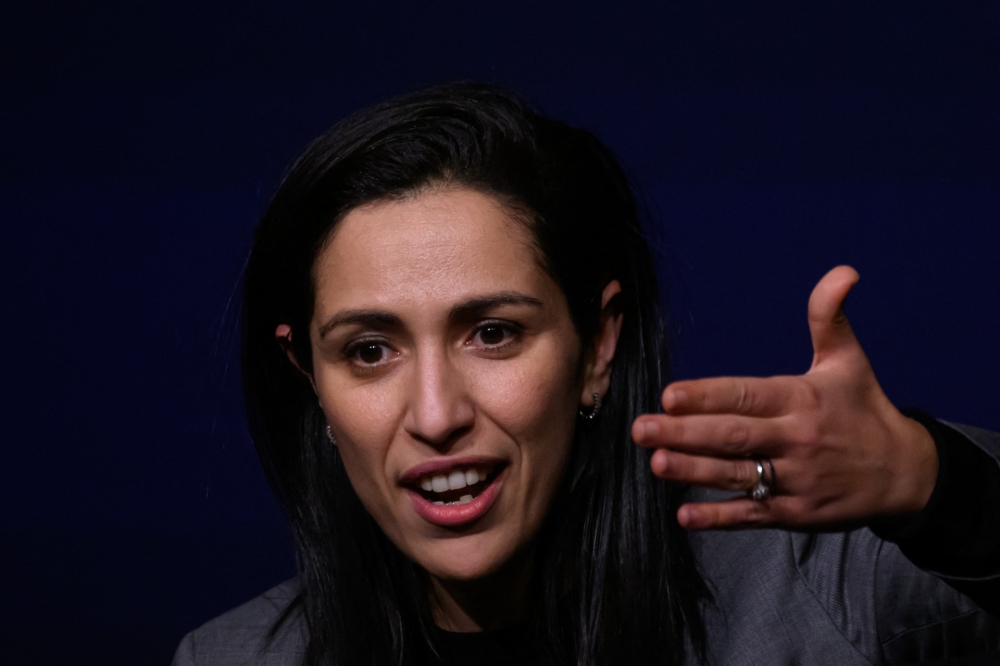
SAMARKAND (Uzbekistan), Oct 24 — Protecting children from online risks requires a global coalition, including new cooperation between Malaysia and France, as digital safety remains a shared challenge transcending national borders, said French High Commissioner for Children Sarah El Haïry.
She said children’s online safety is not an issue confined to individual nations, stressing the need for governments to jointly safeguard children’s rights in the digital space.
“I think the children safety is a global issue. So for Malaysia, for France, for Uzbekistan, for Morocco, for Mexican child, it’s a global progress.”
El Haïry said Malaysia and France need to build a new coalition.
“We need this coalition to say, ‘No, our child is not a product. It’s not a product for social media’,” she told Bernama on the sidelines of the World Summit on Investing in Children’s Wellbeing, here recently.
El Haïry said protecting children from online harm should not be viewed solely as a national responsibility. Stronger international cooperation is necessary to ensure children’s rights were respected and protected.
Commenting on Malaysia’s move to introduce social media restrictions for children under 16, she said age limits and verification mechanisms should be regarded as protective measures rather than restrictions intended to punish young users.
She said such measures must be accompanied by preventive initiatives, digital education, and parental support to ensure children and families understood their importance.
“When we put this new protection, this age, it’s not to punish. It’s not this. It’s really a new right, because in a lot of social media and another game space, we don’t have protection,” she said.
El Haïry said although social media offers numerous opportunities, it also exposes children to various dangers, including algorithms that could adversely affect their mental health.
She stressed that parents and teachers must play an active role in guiding children through the digital environment, while governments should provide adequate support to families.
On France’s advocacy of a child-safe-by-design approach, El Haïry said digital platforms should incorporate child protection measures from the initial stages of development rather than introducing safeguards only after products have been launched.
“The framework for the safe child by design is a new standard, is a new doctrine to build for the child, for more protection,” she said.
She explained that embedding safety features directly into digital platforms would reduce the need for corrective measures while allowing children to benefit from technological advancements, including artificial intelligence (AI).
“I think it’s a good framework because we need opportunity with this numeric and AI revolution. We need it, but if you don’t protect the child, it’s not a progress, it’s a risk,” she said.
On determining the appropriate minimum age for social media access, El Haïry said the decision should take into account national discussions and cultural considerations.
She noted that France and other European countries were considering age thresholds of around 15 to 16 years as part of efforts to strengthen protection for young internet users.
In Malaysia, the minimum age requirement of 16 for social media account ownership came into effect on June 1, 2026, under the Child Protection Code (CPC), introduced pursuant to the Online Safety Act 2025, which took effect on January 1.
Under the regulations, social media platforms are required to implement age verification mechanisms using official documents, including MyKad and passports, to prevent children under 16 from registering or maintaining accounts.
Communications Minister Datuk Seri Fahmi Fadzil previously said Malaysia had adopted a regulatory approach rather than an outright ban on social media use, placing greater responsibility on digital platforms to protect children from online harm.
Meanwhile, France has been pursuing legislation to prohibit children under 15 from accessing social media, although its initial attempt suffered a setback when the Constitutional Council struck down the relevant provisions on August 14, 2026, citing concerns over freedom of expression and privacy.
On September 14, French President Emmanuel Macron announced that the government had submitted a revised proposal to the European Commission, seeking to introduce legally robust restrictions while addressing constitutional concerns. — Bernama
Date: 24 October, 2026 4:30 pm
Source: Malay Mail
💬 Join the Conversation! 💬
We’ve disabled comments on our posts and pages to keep the discussions organized and lively! But don’t worry – the conversation isn’t over. Head over to our forum and share your thoughts, ideas, and feedback with the community! It’s the perfect place to connect, learn, and engage with others who care about the same things. We can’t wait to hear from you!