

KUALA LUMPUR, Sept 14 — On a daily basis we wake up to check our mobile phones for the quickest route to work using a navigation application, then perhaps proceed to clear out filtered spam emails.
At lunch, a food delivery application recommends restaurants, while an online shopping platform suggests products based on what you have previously viewed.
At home, someone managing a household might use artificial intelligence (AI) to prep a cooking recipe, order groceries or use a learning platform to help a child with homework.
Much of this may not feel like “artificial intelligence” at work, but the broader picture is clear — AI is no longer something so alien that Malaysians suddenly have to learn about or make drastic adjustments to accommodate it.
What is changing is how much more it is expected to become part of workplaces, schools, businesses and government services.
That is why the government is looking at preparing the country to become an “AI nation” by 2030, ensuring its citizens are equipped to understand it, adapt to it and be protected from the risks that come with the technology.
So what is the government doing to prepare Malaysians for that future?
A changing work environment
One of the biggest concerns surrounding AI is what it could mean for jobs.
Under the National AI Action Plan 2026–2030, Malaysia is targeting the creation of over 300,000 jobs attributable to AI by 2030.
Separately, the Malaysia Digital Economy Blueprint 2030 sets a target of 700,000 workers being re-skilled and up-skilled, and 80 per cent of the population becoming digitally literate by 2030.
The distinction matters: creating AI-related jobs does not necessarily mean preparing existing workers for changes to their current roles.
That is where initiatives such as Jelajah AI MyMahir come in.
The programme, run by TalentCorp under the Human Resources Ministry targets students, workers, jobseekers, entrepreneurs, homemakers and senior citizens.
Running the programme is part of efforts to provide safeguards for an estimated 685,000 Malaysian workers who could be significantly affected by AI over the next three to five years if reskilling and upskilling efforts are not intensified.
This does not mean 685,000 jobs will disappear, rather, it refers to workers whose roles or tasks may change and who will need to learn how to adapt.
Basic digital and AI literacy
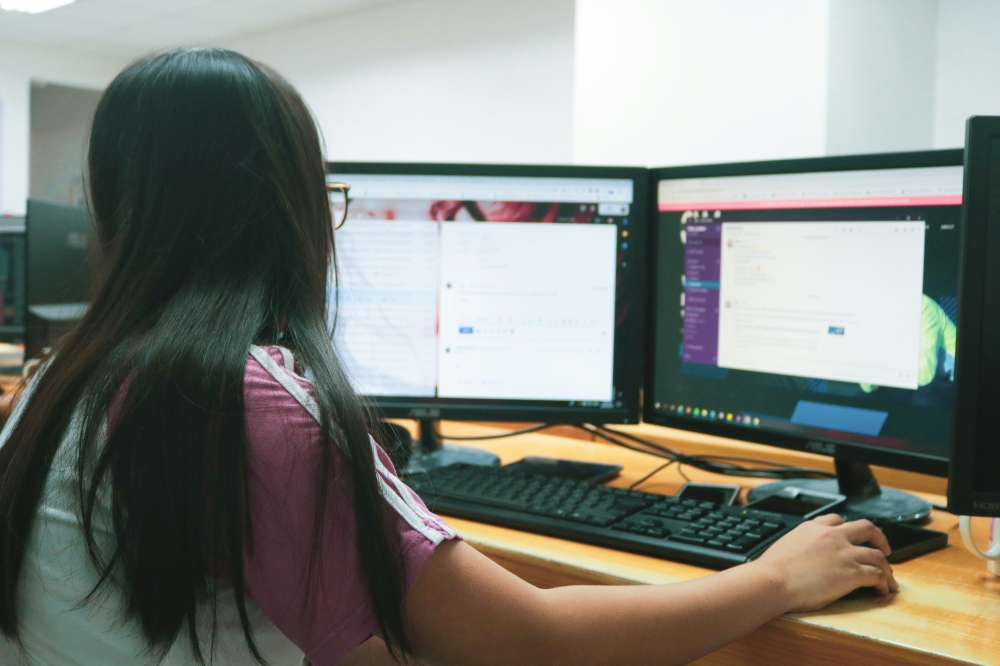
For many Malaysians, the starting point is understanding how digital and AI tools work — and how to use them safely.
The Digital Ministry’s Rakyat Digital platform provides free foundational learning in areas including AI, cybersecurity, cloud technology, blockchain and generative AI.
Its AI-related courses include AI Fluency and Introduction to AI.
The platform offers learning in Malay, English, Chinese and Tamil, with features including dyslexia-friendly content.
As part of the government’s inclusion efforts, it has identified groups such as rural communities, senior citizens, youth, persons with disabilities and micro, small and medium enterprises.
This matters because being connected does not automatically mean one is digitally literate, or knows how to assess an AI-generated answer, protect personal information, identify a scam or understand how an automated system may affect them.
AI Untuk Rakyat
The original programme, launched in 2024, was designed as a self-learning course for people from different backgrounds, including students, professionals, stay-at-home parents and senior citizens.
It introduced basic AI concepts through two sections — AI Aware and AI Appreciate — and takes about four hours to complete and is available in four languages.
A newer version was announced in August 2026 under Rakyat Digital, which is specifically aimed at younger Malaysians.
It targets 100,000 Malaysians aged 18 to 30 through 2027, with the programme available through Rakyat Digital from August 31.
Participants must complete and pass six modules:
Those who complete the required modules can receive three months of free access to selected AI applications and software.
Initial providers include YTL AI Labs, Alibaba and Google, with access including tools such as IlmuChat, Wonderclip, MuleRun and Gemini Enterprise.
That is an important distinction: free AI learning does not mean free access to every AI tool.
What about Malaysians outside these target groups
There is no single programme that prepares every Malaysian in exactly the same way — a 25-year-old could access the youth-focused AI Untuk Rakyat initiative; a civil servant could be covered by AI at Work 2.0; while a worker, entrepreneur, homemaker or retiree could participate in Jelajah AI MyMahir.
For the wider public, Rakyat Digital provides a common entry point for basic digital and AI learning.
Something to note is that, AI readiness is not only about employment.
It also means knowing how to spot AI-generated misinformation, protect personal data, recognise scams and understand the limitations of AI-generated information.
The government is preparing itself too
Through AI at Work 2.0, launched in February 2025, the government partnered with Google Cloud to provide generative AI capabilities to 445,000 civil servants.
The programme covers practical uses such as drafting documents, summarising information, analysing data, streamlining workflows and preparing meeting notes.
About 200 Change Ambassadors from ministries and agencies were subsequently trained to help spread AI knowledge within the public sector.
It has also introduced Public Sector AI Adaptation Guidelines, covering areas such as ethics, responsibilities, risk management and ways for agencies to assess their readiness.
More recently, the Digital Ministry and Amazon Web Services (AWS) launched an AI Academy programme focused on AI for productivity and decision-making in the public sector.
Government services will in the future incorporate AI, for example, an agentic AI feature entered beta testing in August, allowing the system to understand a user’s request, plan actions and assist with completing tasks, subject to permissions and safeguards.
The rollout is being phased, with attention to safety, data privacy, accuracy, transparency, governance and human oversight.
Accessibility to learning programmes
The government has also announced a Global Learning Pass, whereby 100,000 Malaysians will receive three months of access to more than 16,000 Coursera courses and certifications, distributed through four cohorts of 25,000 participants, with the first cohort beginning on September 16, 2026.
Registration can be done via the Rakyat Digital website.
Another planned initiative, the Rakyat Digital AI Builders Hub, is expected to begin in October 2026, giving Malaysians a practical pathway to experiment with AI and develop solutions after completing foundational learning.
Addressing possible AI risks
The government is also building institutions and safeguards around AI rather than treating adoption as purely a technology issue.
A public consultation on the proposed AI Governance Bill was held from July 10 to August 1, 2026.
Other safeguards include:
However, Malaysia does not currently have a dedicated AI law.
The proposed legislation is intended to complement existing laws covering areas such as personal data protection, cybersecurity, copyright and online safety.
What about schools
The Education Ministry issued its AI Literacy Guidelines 2026 in May, providing guidance for introducing AI literacy within the education system.
It hopes to convey a message: preparing Malaysians for AI cannot begin only when they enter the workforce.
Students will eventually enter workplaces where AI is likely to be more commonplace, while teachers will need to understand how to use AI appropriately and help students navigate its risks.
What does this mean for everyone
The government’s approach to AI readiness spans workplace skills, public digital literacy, education, government services and AI safety.
However, having programmes in place does not automatically mean every Malaysian is ready for AI.
Recognising this, the government is expanding its outreach through these initiatives, equipping more Malaysians with the skills they need to understand enough about it to adapt to changes, question what they encounter and protect themselves when necessary.
Date: 14 September, 2026 9:00 am
Source: Malay Mail
💬 Join the Conversation! 💬
We’ve disabled comments on our posts and pages to keep the discussions organized and lively! But don’t worry – the conversation isn’t over. Head over to our forum and share your thoughts, ideas, and feedback with the community! It’s the perfect place to connect, learn, and engage with others who care about the same things. We can’t wait to hear from you!