
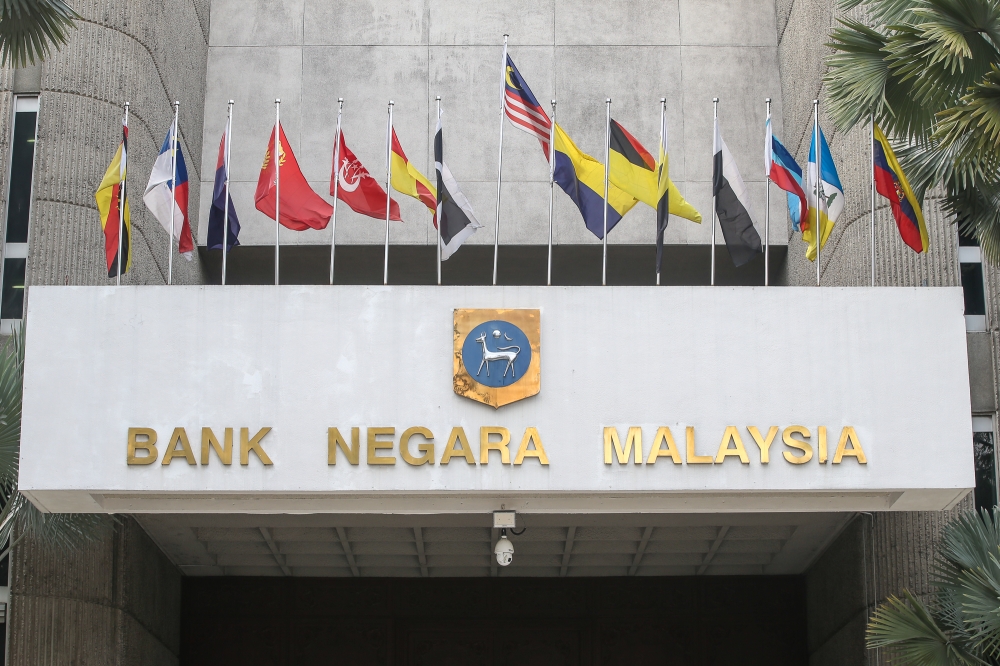
KUALA LUMPUR, Sept 17 — Bank Negara Malaysia (BNM) has kept its Overnight Policy Rate (OPR) at 2.75 per cent, maintaining the rate for a seventh consecutive meeting.
At 2.75 per cent, the OPR is now at its lowest since the Covid‑19 pandemic era, when it was cut to 1.75 per cent — a rate that remained in place until July 9, 2025, when it was raised back to 3 per cent.
With the OPR left unchanged at 2.75 per cent, the focus now shifts to what this means for borrowing costs, savings returns and day‑to‑day spending.
What does the OPR do
The OPR is Bank Negara’s key monetary policy rate.
It influences interest rates in the banking system, including rates for loans and deposits, although changes to the OPR do not necessarily translate one-for-one to every financial product.
Put simply, the OPR affects the cost of borrowing money and the returns on some forms of savings.
When the OPR is lowered, borrowing can become cheaper, which can support household and business spending and investment.
When it is raised, borrowing generally becomes more expensive, which can moderate demand in the economy.
How does Bank Negara decide the OPR?
The OPR is not calculated using a fixed formula.
Bank Negara’s Monetary Policy Committee (MPC) considers the outlook for inflation and economic growth, as well as risks to the economy, before deciding whether to raise, lower or maintain the rate.
It considers factors including economic growth, inflation, domestic demand, financial conditions and developments in the global economy.
Why did Bank Negara keep it at 2.75 per cent?
At its September 3 meeting, the MPC decided to maintain the OPR at 2.75 per cent.
Bank Negara said the current monetary policy stance was consistent with the outlook for continued price stability and sustainable economic growth.
Malaysia’s economy grew by 6 per cent in the second quarter of 2026, while headline inflation stood at 1.8 per cent in July, according to BNM.
BNM said the economy’s solid growth momentum was supported by stronger-than-expected export performance alongside sustained domestic demand.
It also said global growth remained resilient, supported by strong technology-sector expansion, improving supply conditions and stable labour markets.

Why doesn’t Bank Negara simply set the OPR based on inflation?
This is because the two measure different things.
Inflation measures how quickly the prices of goods and services are changing.
The OPR is a policy interest rate used by Bank Negara to influence economic and financial conditions.
So an inflation rate of 1.8 per cent does not mean the OPR should also be 1.8 per cent.
Bank Negara considers inflation alongside economic growth and the risks facing the economy.

How does it affect a home loan?
This is where the OPR can have a more direct effect on households.
For borrowers with a floating-rate or variable-rate home loan, the interest rate can change over time rather than remaining fixed throughout the loan period.
For new retail floating-rate loans in Malaysia, the Standardised Base Rate (SBR) is linked solely to the OPR.
Banks then add a spread that reflects factors such as the borrower’s credit risk and the bank’s costs.
So if the OPR falls, the SBR falls and the interest rate on a loan linked to it can fall as well, and if the OPR rises, the reverse can happen.
The exact effect on your monthly instalment depends on the terms of your loan.
Are car loans affected?
One should not assume that a car instalment will automatically change when the OPR moves.
The effect depends on the type of financing and the terms of the agreement.

What about credit cards and other debts
For individuals who are already carrying debt, interest rates matter because they determine how much it costs to borrow, and in the case of revolving credit card balances, how much interest can accumulate over time.
When interest rates rise, borrowers with loans or other credit facilities linked to variable rates may face higher repayment costs.
When rates fall, the cost can come down for those same types of borrowing.
However, the impact depends on the type of debt and the terms of the financing.
An unchanged OPR, therefore, does not mean every borrower’s monthly repayment will remain exactly the same, nor does a change in the OPR automatically affect every type of loan.
It affects savings accounts and fixed deposits
In this area, the OPR affects savers as well as borrowers.
Interest‑bearing deposits are accounts where a bank pays you a return for keeping your money with it.
Common examples include savings accounts and fixed deposits (FDs).
When interest rates are higher, banks may offer higher returns on some deposits, particularly FDs.
However, when rates fall, deposit rates may also decline.
The same broad principle applies to Islamic banking deposits, although their returns are structured differently from conventional interest.
However, deposit rates do not necessarily move by exactly the same amount as the OPR.
Banks also consider factors such as competition, funding requirements and their own pricing decisions.
What are some takeaways from the decision?
For households, the simplest takeaway is that there is no new OPR change following the latest decision.
For borrowers with rates linked to the OPR, that means there is no new OPR-driven increase or decrease in borrowing costs from this decision.
For savers, deposit rates will continue to depend on individual banks and products rather than moving automatically with the OPR.
An unchanged OPR also does not mean prices will stay the same, as the OPR influences overall demand and financial conditions rather than directly controlling the prices of goods and services.
BNM had said it would remain vigilant to developments affecting domestic inflation and growth, particularly given external risks such as geopolitical tensions and energy costs.
For now, the OPR remains at 2.75 per cent, with the next scheduled MPC decision on November 5, 2026.
Date: 17 September, 2026 7:30 am
Source: Malay Mail
💬 Join the Conversation! 💬
We’ve disabled comments on our posts and pages to keep the discussions organized and lively! But don’t worry – the conversation isn’t over. Head over to our forum and share your thoughts, ideas, and feedback with the community! It’s the perfect place to connect, learn, and engage with others who care about the same things. We can’t wait to hear from you!