
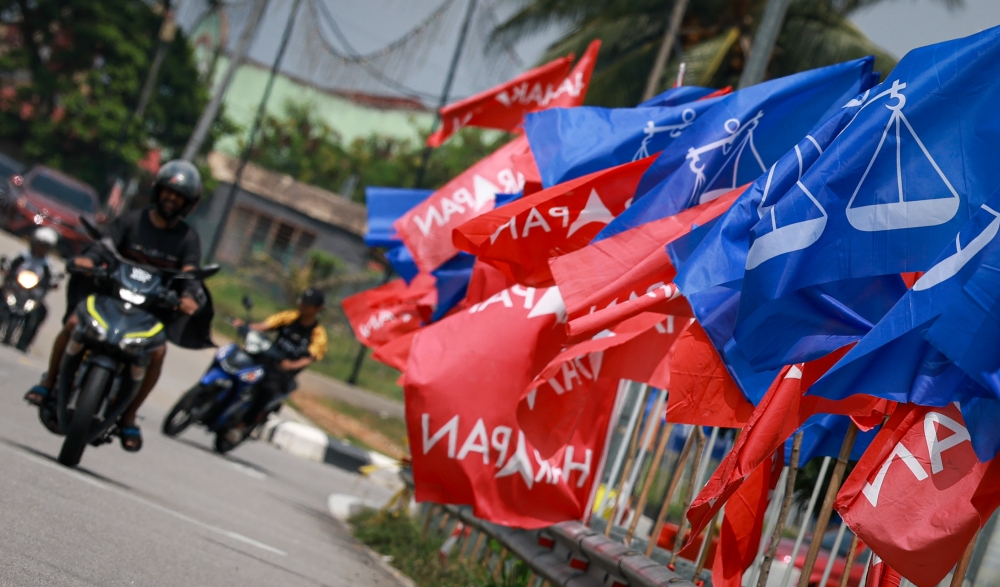
KUALA LUMPUR, Nov 9 — As campaigning for the 16th Melaka state election enters its second week, rival parties are seeking to win over voters with promises of economic growth, political stability and reform, while new alliances face the test of whether their supporters will vote across party lines.
Barisan Nasional (BN) and Perikatan Nasional (PN) are banking on their joint electoral machinery, Pakatan Harapan (PH) is challenging the incumbent administration’s record, and smaller parties are seeking to distinguish themselves through reform pledges and alternative campaign strategies.
A total of 79 candidates are contesting 28 state seats in the November 14 election, with early voting scheduled for November 10.
PH is contesting 24 seats, followed by BN with 23, Parti Bersama Malaysia (Bersama) with 16, Parti Pribumi Bersatu Malaysia (Bersatu) with seven, PN with five and Parti Pribumi Perkasa Malaysia (Putra) with one. Three candidates are running as independents.
Here is how the main parties are making their case, the issues shaping the campaign and the key contests to watch as polling day approaches.
BN-PN: Promising continuity and growth
BN and PN are presenting a united front through their Muafakat Melaka arrangement, with caretaker Chief Minister Datuk Seri Ab Rauf Yusoh leading their campaign pitch on development and economic growth.
Their joint manifesto promises to attract RM30 billion in investments, provide free domestic water for households consuming less than 20 cubic metres a month and freeze quit rent increases for five years.
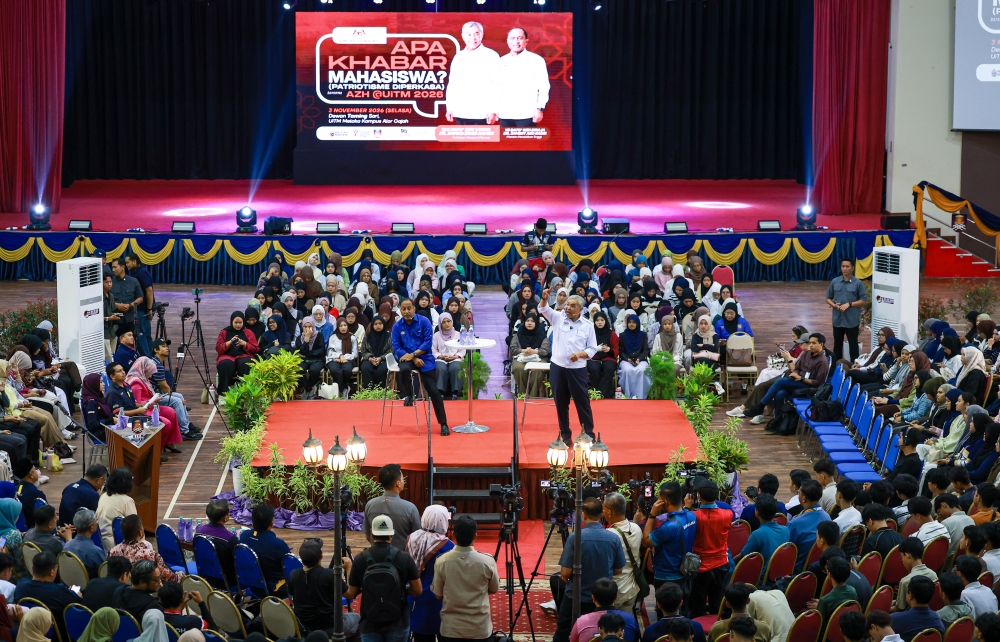
Other proposals include establishing Melaka as a national technical and vocational education and training (TVET) hub, providing financial assistance to B40 students pursuing TVET qualifications and offering funding to small traders.
Ab Rauf has also defended his administration’s record, claiming BN has fulfilled 97 per cent of the promises made in its 2021 state election manifesto.
However, PH chairman Adly Zahari has challenged that figure, arguing that BN should account for its earlier commitments before making fresh ones.
BN’s campaign is also seeking to demonstrate unity between Umno and PAS, with their cooperation presented as a continuation of their electoral partnership in Negeri Sembilan.
BN chairman Datuk Seri Ahmad Zahid Hamidi has urged both parties’ campaign machinery to respect one another and avoid clashes, underscoring the challenge of managing their previous political differences.
Beyond policy announcements, BN has brought familiar faces into its campaign.
After previously enlisting Chinese actress Fan Bingbing to promote Melaka internationally, Ab Rauf brought veteran Malaysian actor Datuk Jalaluddin Hasan to campaign in the Bukit Katil constituency.
At the constituency level, Duyong incumbent Mohd Noor Helmy Abdul Halem, who has built a following on social media, said he was not offering a specific manifesto this time, arguing that addressing residents’ problems was already his responsibility as their elected representative.
PH: Challenging BN’s record
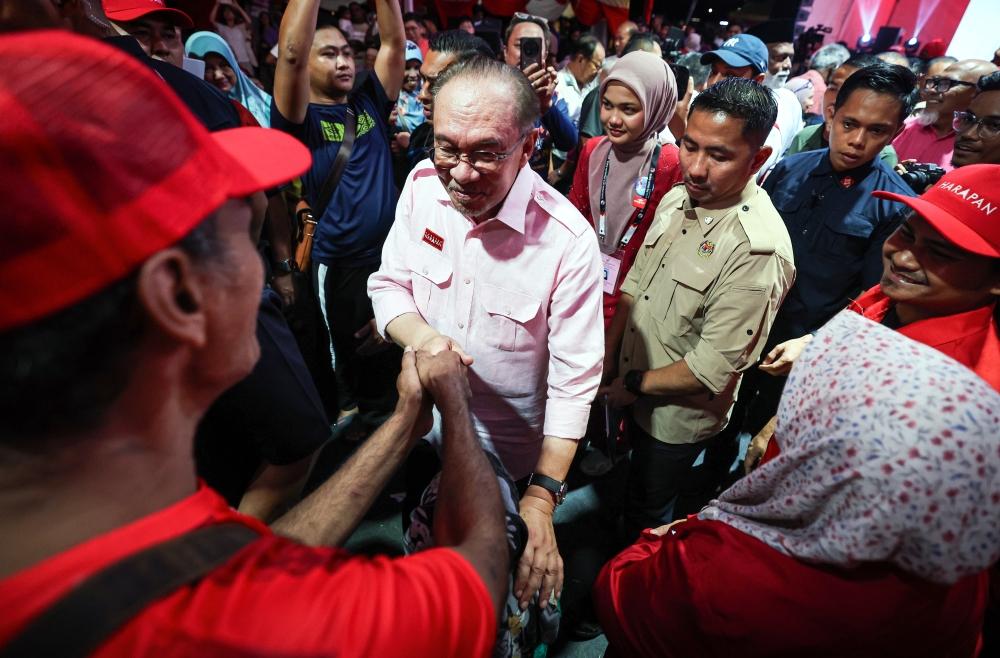
For PH, the challenge is to convince voters that it offers a credible alternative to BN, despite both coalitions being part of the federal unity government.
Its manifesto, Aspirasi Melaka Rumah Kita, is built around three main pillars and 12 priorities, including transparent administration, the Smart Melaka transformation, economic opportunities for young people and stronger tourism development.
The coalition is also targeting younger voters with a proposal to allocate 30 per cent of local authority work contracts to young people, alongside pledges on employment, housing and public welfare.
Prime Minister and PH chairman Datuk Seri Anwar Ibrahim has highlighted the coalition’s multiracial appeal and the integrity of its candidates as key strengths.
PH is making BN’s record in state government a central campaign issue, with Adly repeatedly questioning its delivery of previous manifesto commitments and the lower jobs target in its latest pledges.
The coalition has also been holding daily 10am press conferences at its main operations room in Bukit Baru, featuring Adly, acting Melaka PKR state leadership council chairman Adam Adli Abd Halim and Melaka DAP chairman Khoo Poay Tiong.
The regular briefings allow PH to respond to campaign developments, challenge BN-PN and keep its policy positions in the public eye.
Some PH leaders have also urged voters to assess the coalition based on the federal government’s record, with Pasir Gudang MP Hassan Karim arguing that its national performance should be part of voters’ considerations.
However, PH must distinguish its state-level agenda from BN’s while remaining its partner in Putrajaya, a balancing act that complicates its campaign against the incumbent administration.
Bersatu: Taking on BN amid PAS tensions
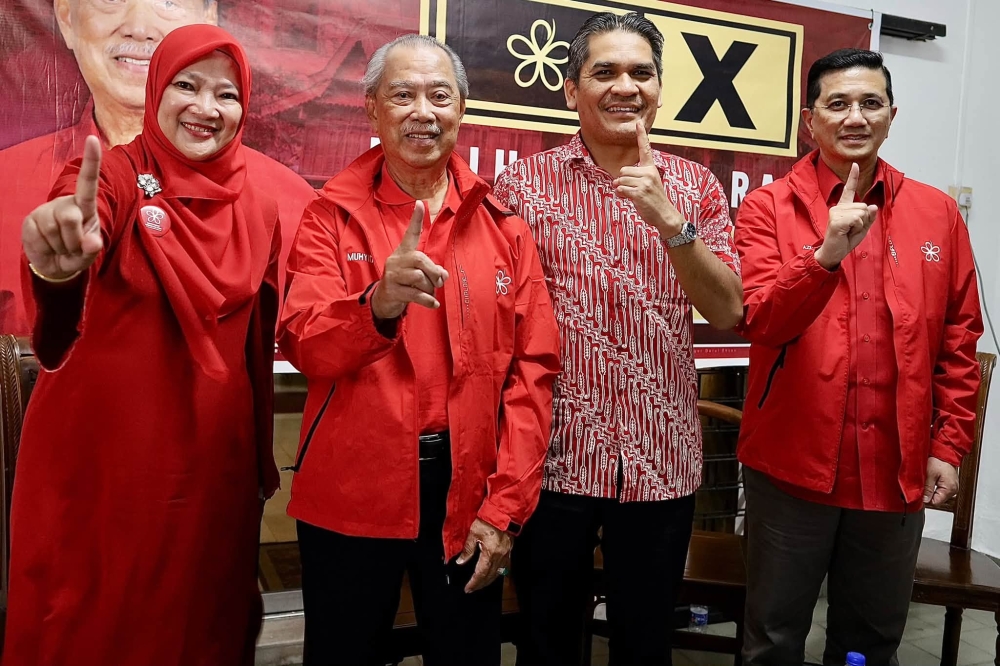
Parti Pribumi Bersatu Malaysia is seeking to position itself as an alternative to BN while navigating tensions with PAS that have complicated the PN campaign.
The party is contesting seven seats under its own logo, separately from PN’s five candidates.
Bersatu president Tan Sri Muhyiddin Yassin said some voters remained confused about the distinction between Bersatu and PN, prompting him to instruct party leaders to clarify its position during the campaign.
At a mega ceramah in Pantai Kundor, Bersatu secretary-general Datuk Seri Mohamed Azmin Ali accused PAS and Wawasan of betraying the mandate previously given to PN voters by cooperating with parties they had once campaigned against.
He also pointed to political turmoil in Negeri Sembilan, arguing that BN and Umno had failed to provide stable government despite their electoral success there.
Azmin urged Melaka voters not to give BN another opportunity to govern, warning that the state could face similar instability.
Muhyiddin, meanwhile, has returned to a familiar campaign argument by highlighting his record as prime minister during the Covid-19 pandemic, recalling his administration’s handling of the country during the lockdowns.
The approach echoes his previous state election and by-election campaigns since the 15th general election, when his pandemic-era leadership featured prominently in his appeal to voters.
Bersama: Reform pledges and digital campaigning
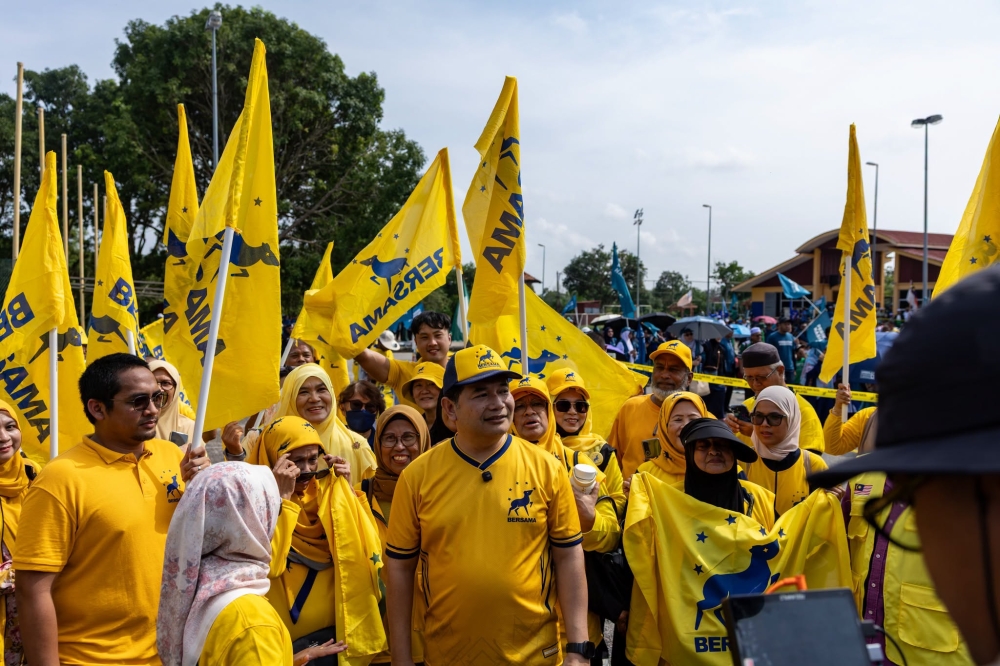
Among the smaller parties, Bersama is combining conventional ceramah and grassroots engagement with an extensive online presence, adopting an approach similar to its previous Johor election campaigns.
The party was the first to launch its manifesto for the Melaka election and has placed reform at the centre of its campaign.
Its Jelajah Trak Kancil campaign involves candidates and party leaders holding ceramah from a small truck, usually beginning around 9pm, with the events streamed live on YouTube.
Based on observations of the livestreams, the broadcasts have drawn about 80,000 views each, extending the party’s reach beyond those attending in person.
Former economy minister Datuk Seri Rafizi Ramli and his media team have also been accompanying candidates on the ground.
Bersama has revived familiar reform messages from previous elections, including inviting Teoh Lee Lan, the sister of the late Teoh Beng Hock, to one of its campaign events.
All 16 Bersama candidates signed a pledge calling for a fresh investigation into Teoh’s death, the introduction of an Anti-Torture Act and comprehensive reforms of the Malaysian Anti-Corruption Commission.
The party is also using government data to scrutinise the incumbent administration, with Rafizi highlighting what he described as an increasingly unsustainable state financial position.
Bersama has used the figures to call for better revenue collection and a review of spending priorities, reflecting Rafizi’s data-driven approach to scrutinising public administration.
Voter sentiment: Jobs, living costs and stability
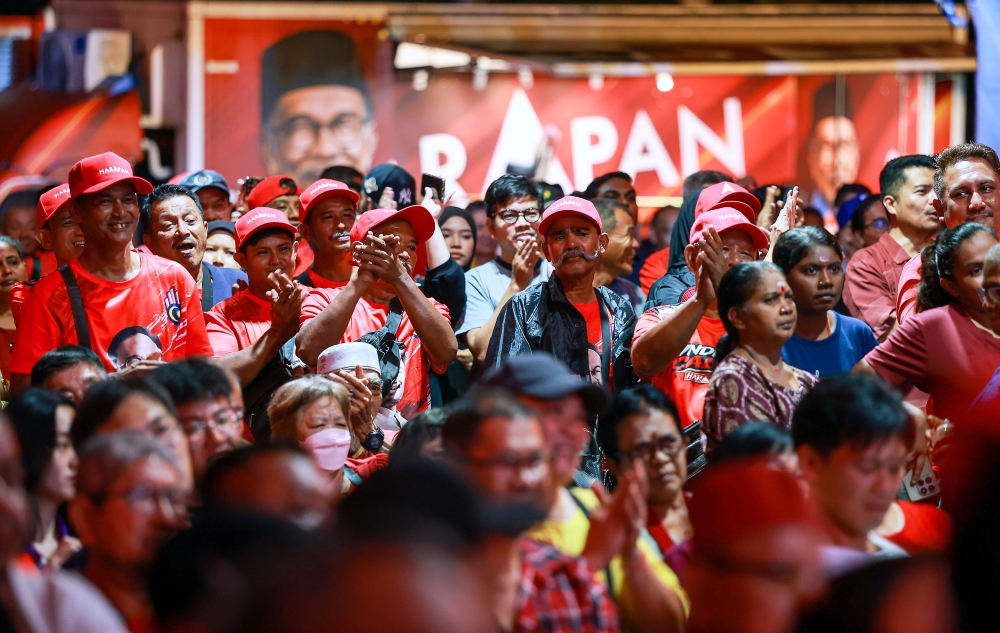
Despite the competing political narratives, campaigning has been relatively subdued, with local economic concerns taking precedence over national political rhetoric, according to political analyst Amir Fareed Rahim.
The strategic director of consultancy KRA Group said jobs and the cost of living remained key concerns, but voters were also questioning whether development projects were delivering tangible benefits to local communities.
“From our observation, key issues raised by these voters centre around whether tourism is improving local livelihoods, what coastal reclamation means for fishing communities, and how the state will deal with worsening traffic,” he told Malay Mail.
Political stability is another consideration, given that Melaka has had several chief ministers since 2018.
Amir Fareed said criticism of delayed projects could work both ways for BN, raising questions about its delivery while also reminding voters of the importance of continuity.
He said BN had an advantage among voters who credited Ab Rauf with development and welfare initiatives, while PH retained support in areas where its candidates had addressed local grievances.
Non-Malay voters, however, faced a more complicated choice, with some disappointed by the pace of federal reforms while remaining uneasy about Umno’s cooperation with PAS.
That unease could help PH retain support, although disappointment with the federal government’s reform agenda could also affect turnout, he said.
Amir Fareed said BN-PN had the clearest path to forming the state government, citing BN’s incumbency, Ab Rauf’s development record and more coordinated cooperation between Umno and PAS than in the previous two state elections.
The real test, however, would be whether that cooperation translated into votes in constituencies where the parties were supporting one another’s candidates.

Key battlegrounds: Where votes could swing
Among the seats to watch is Paya Rumput, where BN won by just 629 votes in 2021.
PAS is contesting the seat under the BN-PN arrangement, while PKR has fielded Anwar’s political secretary, Azman Abidin.
Amir Fareed said his team’s observations showed Umno and PAS campaigning closely together there, but the question remained whether BN supporters would turn out for a PAS candidate and whether Azman’s profile could help PKR attract Malay voters.
Bemban is another constituency to watch, with PN fielding a Wawasan candidate while Bersatu is contesting separately.
Amir Fareed said his team observed a strong Wawasan presence during the candidate’s walkabout, adding that the result could indicate how much support PN had retained since the 2022 general election.
For PH, the immediate tests include whether Amanah can retain Bukit Katil and DAP can defend Ayer Keroh, while PKR will be seeking to regain Machap Jaya and Kelebang.
In mixed constituencies such as DAP-held Ayer Keroh, where Malay voters make up roughly 42 per cent of the electorate, even relatively small shifts in support or turnout could influence the outcome, he said.
Amir Fareed said PH had room to make gains in a campaign that was less confrontational than the Johor state election, with Budget 2027 potentially giving it a boost.
However, Bersama, which has Rafizi playing a prominent campaign role, had been organising in Melaka even before the state assembly was dissolved and could draw support from the same pool of voters.
He also identified the controversy surrounding former prime minister Datuk Seri Najib Razak’s house arrest bid as a possible factor affecting PH supporters’ motivation to vote during the second week of campaigning.
Ultimately, Amir Fareed said the election would test whether voters were willing to transfer their support across newly formed political alliances, particularly when their preferred party was not contesting under its own banner.
“A voter can approve of the chief minister’s record and still hesitate to back his coalition partner’s candidate. Equally, a voter can be disappointed with PH nationally and still turn out for an assemblyman who has served the constituency well. In a quiet campaign, those decisions can be hard to see until polling day.
“In the closest seats, who stays home may matter as much as who switches sides,” he said.
Date: 9 November, 2026 11:00 am
Source: Malay Mail
💬 Join the Conversation! 💬
We’ve disabled comments on our posts and pages to keep the discussions organized and lively! But don’t worry – the conversation isn’t over. Head over to our forum and share your thoughts, ideas, and feedback with the community! It’s the perfect place to connect, learn, and engage with others who care about the same things. We can’t wait to hear from you!