
KUALA LUMPUR, Aug 11 — The National Energy Efficiency Policy and Action Plan 2026–2035 (NEEAP 2.0) aims to deliver RM85.24 billion in utility savings, reduce national energy demand by 11.6 per cent, and achieve cumulative energy savings of 815,383 terajoules (TJ) by 2035.
The policy and action plan also include a greenhouse gas (GHG) emissions avoidance of 26,108 kilotonnes of carbon dioxide equivalent (CO₂eq).
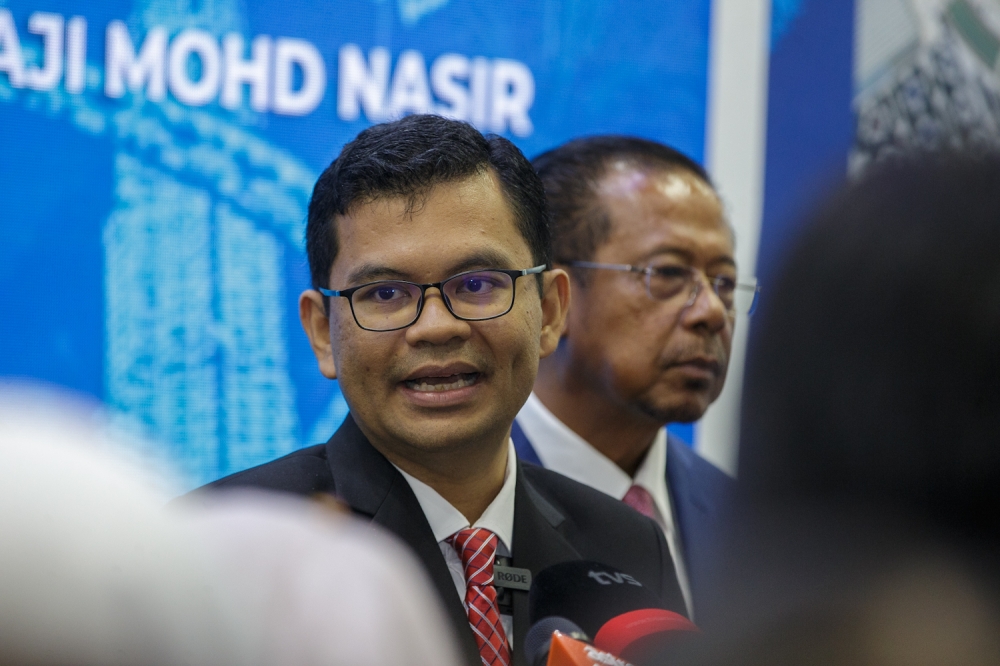
Economy Minister Akmal Nasrullah Mohd Nasir, who officiated the launch of the NEEAP 2.0 here today, said the plan is guided by the Energy Efficiency and Conservation Act 2024.
“The Act marks an important shift towards institutionalising efficiency across our economy.
“Together with the next phase of national policy, including thermal energy management, it will encourage users to optimise consumption, improve competitiveness and reduce pressure on the grid,” he said in his speech at the 7th International Sustainable Energy Summit (ISES 2026).
He said that over ten years, the NEEAP 1.0 delivered electricity savings of 60,886 gigawatt-hours, exceeding its target of 52,233 gigawatt-hours.
“This is equivalent to an estimated GHG reduction totalling 35.6 million tonnes and savings of approximately RM16.1 billion,” said Akmal Nasrullah.
He opined that energy efficiency must become standard business practice and a national productivity tool, and ultimately, a way of life.
The NEEAP 2.0 focused on four strategic thrusts, namely, implementation of energy efficiency (EE) plan; reskilling and upskilling the workforce for operational EE improvement; sustainable funding mechanisms; and facilitating private sector EE initiatives and investments.
Key initiatives include improving EE across the industrial, building and domestic sectors through measures such as energy-efficient facilities, energy audits, and regulating new equipment and appliances.
The plan is in line with key roadmaps in Malaysia, namely the National Energy Policy 2022–2040, National Energy Transition Roadmap, New Industrial Master Plan 2030 and the 12th and 13th Malaysia Plan.
It was developed with input from multiple stakeholders, ministries, government agencies, industry associations, key industry players, experts and related stakeholders.
Meanwhile, the Ministry of Energy Transition and Water Transformation (PETRA) said that the implementation of NEEAP 2.0 is expected to attract RM36 billion in private investment and create approximately 29,000 new jobs.
Building upon the achievements of the previous action plan, NEEAP 2.0 will drive the nation’s energy transition towards the aspiration of net-zero emissions by 2050 by fostering a culture of EE across the industrial, commercial, and domestic sectors, it said.
“Priority will continue to be given to high-impact sectors to stimulate the country’s economic growth, while ensuring the participation of all segments of the society,” the ministry said.
PETRA added that the estimated cumulative energy saving of 815,000 TJ is equivalent to the energy required to meet the entire electricity supply needs of Peninsular Malaysia for nearly two years. — Bernama
Date: 11 August, 2026 1:00 pm
Source: Malay Mail
💬 Join the Conversation! 💬
We’ve disabled comments on our posts and pages to keep the discussions organized and lively! But don’t worry – the conversation isn’t over. Head over to our forum and share your thoughts, ideas, and feedback with the community! It’s the perfect place to connect, learn, and engage with others who care about the same things. We can’t wait to hear from you!