
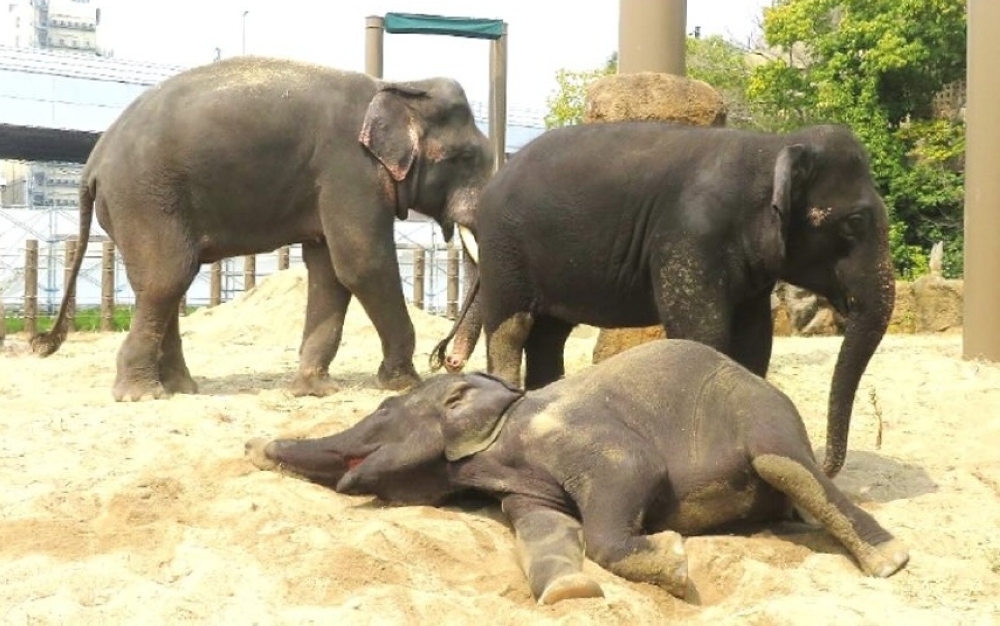
IPOH, June 16 — The recent absence of an elephant named Kelat from public viewing at Tennoji Zoo in Osaka, Japan, was part of a musth management procedure implemented for safety and animal welfare reasons.
Taiping Municipal Council (MPT) President Mohamed Akmal Dahalan explained that as a safety measure for the animal, its keepers, and zoo visitors, Kelat was temporarily housed separately throughout the musth period.
“This practice is a standard procedure adopted by zoos and does not reflect any form of neglect or abuse toward the animal,” he said in a statement.
However, he noted that Kelat’s musth phase (a periodic state in adult male elephants characterised by a dramatic surge in reproductive hormones) has officially ended, and the animal has been reintroduced to the company of two other elephants, Dara and Amoi.
He added that monitoring by the animal care team showed Kelat is interacting well and exhibiting normal, positive behaviour alongside the other two elephants.
In the meantime, Mohamed Akmal also denied viral claims on social media alleging that the three elephants were facing welfare issues, neglect, and a shortage of food.
He said periodic reports received from the zoo indicate that all three elephants are in good health, receiving continuous daily care, and being closely monitored by a team of experienced animal keepers and veterinary officers.
According to him, allegations that the elephants were not receiving adequate food are completely baseless, as daily diet records submitted by Tennoji Zoo show that food supplies are provided according to the nutritional needs of the species and each individual’s physiological condition.
“As proof, Dara and Amoi recorded weight gains of 85 kilograms and 60 kilograms respectively compared to records from May 8, which reflects a satisfactory level of nutrition and healthcare.
“Meanwhile, the 220-kilogram weight loss recorded for Kelat was not caused by health problems or a lack of food. Instead, it was because the male elephant was going through a musth period, a natural physiological phase commonly experienced by adult male elephants,” he said, adding that MPT remains in constant contact with Tennoji Zoo management to ensure any issues are handled through official channels.
Mohamed Akmal also mentioned that MPT had submitted a copy of the agreement to the Select Committee on Environment, Science, and Plantation of the Malaysian Parliament (JKP) on April 28 for review and reference.
“MPT is always committed to the principles of transparency, accountability, and good governance in executing this collaboration. In this regard, MPT stands ready to extend full cooperation to the JKP and any relevant authorities, including providing information, documents, and further clarifications as required from time to time.
“MPT also welcomes any review or scrutiny conducted to ensure that animal welfare interests, treaty compliance, and conservation objectives are consistently preserved,” he said. — Bernama
Date: 16 June, 2026 10:00 am
Source: Malay Mail
💬 Join the Conversation! 💬
We’ve disabled comments on our posts and pages to keep the discussions organized and lively! But don’t worry – the conversation isn’t over. Head over to our forum and share your thoughts, ideas, and feedback with the community! It’s the perfect place to connect, learn, and engage with others who care about the same things. We can’t wait to hear from you!