
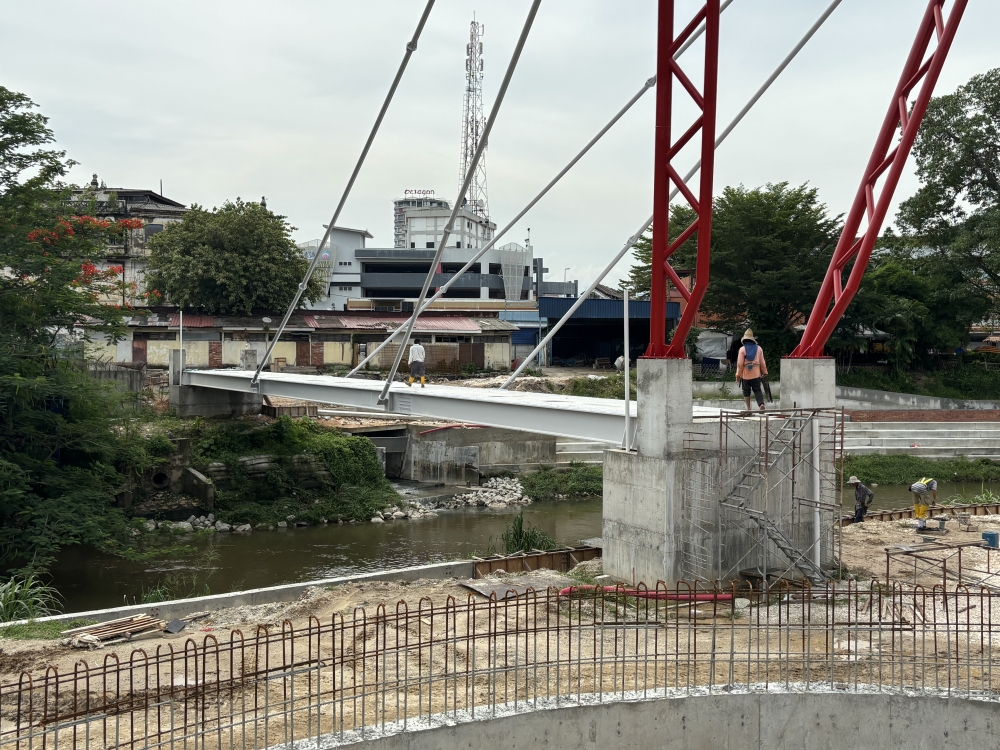
IPOH, May 10 — Visitors to Ipoh’s Old Town may soon be able to leave their cars behind and explore the city on foot through a new pedestrian bridge and riverfront development linking key tourism hotspots along Sungai Kinta.
The core objective is to connect Ipoh’s main tourism clusters into a seamless network, Perak Tourism, Industry, Investment and Corridor Development Committee chairman Loh Sze Yee said.
“People drive from one spot to another, creating traffic jams, wasting time and reducing the enjoyment of their holiday.
“The new development seeks to change that by allowing visitors to park once and explore multiple areas on foot,” he said when met at the project site here recently.
Improving access and reducing car dependency
The project, which began in March last year, is expected to be completed by June this year.
Once finished, visitors will be able to access multiple attractions within a 2km radius on foot.
Loh said the project also aims to better utilise existing parking spaces around Ipoh’s Old and New Towns.
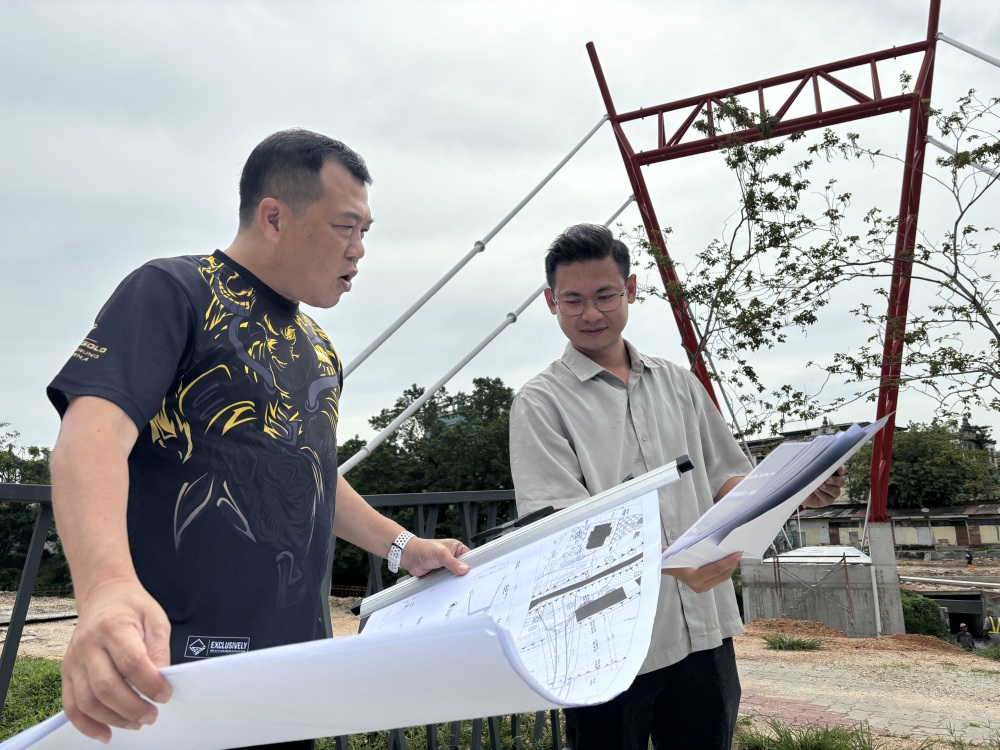
“With improved connectivity, visitors can park in one area and walk to another. This will also reduce traffic movement.
“For example, it is very difficult to find parking near Concubine Lane and its surrounding areas during weekends, and even on weekdays during peak hours.
“With this pedestrian bridge, people can park their cars at the Urban Transformation Centre in Jalan Dato’ Onn Jaafar or nearby areas, cross the river via the bridge, and reach Ipoh Old Town within 10 minutes or less on foot,” he said.
Loh said the concept is similar to Jonker Street in Melaka, where visitors can park once and walk through various clusters – from heritage zones to cultural and commercial areas.
Rethinking walkability in Ipoh
Loh said the project goes beyond building pedestrian infrastructure and is instead focused on creating a broader “walkability” experience.
“Walkability doesn’t equate to walking paths. They are two different things,” he said.
He said modern infrastructure must also respect Ipoh’s heritage character.
“Imagine having very modern overhead pedestrian walkways all over Old Town or New Town. Does it fit our image? It might not,” he said.
Loh said visitors do not walk simply for the sake of walking while on holiday.
“You would not walk just for the sake of walking. Walkability must involve what you have along the paths.
“Attractions such as Instagram-worthy spots, historical elements and storytelling, local food, traditional products and handicraft stalls, as well as cultural experiences should be included along the walkway,” he said.
Opening space for private sector ideas
While the RM5 million project is funded by the Ministry of Tourism, Arts and Culture, Loh said the state government is open to private sector participation in activating and managing the area.
“Of course, we are responsible for the infrastructure, but we prefer the private sector to manage and activate the area. The government should not be doing business there.
“Interested parties are encouraged to submit proposals to manage the space, organise events, maintain facilities, and provide security and lighting,” he said.
Loh said similar opportunities are being extended to the Kinta Riverwalk area opposite the Kinta Riverfront Hotel.
He said the area is currently underutilised but could be revitalised through programming and activities.
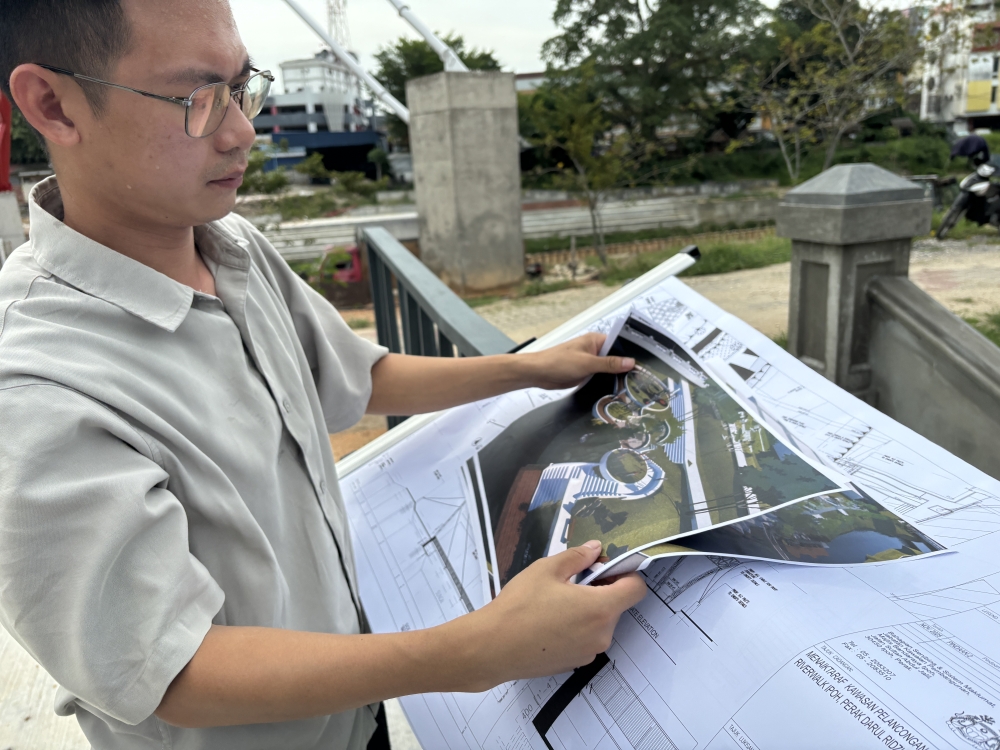
“Private sector proposals to rejuvenate the area with activities such as busking, live music, cultural and religious programmes, dance and community activities, river-based activities, night markets and food stalls are welcome.
“Only with activities will there be crowds. Only with crowds will there be businesses,” he said.
Loh said the state government has already tested the area through festive events such as Chinese New Year and Hari Raya celebrations.
“Another festival is planned around June at the Kinta Riverwalk, further activating the space and testing its potential as a public hub.
“These events are proof of concept, showing that various activities can be held there,” he said.
Future phases along Sungai Kinta
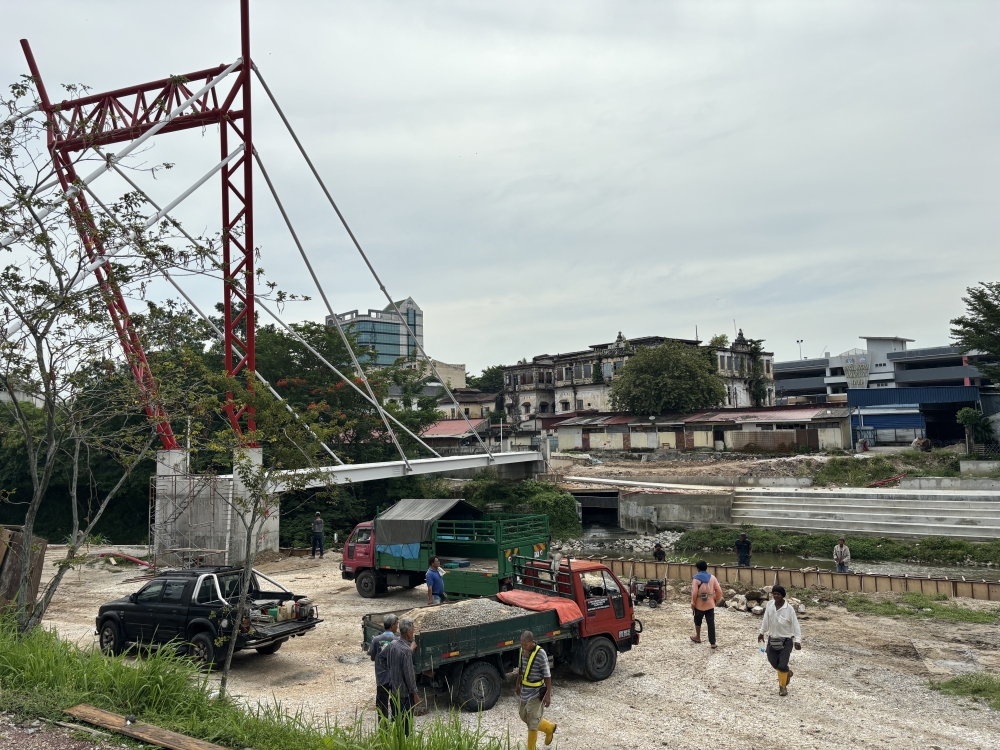
Loh said the state government is also open to proposals for a shaded solar-powered walkway linking the existing Kinta Riverwalk to the new pedestrian bridge site.
“We want a solar-powered walkway. The electricity generated can be used by operators, sold back to the authorities, or used to support electric vehicle charging stations along the river, where there are many parking spaces available.
“It will be a win-win situation. The government can provide shaded walkways to attract more people, while the private sector benefits from renewable energy generation,” he said.
He said the current project is about 85 per cent completed and will be finished before further phases are rolled out.
“There is another development planned further along Sungai Kinta, which can connect additional tourism clusters.
“The proposed RM7 million project will be supported by the Housing and Local Government Ministry. However, it will only begin after the current project is completed to minimise environmental impact along the river,” he said.
Date: 10 May, 2026 8:00 am
Source: Malay Mail
💬 Join the Conversation! 💬
We’ve disabled comments on our posts and pages to keep the discussions organized and lively! But don’t worry – the conversation isn’t over. Head over to our forum and share your thoughts, ideas, and feedback with the community! It’s the perfect place to connect, learn, and engage with others who care about the same things. We can’t wait to hear from you!