

KUALA LUMPUR, Aug 15 — Parti Keadilan Rakyat (PKR) heads into its national congress this weekend facing a problem that goes beyond recent electoral defeats: convincing Malaysians that it still has something to fight for.
The party is grappling with the departure of prominent reformist figures, internal dissent and poor results in Sabah, Johor and Negeri Sembilan, with another state election in Melaka looming.
For a party built around reform, equal treatment and institutional change, its time in government has brought another challenge: convincing voters those ideals remain relevant after nearly four years in power.
International Islamic University Malaysia political scientist Associate Professor Syaza Shukri said must determine its political direction while rebuilding public trust.
“I think the biggest issue would be how to go forward. I think PKR is at a crossroads especially after losing people like Rafizi and now Izzah taking leave. They need to figure out what’s the trajectory,” she said.
“If it’s still a reform agenda then how to proceed with that now that trust is low. How to win back people’s support rather than just uniting around the leadership.”
A year of upheaval
PKR’s troubles intensified after last year’s party election, when then-deputy president Datuk Seri Rafizi Ramli lost the post to Nurul Izzah Anwar, daughter of party president and Prime Minister Datuk Seri Anwar Ibrahim, by more than 5,900 votes.
Nurul Izzah secured 9,803 votes against Rafizi’s 3,866.
Rafizi subsequently resigned as economy minister, while Nik Nazmi Nik Ahmad left his Cabinet post as natural resources and environmental sustainability minister after failing to retain his vice-presidential position.
A year later, both men resigned as MPs and left PKR. In May this year, they took over the Malaysian United Party and rebranded it as Bersama, positioning it as a new multiracial political platform ahead of the next general election.
Their departure was followed by signs of sympathy within PKR, with several lawmakers attending Bersama’s launch. The new party did not make an electoral breakthrough in Johor, but its presence added another complication for Pakatan Harapan, which was already facing Barisan Nasional despite the two coalitions being federal government partners.

Three elections, three warnings
The electoral setbacks began in Sabah last November, where PKR won only one of the 12 seats it contested.
In Johor in July, PH won eight of the 56 state seats, down from 12 in 2022, with PKR securing only one through former education minister Maszlee Malik.
In Negeri Sembilan earlier this month, PH won 11 of the 36 seats and lost the state it had governed since 2018. PKR was reduced to two seats after losing four of its six incumbent constituencies.
The Negeri Sembilan result also highlighted the uneasy relationship between PH and BN, which contested separately while remaining federal government partners. BN subsequently worked with Perikatan Nasional in the state.
Syaza said the results should not automatically be read as PKR voters switching to rival parties, pointing instead to declining turnout, particularly among Chinese voters.
“Looking at recent elections, especially Johor and Negeri, it is not that PKR is losing support or support shifted to other parties. It’s just that a lot more people, especially Chinese voters, are choosing not to go out to vote,” she said.
“If that’s the case, the party needs to make a case to get them out, to mobilise them. And to do that the party needs to show it can fulfil the people’s expectations of PKR as the ruling party.”
Leadership and dissent
Questions over succession and dissent have also surfaced.
Nurul Izzah announced this month that she would step aside to pursue her studies. PKR subsequently granted her temporary leave, with vice-president Datuk Seri Saifuddin Nasution Ismail taking over her responsibilities.
Syaza said the episode highlighted PKR’s unresolved succession issue.
“It shows that the party has not settled the issue of succession and renewal and the next generation of leaders. It is still very Anwar-centric,” she said.
“So yes, now Amirudin is stepping up, but again it’s closing ranks behind Anwar’s faction with little dissent. That could both be good and bad. The party unites, but can it reinvigorate?”
Lee Chean Chung resigned from PKR’s central leadership council in June, saying the party was no longer what it was when he first joined.
Wong Chen then resigned as Subang MP earlier this week, ending his more than 10-year tenure in Parliament. He subsequently announced that he had left PKR and joined Bersama.
Wong, Lee and Ampang MP Rodziah Ismail have also raised concerns over their offices being blocked from accessing the MyKhas portal used to process constituency development allocations.
The dispute is politically sensitive for PKR, which has historically campaigned for equal allocations for elected representatives.
Communications Minister Datuk Seri Fahmi Fadzil has defended the government’s position, saying constituency allocations are at the Prime Minister’s discretion and should ultimately reach constituents rather than be treated as an entitlement of individual MPs.
Syaza said the controversy nevertheless carried a political cost.
“PKR used to fight for equal allocation and now this happens. It unfortunately shows the grassroots that firstly PKR doesn’t tolerate dissent and secondly it affects the whole reformist facade and idealism it once carried,” she said.
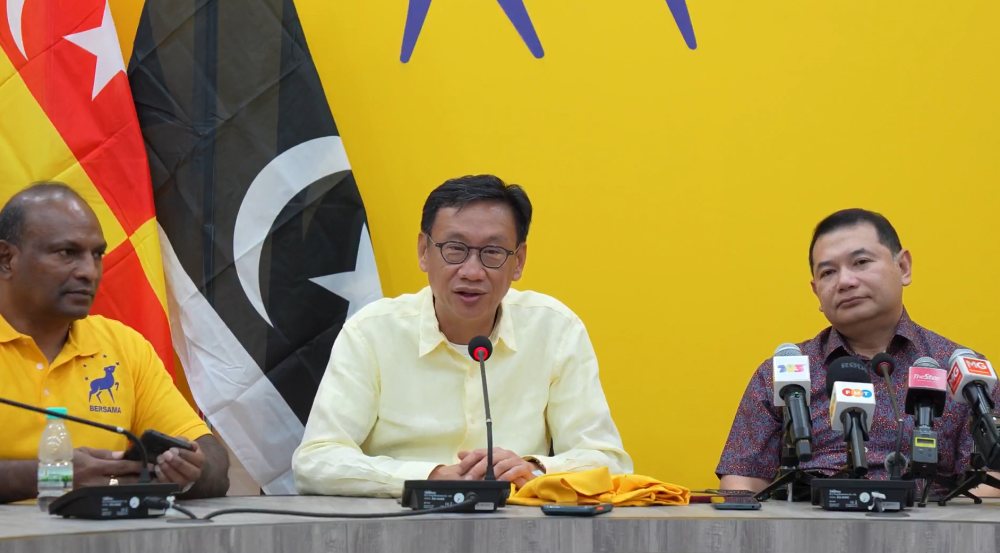
What does PKR stand for now?
For Syaza, the deeper problem is the transformation that comes with being in government.
“Being in government has changed the party. On one hand that is fine. Of course we understand opposition and government are two different forms, one with resources, one without, one with access, one demanding access,” she said.
“But the problem now is people don’t even understand what PKR stands for anymore. It’s okay if as a government they say their means of reform might be different but that language is barely even there.”
She said the congress should reopen political space within the party and redefine what PKR could offer Malaysians.
“PKR needs to reopen political space. How can it be a reform party if it stifles different opinions? It doesn’t make sense,” she said.
“Secondly, redefine what it wants to give Malaysians. They’ve been in power and supporters have not been very happy so what else can they do and offer, realistically?”
“It’s no longer just about forming a government. They’ve had the chance. What else?”
Look forward, not back
Akademi Nusantara senior fellow Prof Azmi Hassan said delegates should focus on the party’s future rather than dwell on its recent setbacks.
“With all the setbacks PKR is facing right now, I think the delegates want to see something in the future. Let’s move forward,” he said.
Azmi said PKR should use its position in government to develop strategies before the next election, while cautioning against attributing all of PH’s recent losses to PKR.
“True enough, Sabah, Johor, Negeri Sembilan, it is a setback. But again, they have to look at their contest as a Pakatan Harapan using one symbol,” he said.
“Yes, PKR lost a lot of seats in Sabah, in Johor, and also in Negeri Sembilan, but maybe it is because of the Pakatan Harapan structure. Maybe it is because of one of their allies, DAP for example, that’s bringing down PKR in this case. That needs to be looked at during the congress itself.”
Azmi also defended the government’s position on constituency allocations, saying the funds were intended for constituencies rather than individual MPs.
“I agree with this allocation against constituencies for those MPs that are not with PKR. And I think Datuk Seri Anwar is correct that the allocation is not for the MP, but for the constituencies itself,” he said.
Melaka test looms
The next test will come in Melaka.
Azmi said PKR needed to demonstrate that it had learnt from its electoral setbacks in Sabah, Johor and Negeri Sembilan before the state goes to the polls.
“Looking at the next general election, I think PKR needs to make a lot of adjustments. They did not do enough after Sabah, after Johor, and Negeri Sembilan, and Melaka is coming very soon,” he said.
“I think there is time to do some tweaking in terms of making a better presentation to the people in the Melaka state election.”
PKR has signalled that its congress will focus on reforms, economic development and strengthening the party, according to vice-president Datuk Seri Amirudin Shari.
PH wrested Melaka from Barisan Nasional in 2018, ending decades of BN rule, but the administration collapsed in 2020 following the Sheraton Move, after which BN took back the state government.
For PKR, the question now is whether it can retain its reformist identity while governing, make greater room for dissent and give voters a compelling reason to return to the ballot box.
Date: 15 August, 2026 8:00 am
Source: Malay Mail
💬 Join the Conversation! 💬
We’ve disabled comments on our posts and pages to keep the discussions organized and lively! But don’t worry – the conversation isn’t over. Head over to our forum and share your thoughts, ideas, and feedback with the community! It’s the perfect place to connect, learn, and engage with others who care about the same things. We can’t wait to hear from you!