
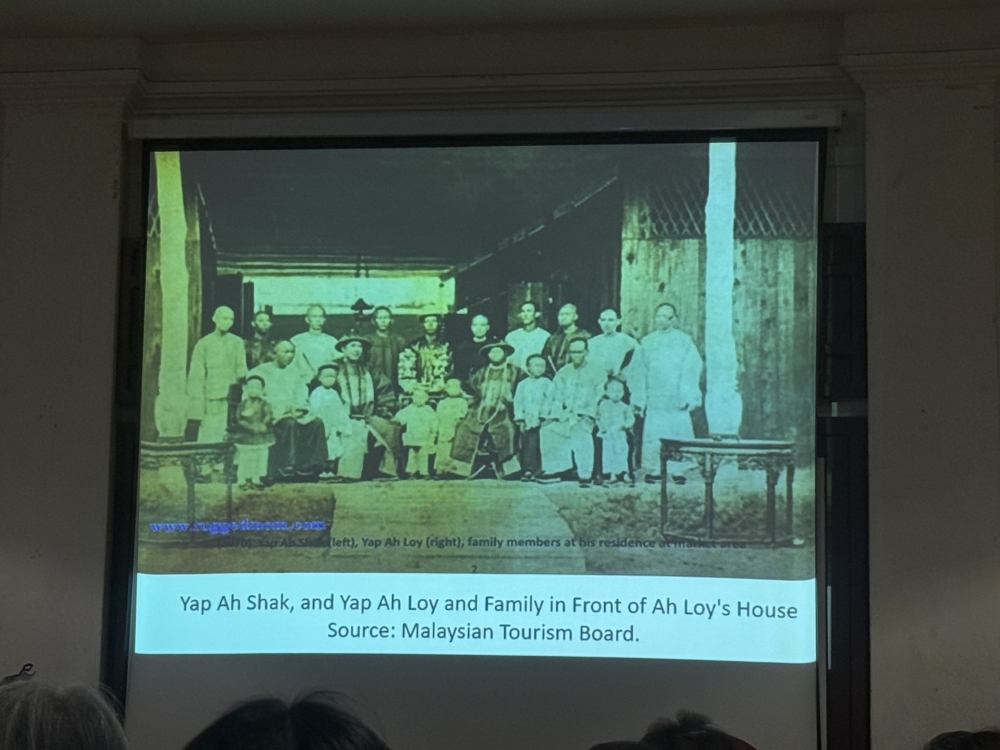
KUALA LUMPUR, May 12 — Yap Ah Loy is widely remembered as the man who founded Kuala Lumpur, but according to his fifth-generation great-grandson Glenn Yap, that story only tells half the truth.
Glenn said Yap’s defining contribution was not founding the city, but rebuilding it after it was almost wiped out during the Klang War.
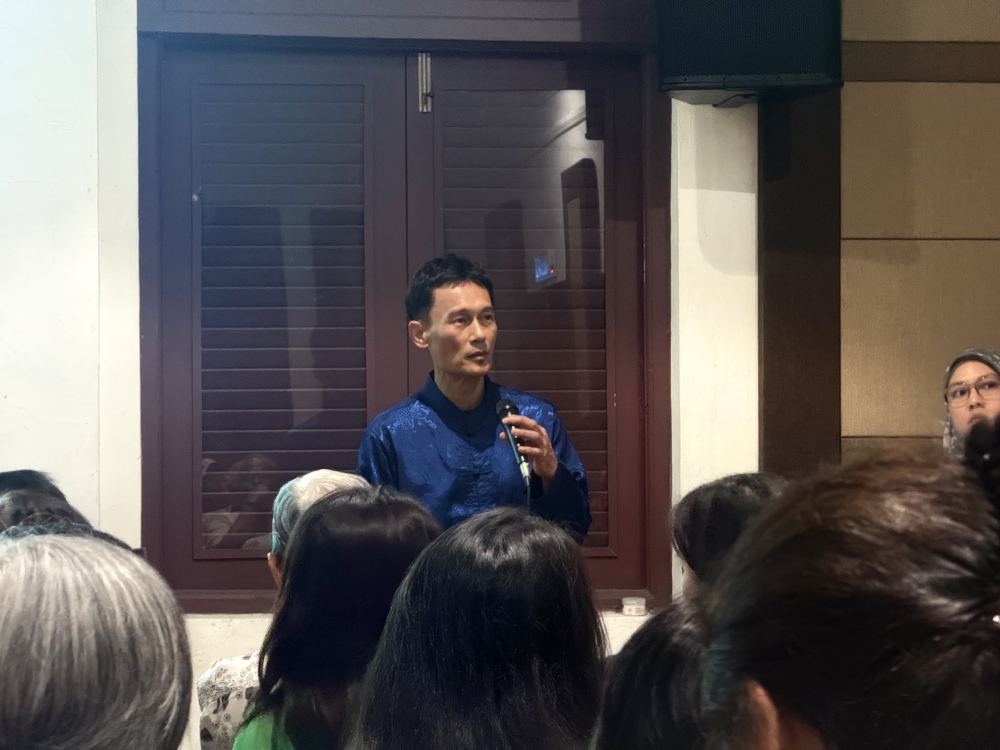
“People always say Yap Ah Loy founded Kuala Lumpur, but what made him extraordinary was that he rebuilt KL after it was completely destroyed during the Klang War,” he said during the Life and Legacy of Yap Ah Loy talk organised by Badan Warisan Malaysia.
Born in Guangdong, Yap came to Malaya as a young migrant seeking opportunities. His early years were marked by false starts — after losing his travel money to gambling at 17, he was too ashamed to return to his uncle in Kesang and instead travelled north on foot until he reached Sungai Ujong.
There, he met Liu Ngim Kong, a figure who would later play a key role in regional developments. Yap initially worked as a cook but quickly demonstrated business acumen, trading surplus goods for profit before expanding into livestock and tin-related activities.
Liu Ngim Kong recognised his abilities and appointed him Kapitan of Sungai Ujong following the death of Shen Ming Li, marking the first time Yap held a formal leadership role.
Not long after, he followed Liu Ngim Kong to Kuala Lumpur and was officially installed as Kapitan Cina in 1869.
His greatest test came during the Klang War, a prolonged civil conflict involving multiple rulers, mining interests and their respective Chinese allies.
“This civil war, involving rival Malay factions and competing Chinese groups, lasted around six years. At its climax in 1873, Kuala Lumpur was devastated. Entire rows of shops and homes were destroyed, leaving the town looking like an abandoned construction site covered in mud and rubble.
“There were no drainage systems, infrastructure or functioning settlements left. Many survivors fled to places such as Taiping and other mining towns in search of new opportunities,” Glenn said.
Glenn said Yap then begged people to stay, convinced that Kuala Lumpur still had tremendous potential and that its people were more experienced and capable than those elsewhere.
However, rebuilding came at an enormous personal cost to Yap, who had spent heavily throughout the war on troops, supplies and welfare, depleting much of his fortune.
To finance reconstruction, he borrowed from three separate parties, with some loans carrying interest rates as high as 50 per cent.
The recovery only gained momentum around 1878 and 1879, when improving global tin prices helped restore both the town’s economy and Yap’s finances.
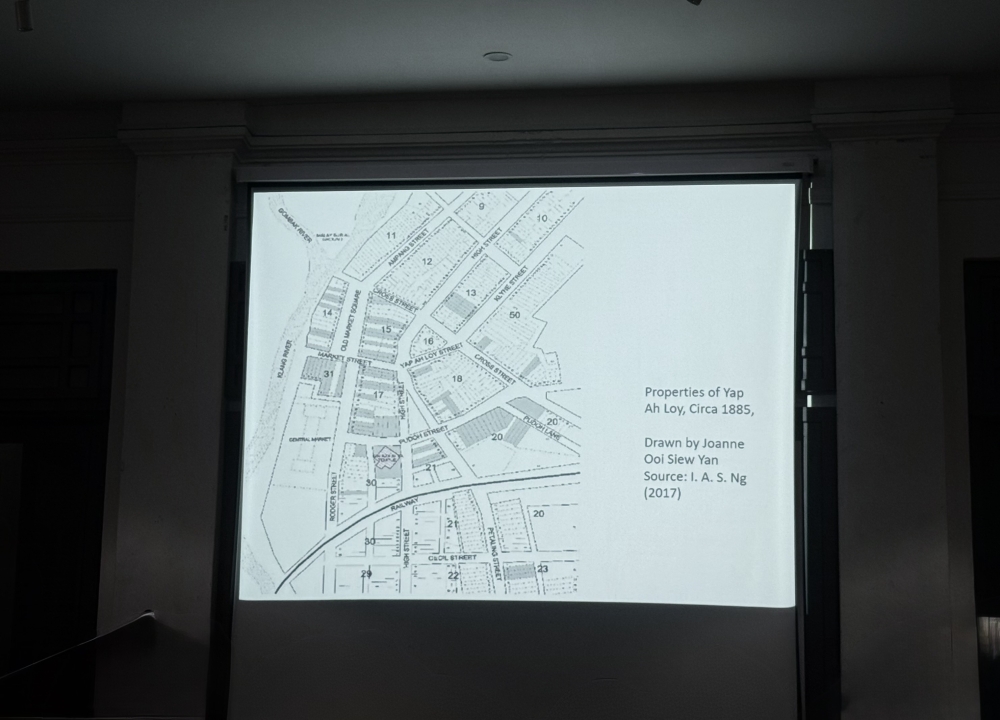
By then, he had become one of Kuala Lumpur’s largest property owners, controlling nearly two-thirds of the town, including more than a dozen mines and much of the Medan Pasar commercial centre.
Yap later established brick kilns in what became Brickfields and set up a tapioca mill along Petaling Street that created jobs for the growing population.
Among his lesser-known contributions was the establishment of what is believed to be Kuala Lumpur’s first Chinese school along High Street, now known as Jalan Bandar.
“He invested his own money to set up the school, spending more than 500 dollars. Based on research, that amount would be equivalent to a significant sum today, roughly RM25,000.
“He also helped secure a headmaster and supported the school’s early development as enrolment gradually increased,” he added.
One of Yap Ah Loy’s major contributions was the establishment of basic healthcare facilities. The first hospital he introduced was rudimentary by modern standards and was more accurately described as a hospice.
Glenn said medical facilities were extremely limited and Western medicine was not widely trusted, with many people instead relying on traditional Chinese medicine.
Despite its simplicity, the early hospital created awareness of the need for proper healthcare, eventually leading to the development of more formal medical institutions in Kuala Lumpur.
His contributions also extended to road construction. The earliest roads linked to his development efforts included Ampang Road, Batu Road, Damansara Road and parts of what later became the Federal Highway stretch leading towards the University Hospital area.
Glenn said Yap’s most enduring contribution was the founding of the Sin Sze Si Ya Temple along Jalan Tun H.S. Lee.
He added that visitors and researchers from China continue to travel to the temple to study its architecture and history.
“It is one of the oldest Taoist temples in Kuala Lumpur. Visitors can enter the temple freely, and it continues to attract researchers and tourists interested in Chinese heritage, architecture and history,” Glenn said.
Date: 12 May, 2026 7:04 am
Source: Malay Mail
💬 Join the Conversation! 💬
We’ve disabled comments on our posts and pages to keep the discussions organized and lively! But don’t worry – the conversation isn’t over. Head over to our forum and share your thoughts, ideas, and feedback with the community! It’s the perfect place to connect, learn, and engage with others who care about the same things. We can’t wait to hear from you!