
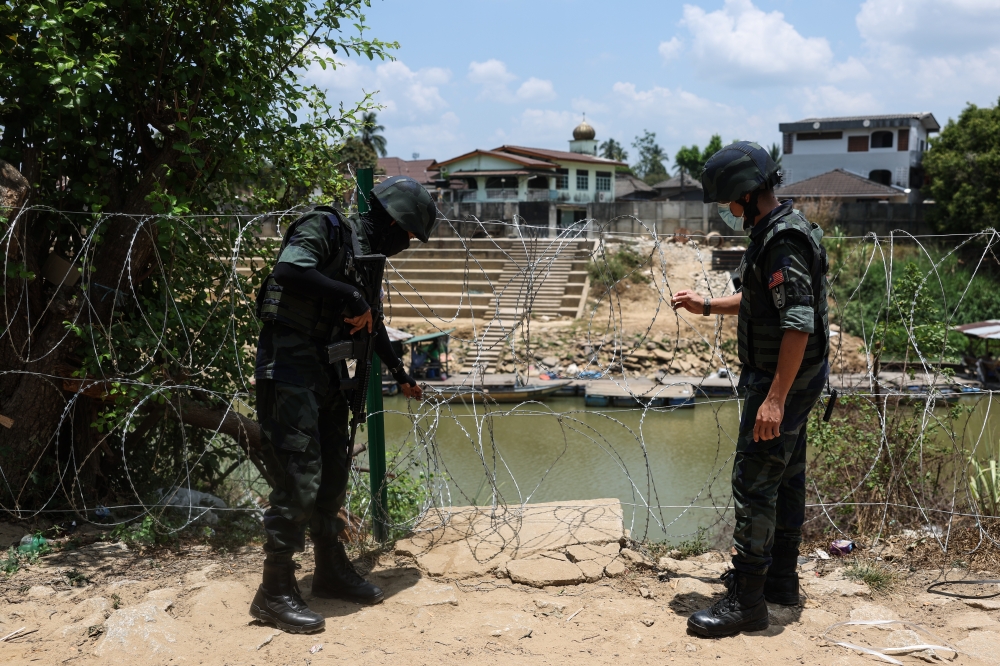
PASIR MAS, April 17 — A directive by Home Minister Datuk Seri Saifuddin Nasution Ismail for assistance to be given to 34 Thai students caught crossing the Malaysia-Thai border illegally last Sunday comes amid growing awareness of the dangers associated with unlawful routes along Sungai Golok.
The risk of “mati katak” (to die in vain) – a term used to describe those who perish without protection or recourse – is no longer taken lightly following the incident involving the students.
The case has since become a turning point, prompting noticeable behavioural changes among residents along the Malaysia-Thailand border.
More residents, particularly students and parents, are now opting for legal entry and exit routes between the two countries, prioritising safety over convenience.
A survey at the Rantau Panjang Immigration, Customs, Quarantine and Security (ICQS) Complex found a noticeable increase in the use of official crossings, especially during early morning hours when parents send their children to school.
Deputy Commander of the Rantau Panjang Border Control and Protection Agency (AKPS), Bakri Sulaiman, said choosing legal routes not only ensures compliance with the law but also safeguards lives.
“Crossing the river illegally by boat or ‘sampan’ is extremely dangerous, particularly during unstable weather, as it exposes users to risks such as capsizing,” he said.
“If an accident occurs, victims face not only the possibility of losing their lives but are also considered to die in vain, with no insurance or protection whatsoever,” he told Bernama.
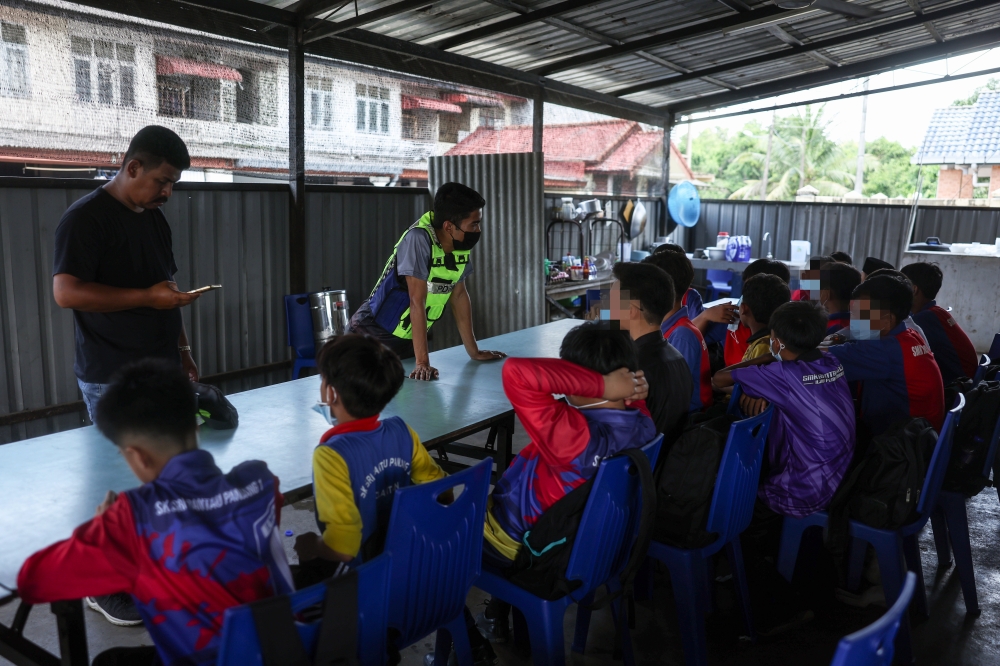
He stressed that the Malaysia-Thailand border is a sensitive zone that must be respected, and all cross-border movement should be conducted through authorised channels.
Bakri added that the ICQS facility, which operates as early as 6 am, enables parents to send their children to school in a safer and more orderly manner.
The shift in mindset among border residents is becoming increasingly evident, with many now placing safety above shortcuts.
Resident Hamid Ismail, 50, said he no longer takes the risk after learning about the recent incident.
“We used to think it was faster and easier, but now we realise the danger is too great. Our children’s safety comes first,” he said.
Food stall operator Hamidah Abdul Wahab, 48, echoed the sentiment, noting that although using legal routes may take more time, it offers peace of mind.
“If something happens in the river, no one is accountable. It’s better to do things the right way,” she said.
Meanwhile, a 16-year-old student known as Muhammad Nabil admitted that the change requires adjustment, but it is a worthwhile sacrifice.
“We have to wake up earlier now, but we feel much safer,” said the Malaysian student who resides in Sungai Golok, Thailand.
It was reported that 34 Thai students were detained last Sunday after being found entering the country through an ungazetted route at an illegal jetty near Rantau Panjang.
They were taken in for documentation processing and then released on police bail.
Yesterday, Saifuddin Nasution instructed the Immigration Director-General and the Kelantan Police Chief to provide appropriate assistance to the 34 Thai students.
He reportedly said the instruction was aimed at facilitating the processing of travel documents for the students, particularly if documentation issues were the reason for them to resort to illegal routes to attend school.
The move underscores a more compassionate approach, ensuring that students are not unduly penalised while efforts are made to regularise their cross-border movement. — Bernama
Date: 17 April, 2026 11:00 am
Source: Malay Mail
💬 Join the Conversation! 💬
We’ve disabled comments on our posts and pages to keep the discussions organized and lively! But don’t worry – the conversation isn’t over. Head over to our forum and share your thoughts, ideas, and feedback with the community! It’s the perfect place to connect, learn, and engage with others who care about the same things. We can’t wait to hear from you!