
KUALA LUMPUR, June 7 — For many Malaysians living with a serious heart disease, the greatest challenge is not always the diagnosis itself, but finding a way to pay for the treatment needed to stay alive.
At the CVSKL Foundation, the charitable arm established by Cardiac Vascular Sentral Kuala Lumpur (CVSKL) in 2022, assistance is focused on patients who are not only financially vulnerable but also facing some of the most complex and costly cardiac conditions.
Since its inception, the foundation has supported a total of 39 major cardiac procedures, comprising seven in 2022, 12 in 2023, six in 2024, 10 in 2025 and four so far this year.
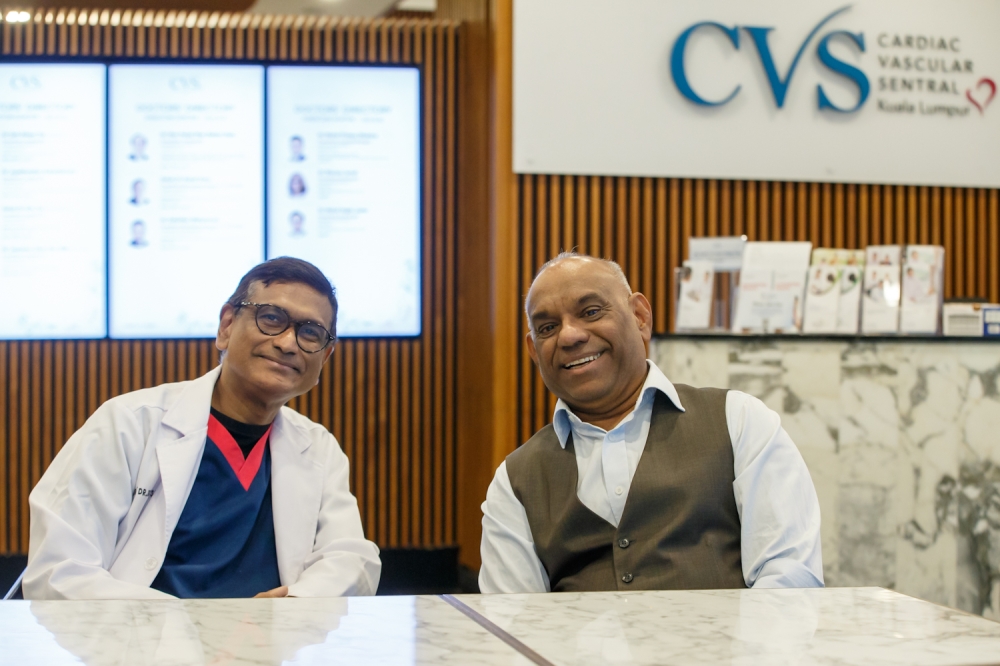
CVSKL Foundation chairman Tan Sri Rashpal Singh Randhay said the foundation was established as part of a broader commitment to ensure that financial hardship does not become a barrier to lifesaving care.
“The vision was always about giving back to society. We wanted to help patients who genuinely have no means of obtaining the treatment they need,” he said.
Specialised and dedicated support
Unlike other welfare programmes, Rashpal said every application undergoes an extensive vetting process involving both financial and medical assessments before assistance is approved.
Besides reviewing a patient’s financial circumstances, each case must be evaluated by CVSKL foundation specialists, who will assess the complexity of the condition and available alternatives before making recommendations to the foundation’s trustees.
“We reject about 50 per cent of applications because our resources are limited and we need to prioritise those who are most in need.
“Our focus is on cases where patients referred to us have exhausted all means of financial support,” he said.
Rashpal said the foundation’s assessment process is designed to ensure limited resources are directed to patients with the greatest need.
He cited the recent case of a 14-year-old girl whose application was reassessed after further re-evaluation.
Following further evaluation and recommendations from the foundation’s medical team, the case was approved for a right heart catheterisation procedure.
“We rejected the case at first, but after further review and strong recommendations from the doctors, the case was approved,” he said.
Datuk Dr Tamil Selvan Muthusamy, consultant cardiologist at CVSKL, said the foundation was designed to support a specific group of patients.
“These are the patients we want to help — those who really have no means to pay for medical procedures that they need,” he said.
Tamil Selvan said many beneficiaries are patients with severe and highly complex cardiac conditions who have exhausted other options, been deemed high-risk or faced lengthy waits for treatment elsewhere.
“A lot of the patients who come to us are not straightforward cases.
“Many are extremely ill, have been waiting a long time for treatment, or have been assessed as very high risk,” he said.
He recalled one patient who arrived at CVSKL after waiting an extended period for treatment and was in critical condition.
“He was so sick that we were not even sure he would survive.
“He spent almost a month in hospital, but today he is doing well. The foundation played a crucial role in helping him receive treatment,” Tamil Selvan said.
What sets the foundation apart
What distinguishes the programme is the level of support provided by the hospital and its specialists.
For approved cases, CVSKL doctors waive their professional fees, while the hospital charges the foundation at cost rather than commercial rates.
In some cases, medical device suppliers also contribute through corporate social responsibility initiatives to further reduce treatment costs.
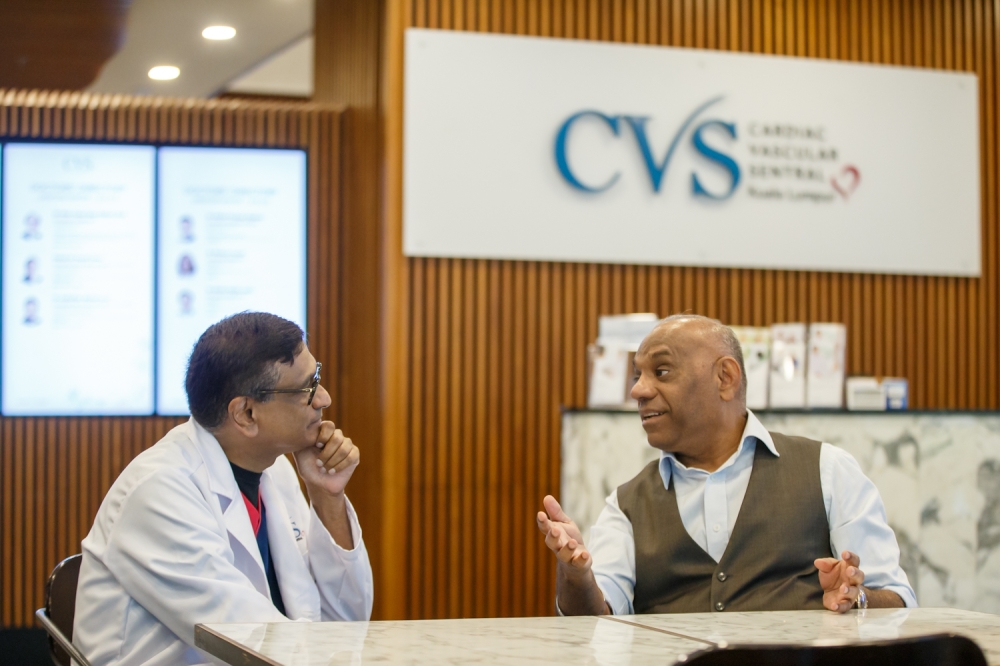
“The doctors do not charge professional fees and the hospital charges us at cost.
“That allows us to help patients who otherwise would not have been able to afford treatment,” Rashpal said.
Among the advanced procedures funded through the programme are transcatheter mitral valve repair, Impella-assisted high-risk percutaneous coronary intervention (PCI) and right heart catheterisation.
Tamil Selvan said some of these interventions involve technologies that remain available only at a limited number of centres in Malaysia.
One example is the Impella heart pump, a temporary mechanical circulatory support device used during complex coronary procedures.
“The device alone costs about US$25,000 (RM100,702.44). These are not routine angioplasty cases.
“They are often patients with severe heart failure or complex blockages where conventional treatment carries very high risk.
“Without support, many would simply not be able to access such treatment,” he said.
The foundation is one of three pillars established at the hospital’s inception, alongside public health education and research, although much of its resources currently go towards helping patients access treatment.
To sustain its activities, the foundation relies on donations and fundraising initiatives.
Rashpal added the foundation typically organises two major fundraising events annually to support future patient assistance programmes.
This year, the foundation will hold a charity hi-tea at The St Regis Kuala Lumpur on June 13, followed by a golf tournament later in the year.
The foundation is aiming to raise approximately RM1 million, which will be used to support patients through 2027 and 2028.
At the moment, the foundation’s funding model mixes hospital cost-price support, CSR partnerships, fundraising events and a pledge of RM500,000 by CVSKL.
Beyond the foundation itself, CVSKL also works with medical device companies and corporate partners to subsidise treatment for other financially challenged patients who may not qualify for foundation assistance but still struggle to afford care.
Still, Tamil Selvan acknowledged that demand continues to outpace available resources.
“We want to help more people, but funding remains the biggest limitation.
“There are many patients who could benefit from these treatments, but every programme depends on having sufficient resources,” he said.
Regardless of having limited resources, Rashpal said the mission remains straightforward.
“Every application represents someone fighting for their life.
“Our responsibility is to ensure that those who truly have nowhere else to turn are given a chance,” he said.
As cardiovascular disease remains one of Malaysia’s leading causes of death, the foundation’s leaders believe access to advanced treatment should not be determined solely by a patient’s financial circumstances.
For the patients whose procedures have already been funded, the value of that support cannot be measured merely in ringgit and sen.
For them, it is the cost of a heartbeat.
Date: 7 June, 2026 12:05 pm
Source: Malay Mail
💬 Join the Conversation! 💬
We’ve disabled comments on our posts and pages to keep the discussions organized and lively! But don’t worry – the conversation isn’t over. Head over to our forum and share your thoughts, ideas, and feedback with the community! It’s the perfect place to connect, learn, and engage with others who care about the same things. We can’t wait to hear from you!