
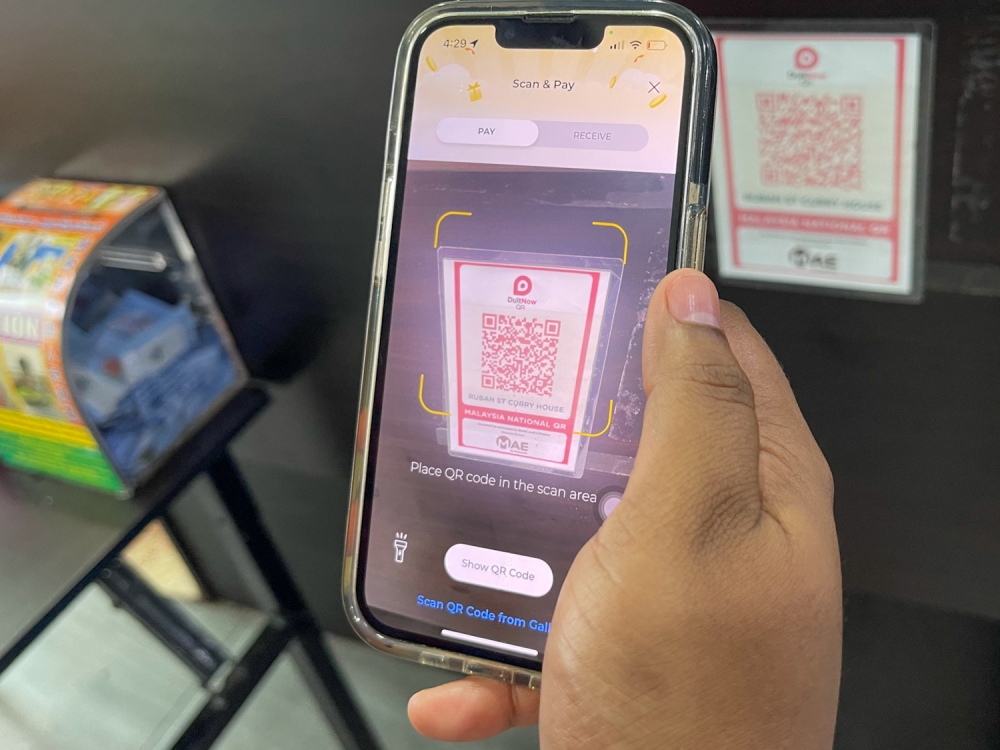
KUALA LUMPUR, Aug 10 — Malaysia’s move away from cash has a clear winner. According to Ipsos Malaysia’s newly released E-Wallet Landscape 2026 report, e-wallets are only growing, but are supplanting debit and credit cards as Malaysians’ preferred non-cash payment method.
The numbers, drawn from a nationally representative Ipsos survey of 1,029 Malaysians aged 18-74 fielded in April 2026, tell a stark story of substitution over the past four years.
E-wallet usage among non-cash payment users climbed from 52 per cent in 2023 to 81 per cent in 2026 — a jump of nearly 30 percentage points.
Over the same period, debit card usage fell from 76 per cent to 56 per cent, and credit card usage nearly halved, from 15 per cent down to 9 per cent. Online banking and digital transfers held comparatively steady, moving from 70 per cent to 70 per cent.
As e-wallets rose, cards fell — while online banking, arguably a complementary rather than competing habit, stayed roughly flat.
Generational infrastructure shift
Ipsos frames this as more than incremental change. Overall non-cash payment adoption among Malaysians has climbed steadily too — from 51 per cent of the population in 2023 to 72 per cent in 2026 — meaning e-wallets are not simply taking share from a shrinking cashless pie; they are the primary engine expanding that pie in the first place, while simultaneously eating into cards’ share within it.
The report credits Bank Negara Malaysia’s push to strengthen the digital payment ecosystem, alongside the rollout of interoperable QR payment infrastructure (such as DuitNow QR, which lets a single QR code work across competing wallet apps), as key enablers.
That interoperability removes a major historical advantage cards held — universal acceptance — since a shopper no longer needs to worry whether a merchant accepts a specific wallet brand.
The displacement is most visible in everyday, in-person spending rather than online transactions. Ipsos data shows sharp usage growth for e-wallets at food and beverage outlets, tolls and parking, and retail stores — precisely the point-of-sale moments where a debit or credit card would traditionally have been tapped or swiped.
Bill payments (70 per cent) and money transfers (65 per cent) also rank among the top e-wallet use cases, encroaching further on territory once dominated by online banking and standing instructions tied to bank cards.
More competition
For banks and card issuers, the implications are significant: falling card usage can mean reduced interchange fee income and weaker card-linked product engagement, even as many wallets (like MAE) are themselves bank-owned, meaning some of this shift is a case of banks competing with their own card businesses rather than losing out entirely.
For everyday Malaysians, particularly those who have relied on a physical debit or credit card for decades, the practical takeaway is that acceptance and convenience have now tipped decisively toward wallets for routine spending — though cards likely retain an edge for larger purchases, credit-building, and online transactions requiring buyer protections that wallets don’t always offer.
Ipsos’s own assessment is unambiguous: Malaysia has moved “beyond digital payment adoption to digital payment dependence” — and for businesses and banks alike, sitting outside that ecosystem is no longer a viable option.
Date: 10 August, 2026 4:00 pm
Source: Malay Mail
💬 Join the Conversation! 💬
We’ve disabled comments on our posts and pages to keep the discussions organized and lively! But don’t worry – the conversation isn’t over. Head over to our forum and share your thoughts, ideas, and feedback with the community! It’s the perfect place to connect, learn, and engage with others who care about the same things. We can’t wait to hear from you!