
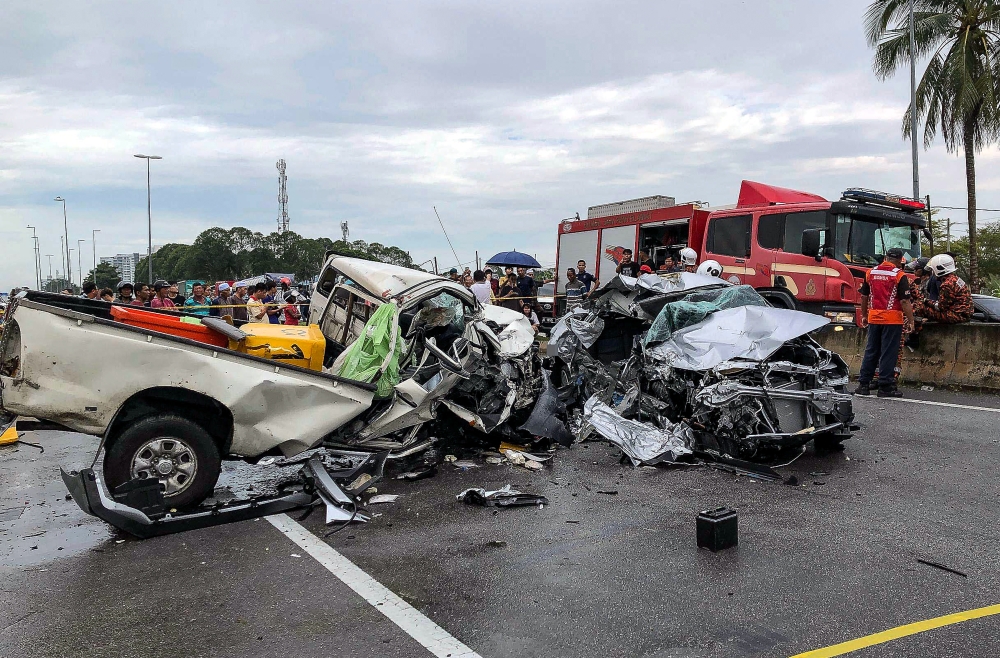
KUALA LUMPUR, April 16 — Growing alarm over road safety in Malaysia has triggered an unusually strong public mandate for legislative and educational reform, as citizens grow increasingly weary of reckless driving and fatal accidents.
According to the Ipsos Mobility Monitor 2026, 61 per cent of Malaysians expressed deep concern regarding road safety in their local areas.
This figure notably exceeds the global average of 55 per cent, signalling a deepening sense of unease across the country’s car-dependent landscape.
The study reveals that public sentiment is no longer merely passive.
Approximately 71 per cent of Malaysians now actively support stricter traffic laws, surpassing the global average of 66 per cent.
Even higher is the support for educational reform, with 75 per cent of respondents backing enhanced driver education programmes to improve road competency.
Ipsos links this surge in demand for reform to a recurring pattern of high-profile tragedies.
The report notes that Malaysia’s heavy reliance on private vehicles, with 77 per cent of the population depending on cars daily, coincides with a rise in fatal accidents, many of which are linked to reckless behaviour and standard inconsistencies.
Education gap
For decades, driver education in Malaysia has faced criticism for prioritising the ability to pass a test over actual road competency.
The Ipsos data suggests the public is no longer willing to accept this gap, with seven in ten Malaysians calling for a dual approach of “stricter laws and enhanced education.”
This will put significant pressure on the Ministry of Transport and enforcement agencies to move beyond traditional awareness campaigns and introduce measurable, high-impact deterrents.
It also raises critical questions about whether current penalties for offences such as tailgating, speeding, and mobile phone use are sufficient to shift behaviour at scale.
The legal system is already beginning to pivot in response to this mounting public pressure.
The Attorney General’s Chambers (AGC) is set to issue a directive making it mandatory for prosecutors to apply for compensation on behalf of victims’ families.
While this provision has long existed in law, it has rarely been enforced; the new directive aims to standardise its application, particularly in cases involving drink or drug-driving.
This move follows the tragic death of motorcyclist Amirul Hafiz Omar on March 29. Amirul was struck on a Klang Valley expressway by a driver allegedly under the influence.
In a rare and severe legal move, the accused was charged with murder rather than the standard offences under the Road Transport Act.
The case also reignited national debate over whether existing penalties are adequate to deliver justice.
Date: 16 April, 2026 3:00 pm
Source: Malay Mail
💬 Join the Conversation! 💬
We’ve disabled comments on our posts and pages to keep the discussions organized and lively! But don’t worry – the conversation isn’t over. Head over to our forum and share your thoughts, ideas, and feedback with the community! It’s the perfect place to connect, learn, and engage with others who care about the same things. We can’t wait to hear from you!