
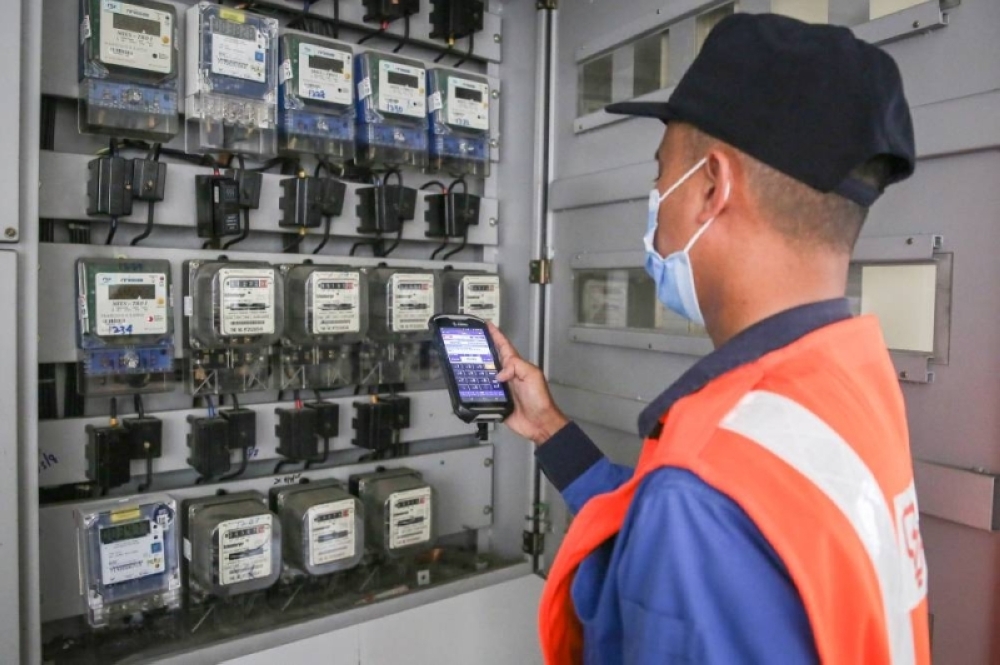
KUALA LUMPUR, Sept 27 — Tenaga Nasional Bhd’s (TNB) role at the centre of Peninsular Malaysia’s electricity system extends beyond that of a conventional profit-driven business, with tariffs, expenditure and returns governed by a regulated framework while the utility firm maintains critical power infrastructure.
Unlike businesses that can freely adjust prices in response to rising input costs, electricity tariffs in Peninsular Malaysia are determined under a framework administered by the Energy Commission (EC), which may determine tariffs and charges levied by a licensee under Section 26 of the Electricity Supply Act 1990, subject to the Minister’s (Energy Transition and Water Transformation) approval.
That oversight extends to the Incentive-Based Regulation (IBR) framework, which determines the prudent and efficient costs recoverable by regulated entities, establishes performance targets and provides for a fair and reasonable return on regulated assets.
As a result, electricity bills reflect not only the cost of generating power but also a regulated system governing tariffs, infrastructure investment and cost recovery.
Regulated pricing and government oversight
The current Regulatory Period 4 (RP4), which runs from July 1, 2025 to Dec 31, 2027, provides the framework for determining the costs and revenues of regulated electricity businesses.
On June 20, 2025, the EC announced an average base tariff of 45.40 sen per kilowatt-hour (kWh) for RP4, lower than the 45.62 sen per kWh approved by the government in December 2024.
The revised tariff schedule took effect on July 1, 2025.
Under the IBR, the base tariff incorporates efficient capital expenditure and operating expenditure for transmission, distribution, grid system operation, single buyer and retail operations, as well as a regulated return on the relevant asset bases.
The EC, in turn, reviews regulated entities’ performance and expenditure against approved projections, while regulated and non-regulated businesses are required to be separated.
The RP4 tariff restructuring has also unbundled electricity charges into energy, capacity, network and retail components, giving consumers greater visibility over what they are paying for.
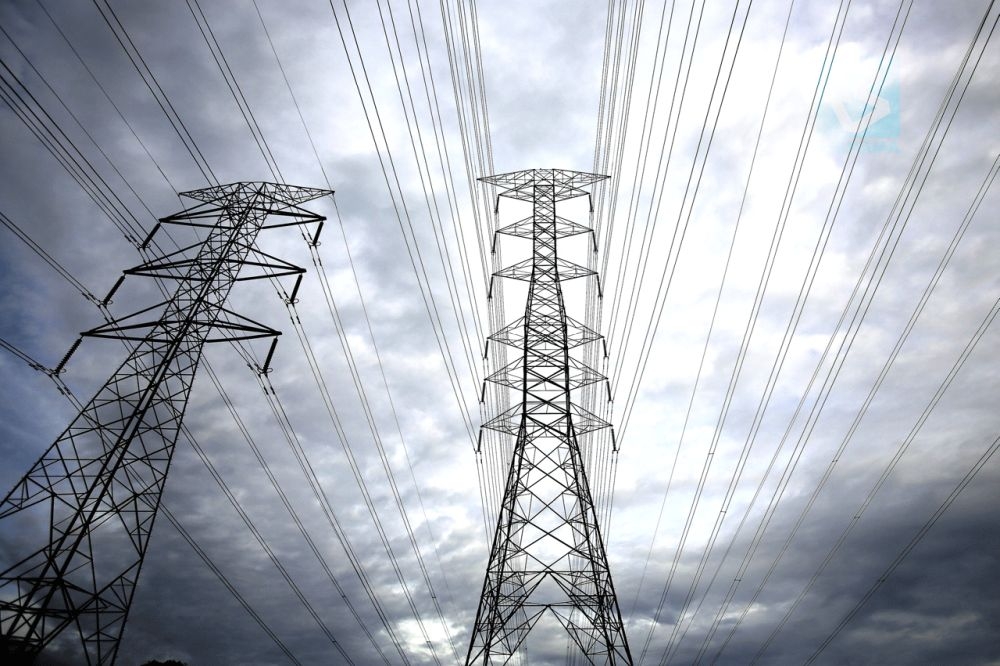
According to the EC, the revised structure is intended to make electricity charges more transparent and reflective of the industry’s underlying cost structure.
Such regulatory oversight is particularly important for transmission and distribution networks, which have natural-monopoly characteristics as duplicating large-scale grid infrastructure would be costly and inefficient.
The EC’s role therefore extends beyond tariff setting to ensuring the security, reliability, efficiency and quality of electricity supply while guarding against the misuse of monopoly or market power.
Together, these arrangements place TNB’s regulated businesses in a different position from companies where pricing, investment and returns are determined largely by commercial considerations.
Finance Minister II Datuk Seri Amir Hamzah Azizan, who served as TNB president and chief executive officer from 2019 to 2021, said TNB carries a significant responsibility in maintaining the balance within the electricity system.
“TNB carries a large part of the responsibility for getting this balance right, and as we’ve seen recently from the noise over electric bills, it is a genuinely difficult role,” he said in his recent LinkedIn post.
Generation costs exposed to global fuel prices
While tariffs and returns are regulated, the underlying cost of generating electricity remains exposed to movements in global fuel prices.
That exposure is significant given Peninsular Malaysia’s generation mix.
In its Annual Regulatory Review 2026 released on April 1, the EC said coal accounted for 58.5 per cent of electricity generated in 2025, while natural gas contributed 33.5 per cent, bringing their combined share to 92 per cent.
Movements in the prices of both fuels can therefore affect the cost of generating electricity.
Economy Minister Akmal Nasrullah Mohd Nasir said global coal prices rose to US$130.67 per tonne in August from US$129.63 in July, before climbing to US$148 per tonne on Sept 10, directly raising electricity generation costs.
Liquefied natural gas (LNG) prices also increased 13.2 per cent to an average US$21.87 per million British thermal units (MMBtu) in August from US$19.32 in July, before approaching US$30 per MMBtu by mid-September, adding to the cost of gas-fired electricity generation.
Fuel costs and regulated returns
The Automatic Fuel Adjustment (AFA) provides the mechanism for reflecting such changes in generation costs within the regulated electricity system.
Introduced in July 2025 to replace the Imbalance Cost Pass-Through, the AFA is calculated monthly rather than every six months, allowing changes in generation costs to be reflected more quickly.
According to the EC’s Regulatory Implementation Guidelines, the mechanism adjusts for the difference between actual and allowed generation costs, including variations in fuel prices and power-purchase costs.
The Single Buyer, meanwhile, operates under an actual-cost regime, enabling it to recover the cost of procuring electricity from independent power producers (IPPs) and TNB Generation.
This means fluctuations in fuel and generation costs are treated separately from the regulated returns earned on electricity network and other regulated assets.
Higher coal or LNG prices, therefore, do not automatically translate into additional regulated profit for TNB, as variations in generation costs are addressed through the AFA mechanism.
Rising demand, grid resilience
The system is also having to manage higher generation costs at a time when electricity demand is increasing.
Akmal Nasrullah said daily peak electricity demand reached 21,949 megawatts (MW) on Sept 9, 4.7 per cent higher than the August average, although the increase remained within the reserve margin that could be accommodated by the existing electricity supply system.
Against this backdrop, he said the government would continue to ensure sufficient generation capacity and electricity supply to support economic activities, meet public needs and strengthen the resilience of the country’s energy system.

The EC’s Annual Regulatory Review 2026 put the reserve margin at 25 per cent in 2025, while identifying industrial expansion, data centres, electrification, weather conditions and electric vehicle adoption among factors driving electricity demand.
Demand is expected to remain firm, with Kenanga Investment Bank forecasting growth of 5.0 per cent in 2026 and 3.5 per cent in 2027.
Data centres are expected to be a significant source of that growth.
Kenanga IB estimated that data centre investments could generate more than 8,000 MW of electricity demand by 2035, equivalent to about 30 per cent of Malaysia’s total generation capacity, with around 700 MW expected to come on stream this year.
The scale of that additional demand raises the question of who should bear the cost of the grid infrastructure needed to serve large new loads.
Under the government’s “user pays” approach, data centre operators are required to bear the additional costs of strengthening grid infrastructure rather than passing them on to other electricity consumers.
A dedicated ultra-high-voltage tariff category has also been introduced for data centres operating at high and extra-high voltage levels, while TNB’s connection-charge framework provides for project-cost-based charges for certain high-voltage connections and dedicated infrastructure.
The approach allows the electricity system to accommodate large new users without shifting their additional infrastructure costs to other consumers.
Consumer protection comes at a cost
The question of who ultimately bears electricity costs has also come into sharper focus for domestic consumers.
Amir Hamzah said public frustration over higher electricity bills was understandable, noting that prolonged haze and El Niño conditions had pushed household consumption higher than usual and that consumers crossing the subsidy threshold faced the full cost of their usage.
“No pricing framework can insulate households from the weather,” he said.
The government has since raised the electricity subsidy threshold for domestic consumers in Peninsular Malaysia to 800 kWh a month from 600 kWh from Sept 1 through December.
Amir Hamzah said the move meant 90 per cent of domestic users would remain within the protected range, with TNB and the Electricity Industry Fund absorbing the cost while the Ministry of Energy Transition and Water Transformation and the EC work on a more permanent solution.
TNB president and chief executive officer Datuk Shamsul Ahmad said the higher threshold shields an additional one million consumers, taking the total number benefitting to more than eight million, with those consuming less than 800 kWh a month exempt from the AFA, retail charges and sales and service tax (SST).
The protection, however, carries a cost, with TNB estimating RM120 million to RM150 million will be required to absorb the AFA cost difference until December.
Kenanga IB said the absorption represents a direct cost to TNB but expects the impact to remain manageable at less than three per cent of FY2026 earnings, concentrated in the fourth quarter.
While TNB has historically been shielded from fuel-cost fluctuations through the IBR’s pass-through mechanism, the investment bank cautioned that prolonged cost absorption could create regulatory lag if full cost pass-through under RP4 faces continued constraints.
It said any extension beyond end-2026 could introduce greater earnings volatility if high fuel costs persist.
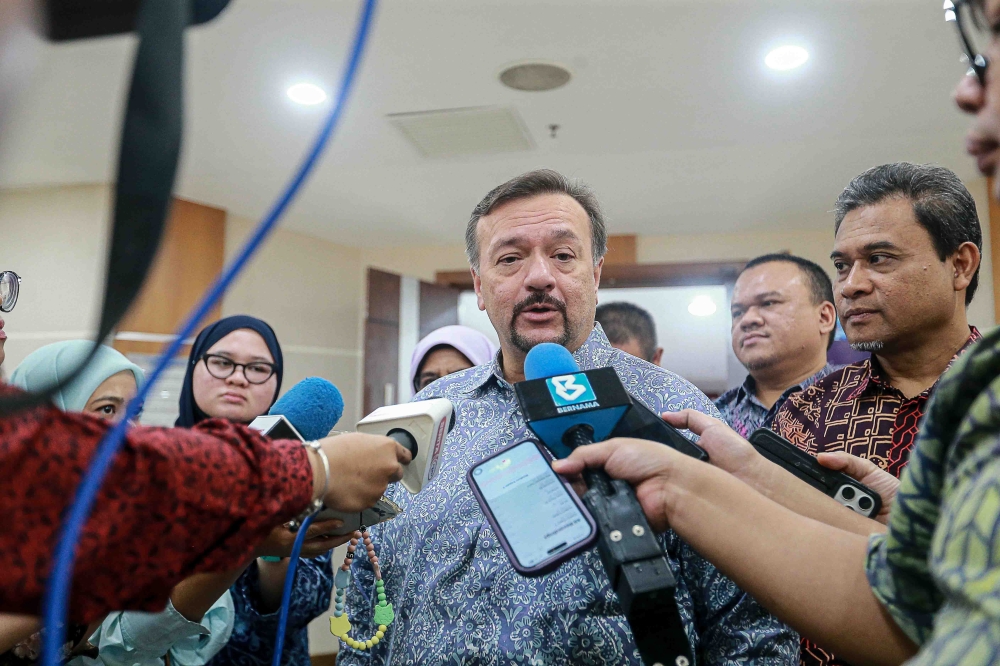
Amir Hamzah also stressed that managing electricity consumption could not rest solely on government measures and TNB’s role.
“While the government can drive protective policies and institutions like TNB carry the weight, all of us have a part to play in this. Efficient energy usage must be the new norm, not a temporary adjustment,” he said in the LinkedIn post.
The current arrangement nevertheless provides a buffer between higher generation costs and what most households ultimately pay for electricity.
Overall, TNB operates at the intersection of commercial considerations and broader electricity-system obligations, with its regulated businesses subject to tariff and return controls while it maintains and invests in infrastructure needed to meet rising demand.
As Malaysia’s electricity requirements grow, maintaining that balance will require continued investment to keep the grid reliable while managing affordability, consumer protection and the transition towards cleaner energy. — Bernama
Date: 27 September, 2026 12:35 pm
Source: Malay Mail
💬 Join the Conversation! 💬
We’ve disabled comments on our posts and pages to keep the discussions organized and lively! But don’t worry – the conversation isn’t over. Head over to our forum and share your thoughts, ideas, and feedback with the community! It’s the perfect place to connect, learn, and engage with others who care about the same things. We can’t wait to hear from you!