
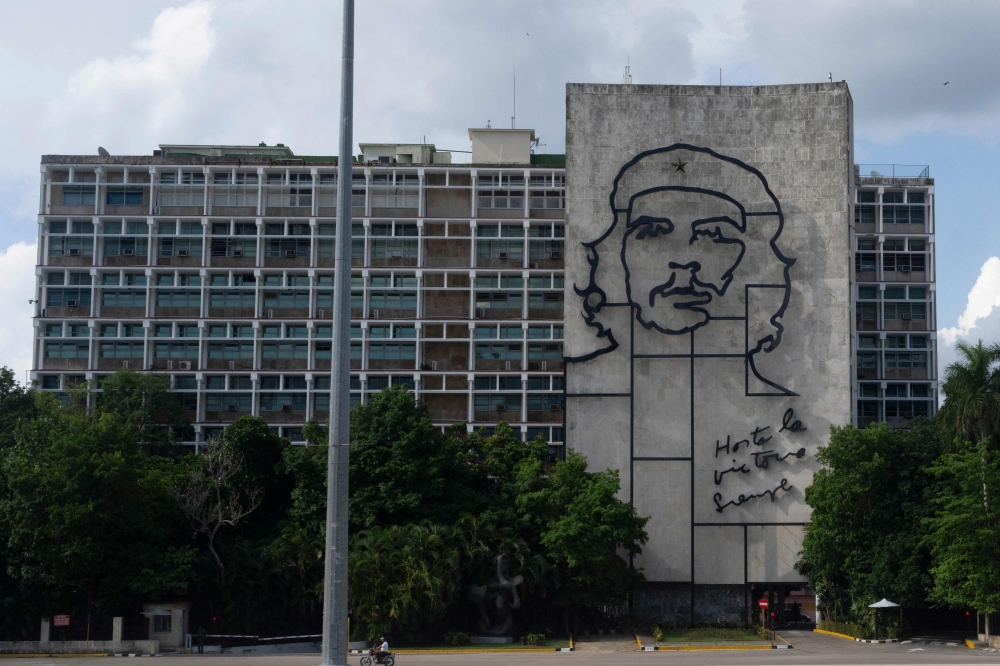
HAVANA, June 20 — Nearly 70 years after Fidel Castro’s 1959 revolution, communist-run Cuba has adopted a sweeping package of free-market reforms aimed at extricating the country from a deep crisis.
Is this the end of Cuban socialism?
The reforms, which are unprecedented in the aftermath of the revolution, mark a radical departure from the socialist orthodoxy of the one-party state.
“These are not cosmetic changes, they represent radical change. For example, there will no longer be only small and medium-sized businesses, it will be possible to establish a big private enterprise in Cuba,” London-based Cuban economist Daniel Torralbas explained.
Since the 1960s, Cuba has operated under a command economy regulated by central planning, which was effectively dismantled on Thursday, “tacitly recognised as a failure,” Torralbas said.
Since the 1990s, several timid pro-market reforms, including the right to own a home, have been introduced, mainly during times of economic crisis or social unrest.
But state enterprises still accounted for 80 per cent of the Cuban economy until a few years ago.
Cubans on the island and abroad will now be free to start businesses and buy and develop property. Foreign investors will have the right to buy into the economy without having to partner with the state.
Will the reforms end the crisis?
Economists consulted by AFP expressed scepticism about Cuba’s ability to rapidly implement such far-reaching reforms against the backdrop of a collapsing economy and a breakdown in social services.
“Cuba hasn’t been short of announcements in recent years, what’s been missing is implementation,” Torralbas said.
While some measures could be implemented rapidly, others “will take more time, like for example attracting foreign investment,” he said.
“Will Cubans abroad or foreign investors really want to put their money into Cuba given the lack of trust in Cuban institutions in terms of their fiscal and financial obligations?” wondered Tamarys Bahamonde, a Cuban economist at the American University in Washington.
Bahamonde also noted the “haemorrhaging of human capital” from the island, with over two million people fleeing the crisis abroad in the past five years.
Can it work without US support?
The viability of the reforms also depends partly on support from the United States, which has sought to completely isolate Cuba with successive waves of sanctions that have deprived the state of nearly all sources of income.
The threat of secondary sanctions has caused many investors to pull out of the island since the start of the year.
Torralbas stressed the need for a normalisation of ties between Washington and Havana, which has been under a US trade embargo since 1962.
“The reforms are necessary but for them to really have an effect, Cuba has to resolve the question of its relations with the United States, which have become the main variable in the island’s recovery,” Torralbas said.
It is unclear, however, whether the reforms will satisfy President Donald Trump, who has teased a “friendly takeover” of the island. — AFP
Date: 20 June, 2026 7:00 am
Source: Malay Mail
💬 Join the Conversation! 💬
We’ve disabled comments on our posts and pages to keep the discussions organized and lively! But don’t worry – the conversation isn’t over. Head over to our forum and share your thoughts, ideas, and feedback with the community! It’s the perfect place to connect, learn, and engage with others who care about the same things. We can’t wait to hear from you!