
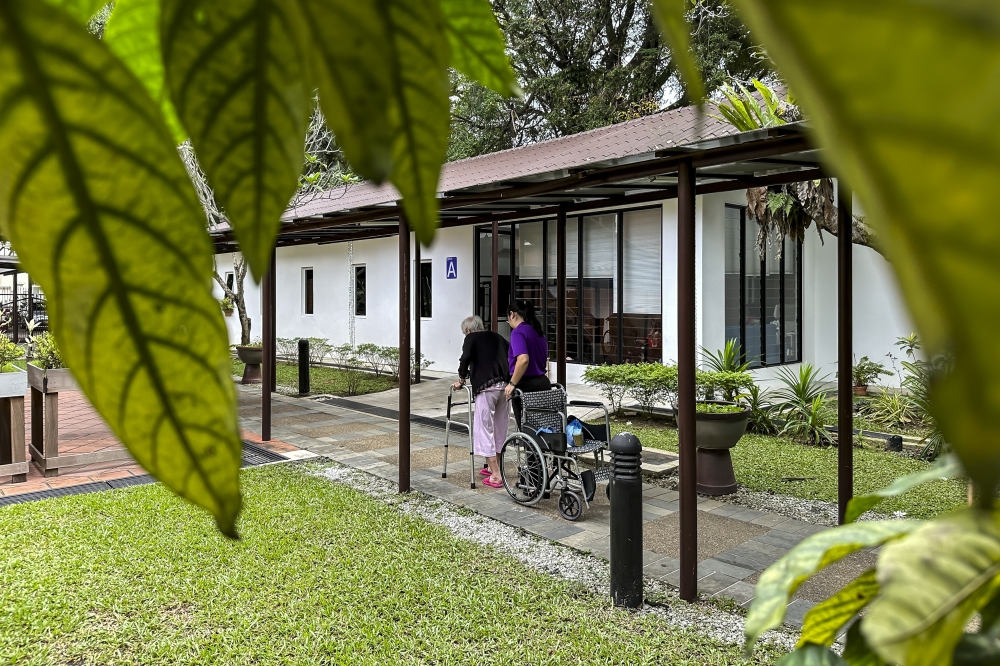
KUALA LUMPUR, Nov 7 — If Malaysia was to introduce its own national insurance for long-term care (especially for older persons), could the Singapore experience be a useful reference?
Here’s a quick look at the Singapore government’s national long-term care insurance CareShield Life, provided via its equivalent to Malaysia’s Employees Provident Fund which is the Central Provident Fund (CPF).
In 2020, Singapore launched CareShield Life which offers lifelong monthly cash payouts if one becomes severely disabled and needs long-term care.
According to Singapore’s Health Ministry, severe disability may be due to sudden events such as strokes and spinal cord injuries; or worsening chronic diseases such as diabetes; or illnesses in old age such as dementia.
CareShield Life automatically enrols and covers all Singapore citizens and permanent residents when they turn 30, and they cannot opt out as it is a mandatory scheme.
Here’s how it works, based on information from Singapore’s CPF:
1. Paying the premium until age 67 (unless severely disabled earlier), getting coverage for life
The premiums are paid once a year and automatically deducted from Singaporeans’ MediSave account in CPF.
(In CPF, workers’ savings go to three accounts for three main purposes — retirement, housing, and healthcare. MediSave is for healthcare.)
You will pay the premiums from 30 until 67 (generally working years for Singaporeans), which means lower annual premiums as you are spreading out the premium payments over a longer period.
The premiums paid by CPF members in each age group will be used for the expected future payouts to the same cohort, which helps ensure the insurance stays sustainable.
As CareShield Life payouts increase annually to keep up with rising long-term care costs, the premiums also increase annually (based on actuarial reviews and factors such as changes in life expectancy and disability trends).
If you are receiving payouts, you will stop paying premiums (even though you are not yet 67) and will only resume paying premiums if you no longer have a severe disability.
2. Government subsidies to keep it affordable
Unlike private insurance that stops coverage if you stop paying premiums, the Singapore government provides financial support to ensure no one loses CareShield Life coverage due to financial difficulties:
The government subsidises up to 30 per cent of the premiums for lower-income and middle-income Singaporeans (depending on their household per capita income, and if they only own one property, and the annual value of their residence is not more than S$31,000 or RM98,280).
For those who still cannot afford to pay premiums even after subsidies, the government will provide Additional Premium Support.
3. Getting assessed to see if you are severely disabled
You can get payouts if an assessment shows you are severely disabled:
Which means you cannot carry out at least three of these six activities of daily living (feeding, dressing, washing yourself, toileting, walking or moving around, transferring from a bed to a chair or vice versa).
A person with dementia or cognitive impairment will not automatically qualify for payouts and will still need to be assessed, as the impact of dementia on their functional abilities may differ.
A severe disability assessor who is accredited by Singapore’s Health Ministry (doctors, occupational therapists, physiotherapists or nurses) will do the assessment.
The first assessment is free.
You have to pay for subsequent assessments (S$100 at a clinic, S$250 at your home) from your own pocket, and will be reimbursed only if you are assessed to have severe disability.
Alternatively, someone who is already receiving care at a nursing home can get a free assessment and submit a Resident Assessment Form, without needing to go through a separate disability assessment.
4. Monthly payouts for life (if still severely disabled)
As people may have different long-term care needs and preferences (e.g. getting care while staying at home, or moving into a nursing home), CareShield Life pays out cash so you can have more flexibility in choosing and deciding on your care.
You can also arrange for the payouts to be paid directly to your nursing home.
The monthly payout amount is currently S$689 in 2026, and the potential amount you can get will continue increasing every year until you turn 67 or once you make a successful claim.
In other words, you will get a higher monthly payout if you claim at a later age, and the payout amount will be fixed once you start receiving them.
For example, someone aged 30 will receive $689 per month for life if they claim for severe disability in 2026, but will receive an estimated $2,941 per month for life if they only develop severe disability and claim at age 67.
A long-term care insurance for just the basics
CareShield Life is a non-profit government-managed insurance that is only intended as basic financial support for long-term care needs for those who are severely disabled.
It is aimed at complementing other government subsidies and assistance, personal savings, support from family and the community; with government safety nets available for those who cannot afford long-term care.
Those who want more insurance benefits can top up by buying supplements from private insurance companies.
CareShield Life does not cover those with mild or moderate disabilities in order to keep the premiums affordable, while those with such conditions can use existing Singapore government subsidies and grants for their long-term care.
What do we have in Malaysia now?
Currently, the Social Security Organisation (Socso) provides something similar to long-term care protection under its Invalidity Scheme, but only if the Socso contributor is certified to be invalid before age 60.
Under the Invalidity Scheme, Socso pays a monthly payout called the Invalidity Pension as long as the contributor remains invalid or until their death, with the amount at 50 to 65 per cent of the average assumed monthly wage. The payout is at a minimum RM550 per month.
After the contributor dies, their dependents such as their spouse or children will receive a monthly Survivors’ Pension.
The Invalidity Scheme also pays a fixed monthly allowance of RM500 if a person is certified to need constant personal care from another person, and pays for physiotherapy and rehabilitation and medical aids such as wheelchair and crutches.
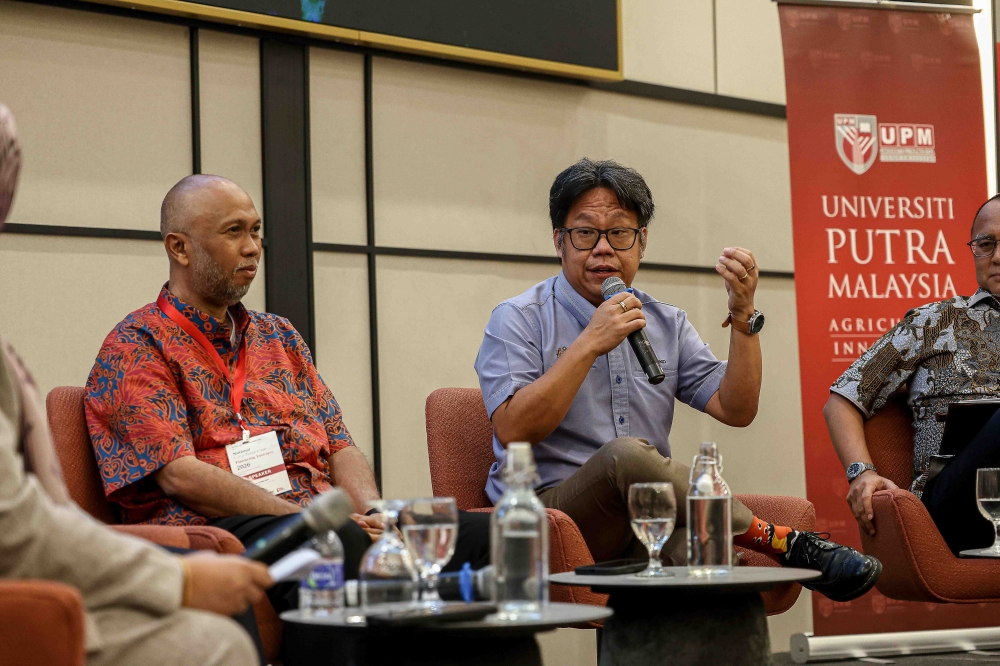
During the recent National Long-Term Care Financing Dialogue 2026, Socso deputy CEO (Strategy and Corporate) Edmund Cheong Peck Huang proposed that Malaysia introduce a national long-term care insurance that would feature mandatory affordable contributions and cover all Malaysians, even beyond 60.
The government’s 13th Malaysia Plan states that a long-term care (LTC) insurance scheme “will be explored to provide a structured and sustainable protection”.
It remains to be seen if the government would introduce a national LTC insurance, and if it could be built on existing platforms such as Socso or EPF, or if any elements might be adopted from other countries’ models.
Recommended reading:
Date: 7 November, 2026 7:30 am
Source: Malay Mail
💬 Join the Conversation! 💬
We’ve disabled comments on our posts and pages to keep the discussions organized and lively! But don’t worry – the conversation isn’t over. Head over to our forum and share your thoughts, ideas, and feedback with the community! It’s the perfect place to connect, learn, and engage with others who care about the same things. We can’t wait to hear from you!