
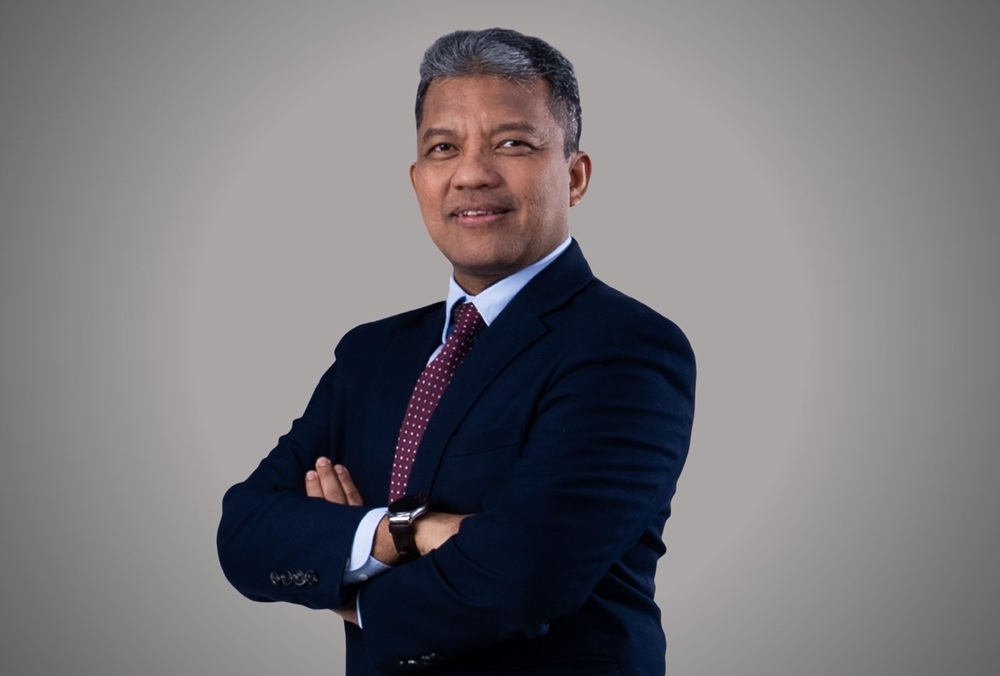
KUALA LUMPUR, May 20 — Malaysia Aviation Group (MAG) expects jet fuel prices to hover between US$120 and US$130 per barrel over the next one year, based on current forward market indications, as airlines continue navigating geopolitical tensions and fuel supply disruptions affecting the aviation industry.
MAG president and group chief executive officer Captain Nasaruddin A. Bakar said fuel prices were hovering around US$100 per barrel before geopolitical tensions pushed prices as high as US$240 per barrel, underscoring continued volatility facing airlines globally.
“Based on the forward curve we see, we believe in the next one year it will be hovering between US$120 and US$130 per barrel,” he told Bernama after his official visit to Wisma Bernama today, following his appointment as MAG CEO on Feb 1, 2026.
Also present at the event were Bernama chairman Datuk Seri Wong Chun Wai, deputy editor-in-chief (Economic News Services) Harlina Samson and assistant news editor (Economic News Services) Kisho Kumari Sucedaram.
Nasaruddin said geopolitical tensions involving Iran have affected the aviation sector not only through fuel costs but also fuel supply concerns, creating operational challenges for airlines globally.
“As an airline that uses fuel, both on the cost bit and also the supply bit, it is impacting Malaysian airlines,” he said, adding that MAG continues implementing mitigation measures to manage challenges while maintaining its long-term business plans.
He said fuel currently accounts for about 30 per cent of MAG’s overall cost structure, with higher fuel prices contributing to an additional 20 per cent to airline operating costs.
“So all the initiatives that we have taken is to ensure that we are able to cushion the impact of the fuel costs.
“However, we are not passing through (the costs) to the passengers at this point of time, but we are trying as much as we can to cushion the fuel costs,” he added.
Meanwhile, beyond cost pressures, Nasaruddin said evolving global aviation dynamics are also creating opportunities for Southeast Asian carriers amid changing travel patterns linked to disruptions affecting West Asia aviation routes.
He said travellers from Australia and New Zealand heading to Europe are increasingly transiting through Southeast Asian hubs including Kuala Lumpur, alongside Singapore and Bangkok.
“There’s a lot of market that we’re seeing, especially from Australia and New Zealand, flying through Kuala Lumpur, flying through Singapore and also Thailand into Europe,” he said.
Nasaruddin said changing passenger flows could create opportunities for Southeast Asia airlines, particularly as travellers are increasingly avoiding West Asia transit points amid geopolitical developments.
“But the focus now from what we can see, not just within Malaysia Airlines, but across the industry, people are trying to avoid West Asia, which is quite common.
“And a lot of people are flying direct from this part, Singapore and Kuala Lumpur, and also from Bangkok directly to Europe. So that is an advantage to our Southeast Asian carriers,” he said.
As Malaysia seeks to strengthen Kuala Lumpur’s position as a regional aviation hub, Nasaruddin said airport infrastructure and facilities remain important areas for continued improvement to support future industry growth and rising passenger demand.
“To compete with our partners across Southeast Asia, the likes of Singapore and also Thailand, our infrastructure and facility has to support the growth of the country, especially in the context of our airports,” he said.
He also noted that passenger booking behaviour remains broadly unchanged for now, with international travellers continuing to book flights around three months in advance while domestic travel bookings remain within two to three weeks before departure.
Nasaruddin began his career with Malaysia Airlines as a pilot in 1979 and rose through the ranks to hold various key leadership roles before being being appointed as the group managing director on Dec 1, 2017, making him the company’s longest-serving chief executive to date.
Earlier, Nasaruddin, together with Wong and Bernama chief executive officer Datin Paduka Nur-ul Afida Kamaludin, joined the programme’s review session and mingle with participants of the C-Suite Media Spokesperson Training programme involving MAG senior management representatives, held today at the Centre for Excellence, Wisma Bernama.
The programme, conducted by head of channel and content at Bernama TV Gerard Vincent Ratnam and Bernama TV news presenter Jasminer Kaur Chahal, aimed to strengthen participants’ confidence and skills in handling media interviews and appearing professionally and effectively on camera. — Bernama
Date: 20 May, 2026 9:00 pm
Source: Malay Mail
💬 Join the Conversation! 💬
We’ve disabled comments on our posts and pages to keep the discussions organized and lively! But don’t worry – the conversation isn’t over. Head over to our forum and share your thoughts, ideas, and feedback with the community! It’s the perfect place to connect, learn, and engage with others who care about the same things. We can’t wait to hear from you!